
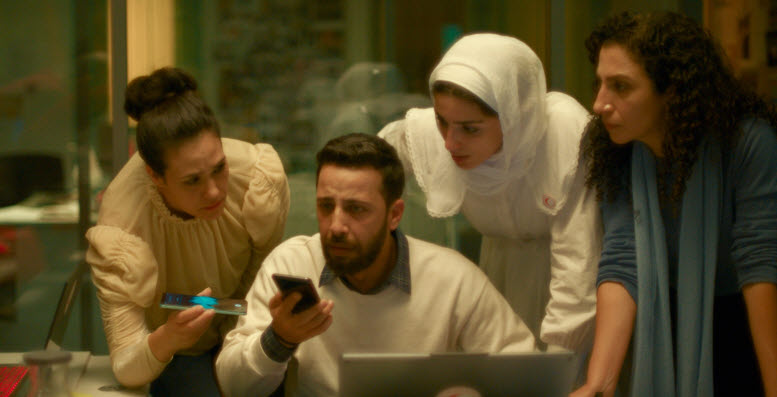
Kaouther Ben Hania’s latest movie “The Voice of Hind Rajab”, which won the Grand Jury Prize at the Venice International Film Festival and then received a Best International Film Oscar nomination in last month, is a devastating docudrama to reckon with. Based on a truly heartbreaking real-life incident during the ongoing war in Gaza, Palestine, the movie is often quite difficult to watch for good reasons, but your eyes will be held by the considerable emotional power felt from the screen, and this will definitely make you reflect more on the Gaza war and all those atrocities and tragedies inside that.
The setting of the film is pretty simple. During its opening part, we are introduced to several volunteers of the Palestine Red Crescent Society (PRCS) including Rana Hassan Faqih (Saja Kilani) and Omar A. Alqam (Motaz Malhees), and we get some glimpses on how these dedicated volunteers go through another busy and demanding day at their modest call center located in the West Bank area of Palestine on January 29st, 2024. Their main job is sending ambulances to those injured Palestinian civilians in Gaza as quickly as possible, but, of course, that is not an easy job at all mainly due to the aggressive military tactics of the Israeli Defense Forces (IDF) across the area.
Not long after being quite devastated by what just happened to a frantic woman who called for help on the phone, Alqam receives an urgent request from a guy currently staying in Germany, who is very concerned about the safety of his several family members including a 6-year-old girl named Hind Rajab. As they tried to leave Gaza by their car, Rajab and her several family members got stuck somewhere in the area, and it does not take much time for Alqam and his several colleagues to realize how grave the situation is. When he subsequently attempts to contact Rajab and her family members on the phone, it turns out that everyone except Rajab was already killed by those Israeli soldiers in the area, and she is desperately calling for help as being helplessly stuck among the dead bodies of her family in that car.
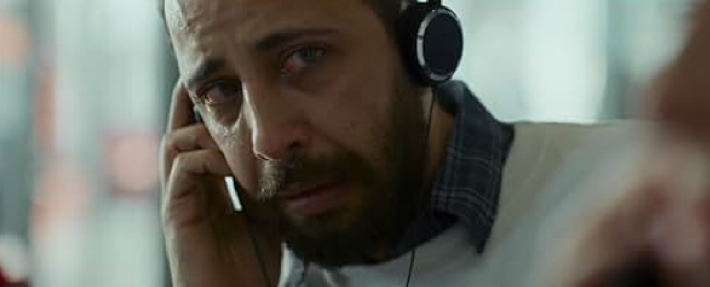
Needless to say, not only Alqam and Rana but also their supervisor Mahdi M. Aljamal (Amer Hlehel) try really hard for the rescue of this unfortunate young girl, but, not so surprisingly, they are reminded again of how often they and their colleagues are helpless and frustrated due to being frequently limited by all those rules and regulations day by day. For example, they must secure a safe route for their ambulance, but this process in question often takes a lot of time, and, above all, there are not many ambulances and paramedics available to them.
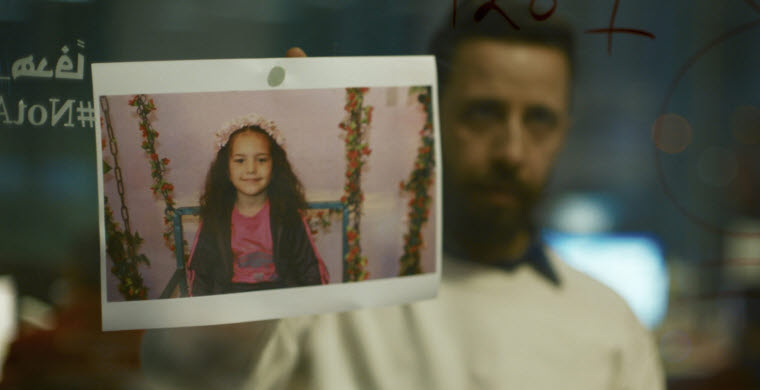
Furthermore, there are also those IDF soldiers in the area, who do not hesitate to target their ambulances and paramedics at all. At one point later in the story, the movie shows the photographs of a bunch of recently deceased paramedics, which are as sad and devastating as those numerous photographs of the unfortunate callers Alqam and his colleagues could not save.
Firmly sticking to Alqam and his colleagues throughout the story, the movie shows some admirable restraint in how it conveys to us the harrowing horror of Rajab’s increasingly grim circumstance. As the handheld camera of cinematographer Juan Sarmiento G. steadily focuses on their emotional responses to Rajab’s desperate call, we come to sense more of whatever she experienced during that horrible time, and we become all the more devastated as there come more horror and despair along the story.
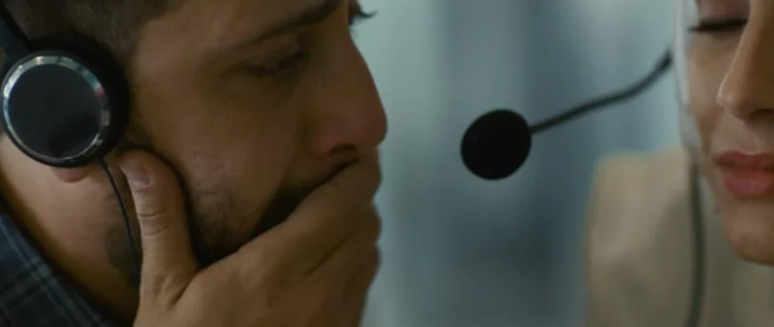
The movie actually uses the excerpts of the recordings of the real phone conversations between Rajab and PRCS. Yes, her voice appearing in the film really belongs to Rajab herself, and this may make you question on the ethics of Ben Hania’s storytelling approach. Is this in fact no more than a blatantly sensational exploitation in the name of art and politics? Or, is this really a bold and powerful storytelling approach for delivering its undeniably angry and urgent political messages to us?
Based on what I observed from the movie, I can only tell you that it succeeds as much as Ben Hania intended. It is quite clear from the beginning that she deeply cares about Hind Rajab as well as what happened to her, and she also strikes the right balance between fiction and reality. It seems to me that the drama among Alqam and several other main characters around him is dramatized to some degree, but they come to us ordinary decent people simply trying to do their frequently demanding job, and the main cast members of the film are believable in their natural acting as their characters go through a lot of emotional upheavals along the story.
In conclusion, “The Voice of Hind Rajab” is a modest but utterly unforgettable movie, and Ben Hania further solidifies her advancing filmmaker career. Although I did not like enough her second feature film “The Man Who Sold His Skin” (2020), which also received a Best International Film Oscar nomination, I admired the interesting mix of fiction and reality in her Oscar-nominated documentary “Four Daughters” (2023), and now she goes further with this very intense piece of work. Yes, you may still wonder whether she should have taken more time for having more insight and perspective, but you cannot deny that she really felt the need to make and then show it to us right now, and she accomplishes her challenging mission with those indelible moments of human despair and devastation which will linger on your mind for a while.


 Seongyong's Private Place
Pingback: My Prediction on the 98th Academy Awards | Seongyong's Private Place