
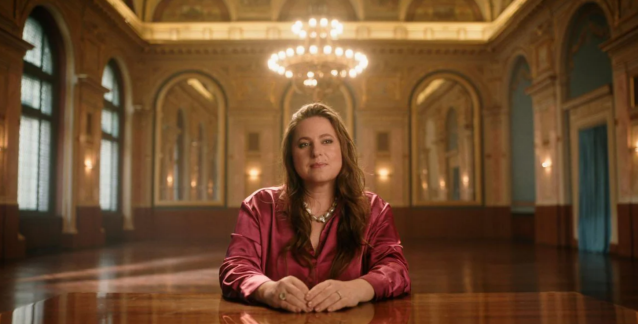
Netflix documentary film “Queen of Chess”, which was released on last Friday, follows the remarkable story of Judit Polgár, a Hungarian female chess grandmaster who was an exceptional trailblazer during her prime. Despite numerous obstacles including sexism, she really tried hard for reaching her ultimate goal, and her dramatic life story is compelling enough to compensate for the rather conventional aspects of the documentary.
The early part of the documentary focuses on Polgár’s humble background, and she and her father and two older sisters willingly talk about their struggling early years in Hungary in the 1980s. Just because he believed that a genius is created from a lot of effort and focus besides natural talent, Polgár’s father looked for something to develop his three daughters’ potential, and he eventually chose chess mainly because it is, well, cheap. During next several years, he steadily encouraged them to study and practice chess a lot everyday, and, fortunately, all of them turned out to have considerable interest and potential.
Although she was only 5 around the time when she began to play chess just like her two older sisters, Polgár quickly began to show much more talent than expected. Around the time when she became 13, she was virtually invincible as winning one local tournament after another, and her father was certainly willing to lead her to those international tournaments outside Hungary.
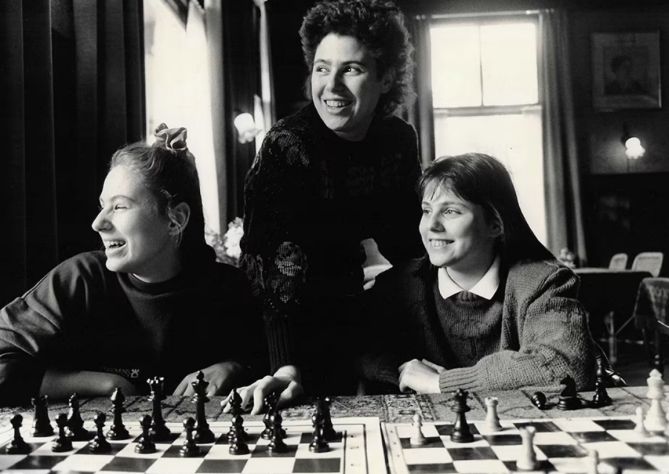
However, his little personal family project was not so welcomed by the Hungarian government, which blocked him and his exceptional daughters in one way or another although the Cold War was being over around that time. In the end, as more people heard and then talked about Polgár and her older sisters’ promising prospect as exciting new chess players, the Hungarian government subsequently stepped back, and then they were allowed to compete at an international tournament held in Greece.
And Polgár and her older sisters did not disappoint their father and supporters at all. Once the tournament was started, they swiftly rose up and up as going through one round after another, and they eventually came to have the final match with the Russian team, which had incidentally stayed on the top of the field for many years. To the surprise of everyone around them, they won the match in the end, and they soon found themselves quite welcomed by everyone in their country.
Nevertheless, Polgár and her father were not satisfied at all, because she really wanted to be the best chess player in the world. So far, she had played only against female chess players at the tournaments, and she was willing to push her more as playing against male chess players such as Garry Kasparov, a formidable Russian chess grandmaster who had been the World Chess Champion for many years.
However, Polgár soon faced a lot of sexism from not only Kasparov but also many other male chess players she encountered, and the documentary makes a good point on how often her field has been not that inclusive just because chess has been regarded as, uh, boys’ game. We see Bobby Fischer, a chess grandmaster as legendary as Kasparov, openly disregarding female chess players during one archival interview clip, and Kasparov, who is incidentally one of several chess grandmasters interviewed for the documentary, was no better than that as shown from one of his old interview clips.
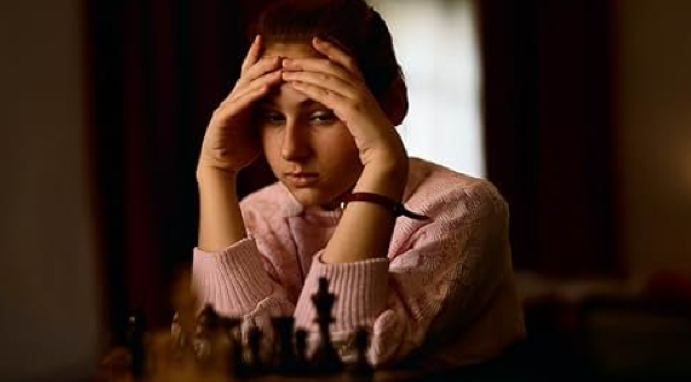
At least, Kasparov did not refuse Polgár’s challenge at all, and the documentary presents well their respective game strategies unfolded on the chess board between them. As not only Polgár and Kasparov but also several chess grandmasters eagerly illustrate what happened during Polgár and Kasparov’s first match, you will sense more how intense their match was at that time, even though you do not know much about playing chess like me.
While she was sadly defeated by Kasparov in the end, Polgár was not so pleased about a little but significant act of violation committed by Kasparov. When she pointed out this not long after their match, it surely caused a lot of stirs in public, and she was reminded again of how misogynistic Kasparov and many other male chess players could be. He is later asked about whether he really broke one of the golden rules of chess, but, not so surprisingly, he is not so willing to admit his error even at this point.
As keeping going as usual despite that, Polgár became an independent adult woman willing to go her own away after many years of her father’s guidance and support, and she married a young veterinarian who not only loves her but also understands her passion toward chess. Once she finally earned some respect from Kasparov after another intense match between them, she was more welcomed by many other chess grandmasters around her, and she even got a small but important life lesson from her seemingly unbeatable opponent.
Overall, “Queen of Chess”, directed by Rory Kennedy, feels a bit too plain compared to its extraordinary human subject, but it is certainly something you cannot miss if you enjoyed recent Netflix miniseries “The Queen’s Gambit”. Both of them show that girls can indeed do anything, and they will surely inspire any bright young girl out there.


 Seongyong's Private Place