
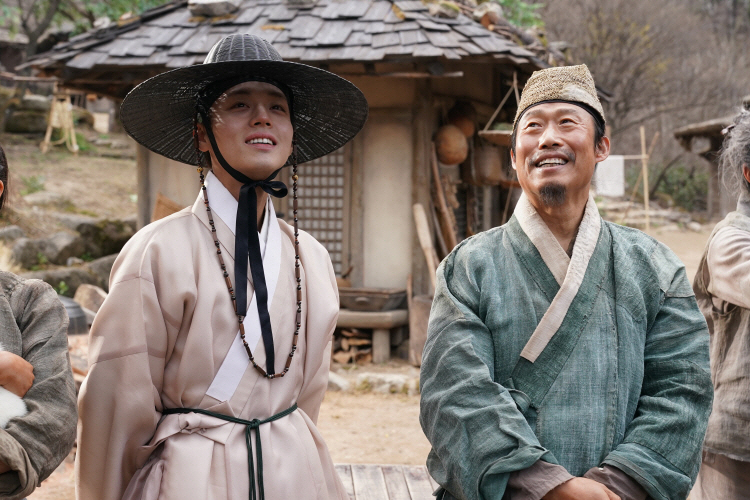
South Korean film “The King’s Warden” often tries too hard for laughs and then tears, and I do not like that much. Based on the real-life relationship between one plain common man and a tragically deposed king of the Joseon Dynasty in the 15th century, the movie attempts to try both broad comedy and sappy melodrama, but, alas, the result is too jarring and blatant for my inconsequential taste.
The movie opens with how King Danjong (Park Ji-hoon) got stripped of his title and then exiled to a remote mountain region far from the capital in 1457. Not long after he succeeded his father in 1452 at the age of 10, King Danjong was forced to abdicate by one of his uncles who led a coup d’état against him, and his ruthless uncle, who would be King Sejo, eventually decided to banish his helpless nephew when a number of court officials attempted to restore the deposed king to power.
And then the movie shifts its focus to Eom Heung-do (Yoo Hae-jin), the chieftain of a small village located in the aforementioned remote mountain region. After he comes to learn that a nearby village got some economical boost thanks to an exiled nobleman who happened to stay there for a while, Heung-do does not hesitate at all when he hears about some exiled noblemen being sent from the capital, and he surely tries his best for making that exiled nobleman in question sent to his village.
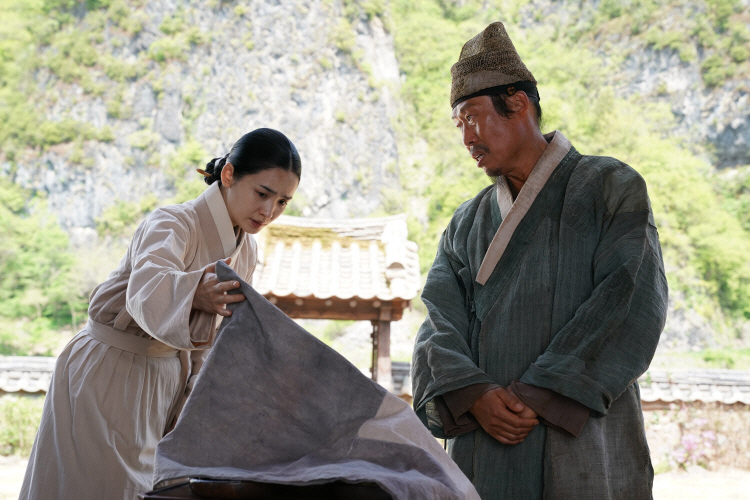
Of course, that exiled nobleman in question turns out to be King Dangjong, and it does not take much for Heung-do to realize that he and his fellow villagers are stuck in a very serious situation. While he and his villagers must treat the deposed king as well as possible, Heung-do must be watchful about whatever may happen around the deposed king, because, well, there can be any other attempt to put him back on the throne.
However, of course, this task of his turns out to be a bit more difficult than expected. Quite devastated and depressed by his miserable current status, the deposed king does not eat much, and he even considers killing himself at one point despite his devoted court lady who has always stood by himself since he was very young.
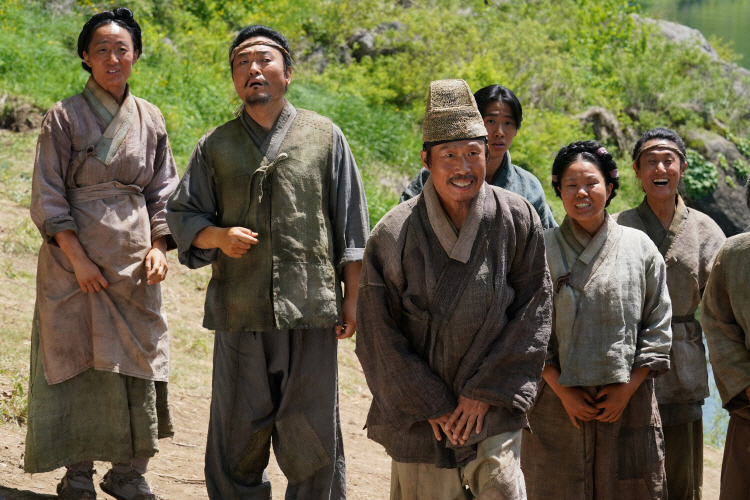
Nevertheless, the deposed king gradually opens himself more to Heung-do and his fellow villagers once he sees how much they depend on his welfare at present. He begins to enjoy the daily meals provided by them, and he also gladly lets Heung-do and the villagers have a bunch of offerings he receives from numerous people still sympathetic to him. In addition, he teaches Heung-do’s son how to read and write, and Heung-do’s son becomes a bit more motivated about his possible future while also teaching several village kids for himself.
Because I and many other South Korean audiences have enough background knowledge on the historical subject of the movie, I guess you should also know in advance that the story becomes more serious and tragic during its second half. King Sejo and his powerful supporters keep watching on whatever is happening around King Danjong, and there subsequently comes an inevitable moment it is decided that the deposed king should be eliminated as soon as possible for solidifying their power.
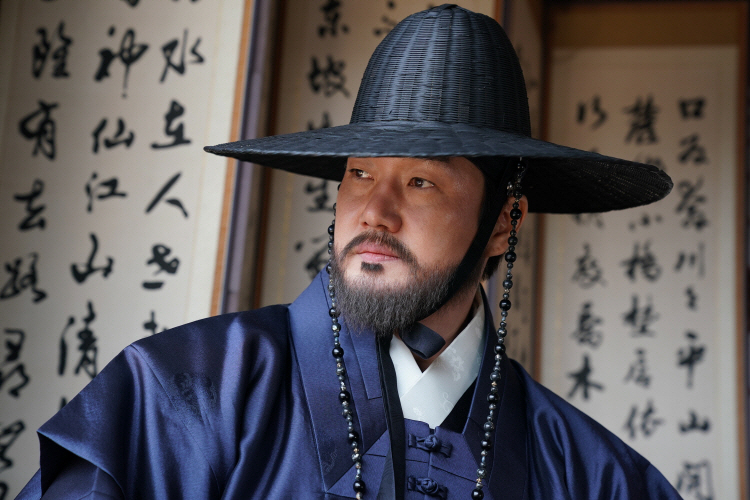
Around that point, the screenplay by director Jang Hang-jun and his co-writer Hwang Seong-gu becomes quite heavy-handed to say the least. For example, a subplot involved with another attempt to restore King Danjong to power is unnecessary and distracting in my humble opinion, and Heung-do’s growing conflict along the story feels glaringly contrived as the story hurriedly pushes its main characters toward its pre-determined finale.
Above all, I was frequently annoyed with how uneven the movie is as clumsily going back and forth between comedy and melodrama. While many of its comic moments are often too silly for generating real laughs, most of its main characters are more or less than broad caricatures, and that is the main reason why the melodramatic parts of the story are superficial without enough gravitas. Furthermore, the movie becomes all the more blatant as trying to pull our heartstrings and extract more tears from us during its finale, and I must confess that I rolled my eyes again as watching this moment.
In case of the main cast members, they try to sell the materials as much as possible. Yoo Hae-jin is surely one of the most dependable character actors in South Korean cinema, but the movie unfortunately pushes him into Overacting 101 more than once, and he is not complemented that well by his co-star Park Ji-hoon, who does not have much to do except looking regal or forlorn throughout the film. In case of several notable cast members in the film, Yoo Ji-tae and Ahn Jae-hong are totally wasted due to their respective thankless supporting roles, and I was also distracted by the appearance of Oh Dal-soo, who recently seems to make an impertinent comeback via several recent films including Park Chan-wook’s “No Other Choice” (2025) despite being accused of sexual harassment several years ago.
In conclusion, “The King’s Warden” is disappointing for failing to generate real humor or pathos from its potentially interesting story and characters. Considering that it is released here not long before the upcoming Chinese New Year holiday season, it will probably draw a substantial number of audiences, but I sincerely recommend you to check on your streaming services instead of watching it at movie theater.


 Seongyong's Private Place