
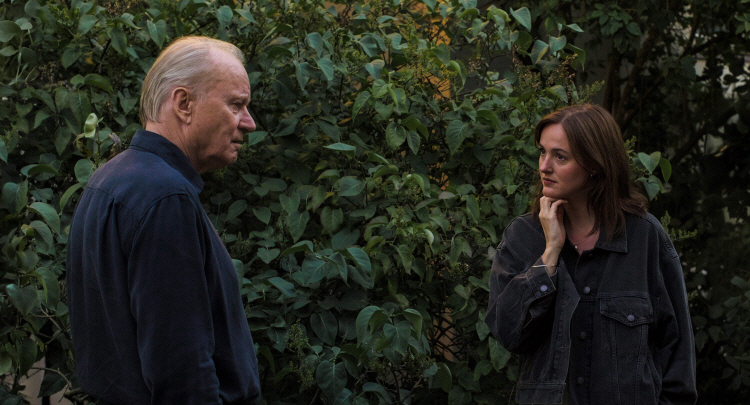
Joachim Trier’s new film “Sentimental Value”, which won the Grand Prix award at the Cannes Film Festival early in last year and then recently received no less than 8 Oscar nominations including the ones for Best Picture, Best Director, and Best International Film, is a somber but deeply sensitive family drama to remember. As freely and leisurely rolling its several main characters, the movie deftly captures and illustrates achingly human moments along the story, and we come to care more about its main characters while gradually getting to know and understand them in one way or another.
The story, which is mostly set in Oslo, Norway, mainly revolves around the troubled personal relationship between an actress named Nora Borg (Renete Reinsve) and her filmmaker father Gustav (Stellan Skarsgård). Although he has been a fairly well-respected filmmaker throughout his filmmaking career, Gustav has not been a very good dad to Nora and her younger sister Agnes (Inga Ibsdotter Lilleaas) as shown from the prologue scene of the movie, and Nora is understandably not so pleased when her father comes to her recently deceased mother’s funeral.
Not long after that, Gustav approached to Nora again, and he turns out to have something to offer for her. Although he has not been active for more than 10 years, he is planning to make another movie, and he has already written the screenplay, which turns out to be loosely inspired by his family history. He hopes that the heroine of this screenplay of his, who happens to be based on his mother to some degree, will be played Nora, but Nora flatly refuses to do that even without taking any look into her father’s screenplay.
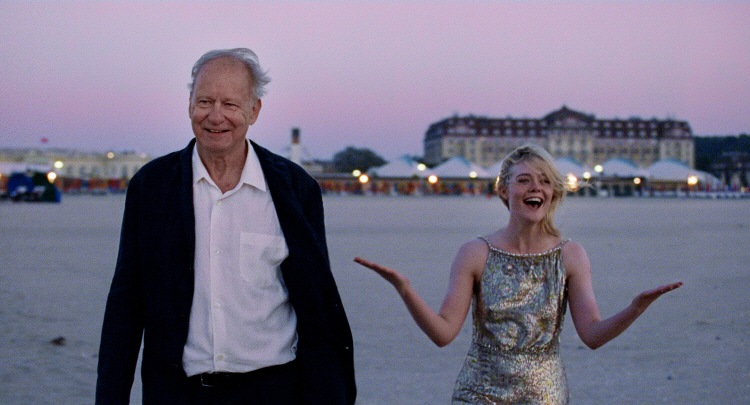
Nevertheless, Nora is gradually reminded again of how her life cannot be totally separated from her father due to a lot of unresolved emotional issues between them. While her younger sister, who incidentally works as an academic historian although she once acted for one of her father’s notable works many years ago, has calmly accepted how flawed their father has really is, Nora comes to feel more anger and confusion in contrast, and that also begins to affect her life and career, no matter how much she struggles to keep things under control.
Meanwhile, shortly after he got rejected by Nora, there comes a possible idea for Gustav. At another retrospective event for those old movies of his, he comes across Rachel Kemp (Elle Fanning), a famous American actress who becomes quite excited to spend some time with him. Although she cannot speak Norwegian at all, Kemp looks like a fairly good alternative to Gustav, who is certainly willing to translate his original screenplay in English for her once she agrees to join his movie project.
As Kemp and Gustav begin their pre-production process for his movie project, we see more of how personal the movie is to Gustav – and his two daughters. He is going to shoot many of the key scenes of the movie inside their old family house in Oslo, which is currently resided by Agnes and her family but still technically belongs to Gustav. He gladly shows Kemp here and there in the house as a part of her character study, and we get a little amusing moment involved with a certain small room inside the house.
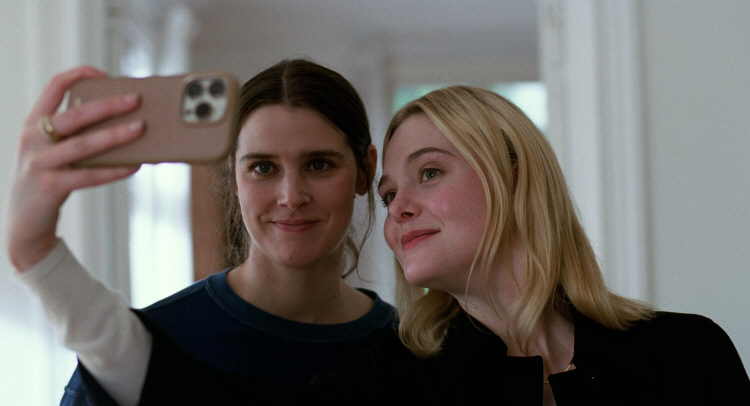
Nora and Agnes do not mind this that much at first, but, what do you know, both of them come to feel more uncomfortable as their father enters their life more and more. While Trier and his co-writer Eskil Vogt’s smart and considerate screenplay seldom underlines anything at all, we come to sense more of the accumulating emotional turmoil surrounding them and their father, and the plot thickens a bit more when Agnes delves into the dark and disturbing past of Gustav’s mother via some old archival documents. She comes to feel more of how her father’s movie project is not going in the right direction at all, and she also has to confront her own old emotional issues with him just like her older sister – especially when he attempts to get herself more involved into his movie project later in the story.
Under Trier’s sensitive and thoughtful direction, the four main cast members of the film give one of the most impressive ensemble performances of last year, and they all richly deserve their respective Oscar nominations. Renate Reinsve, who was absolutely memorable in Trier’s Oscar-nominated film “The Worst Person in the World” (2021), gives another strong performance to admire, and she is especially wonderful when Nora subsequently goes through a sort of healing process via opening herself more to her complex feelings toward his father. On the opposite, Stellan Skarsgård, who has been always reliable in many various films for more than 30 years (I still fondly remember his crucial supporting turn in Gus Van Sant’s Oscar-winning film “Good Will Hunting” (1997), by the way), is fabulous as a flawed old man who knows well that filmmaking is his main way of making genuine human connection with others around him, and his masterful performance is full of small nuances and details to be noticed here and there from the beginning to the end. Inga Ibsdotter Lilleaas is equally compelling in her low-key acting which comes to function as the solid ground for Reinsve and Skarsgård, and Elle Fanning, who had a really productive time thanks to this film and Dan Trachtenberg’s “Predator: Badlands” (2025), has her own moment to shine as her seemingly superficial character comes to show a lot more care and intelligence than expected.
On the whole, “Sentimental Value” is another knockout work from Trier. Although his first feature film “Reprise” (2006) did not impress me much, he steadily advanced with a series of stellar works including “Oslo, August 31st” (2011) and “The Worst Person in the World” during last 20 years to the big delight of me and many others, and I am really glad to report to you that he achieves a lot again. This is indeed one of the major highlights of last year, and, considering its little wry wink on Netflix, you should not miss it when you can see it at movie theater.



 Seongyong's Private Place
Pingback: My Prediction on the 98th Academy Awards | Seongyong's Private Place