
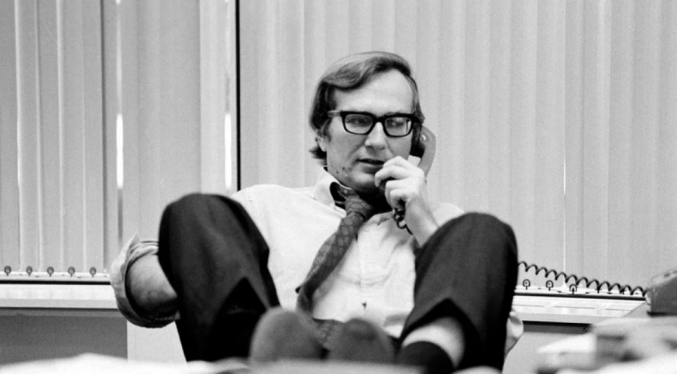
Laura Poitras and Mark Obenhaus’ Netflix documentary film “Cover-up”, which was released around the end of the last year, gives an overview on the career of Seymore Hersh, a Pulitzer-winning American investigative journalist who deserves to be known more in my humble opinion. As following his several big scoops in the past, the documentary presents well his long and tenacious fight for truth and transparency, and that is why it is touching to see how he keeps going as before even at present.
The early part of the documentary mainly revolves around an infamous incident in Vietnam which was a big breakthrough in Hersh’s career. In the late 1960s, Hersh was just a plain journalist who got tired of how he and his fellow journalists simply wrote down whatever the US government told them, but then he came across an opportunity for big scoop not long after he became an independent journalist. He happened to learn a bit about a massive civilian massacre which occurred in some rural region of Vietnam, and he became all the motivated as investigating more on how the US government had been trying to cover up this horrible incident which would eventually be known as My Lai Massacre.
It goes without saying that his eventual article on My Lai Massare was disregarded by many major newspapers in US, but, once it got printed on Chicago Sun-Times in 1969, all the American newspapers became quite interested in this incident. Needless to say, Hersh virtually became a persona non grata to the US government. Although he later got hired in New York Times as he accordingly became more prominent, the US government kept watching for him – especially when he reported on a covert CIA operation against the left-wing student organizations in US.
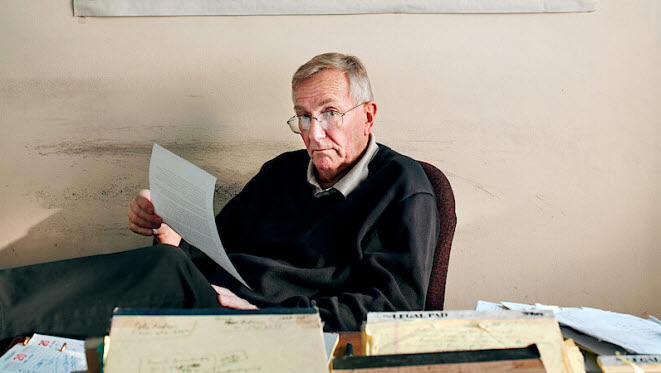
In case of the Watergate scandal, Hersh actually could have delved more into it from the very beginning, but New York Times was not so willing to allow that just for not ruining its good relationship with the US government, and, as many of you know, the ball was eventually handled to that famous duo of the Washington Post. Nevertheless, once the Washington Post reported more and more on the Watergate scandal, Hersh indirectly supported his competitors at the Washington Post via a series of crucial articles on that scandal, which ultimately led to more public interest in that scandal and then the eventual political downfall of President Richard Nixon.
During next several decades, Hersh kept working steadily. After getting more disillusioned about how New York Times has been willing to bend itself to the US government as well as those wealthy corporations in US, he eventually left and then became an independent journalist again. Nonetheless, many people still approached to him as insiders with important information or secret as usual, and he even published a number of books which certainly did not please many people out there.
Nevertheless, Hersh has always stuck to his professional integrity for many years without any compromise. Unless his informant is dead for a long time or agrees to come out, he refuses to reveal many of his numerous informants, and that occasionally causes frequent conflicts between him and the directors. As a matter of fact, Poitras actually tried to make a documentary about him around 20 years ago, but he did not accept her proposal at that time, and he agreed to be interviewed only after Poitras decided to make a documentary along with Obenhaus, who had also tried to delve into Hersh’s career for years just like Poitras.
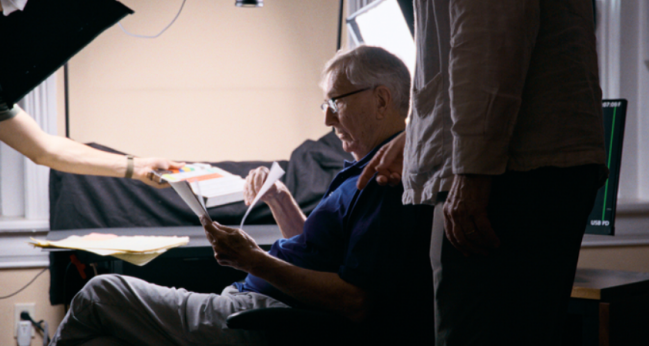
Moreover, Hersh is also rather guarded about his personal life. He is quite willing to tell about his rather unhappy childhood and adolescent period as well as how he got a very fortunate opportunity to become a newspaper reporter in his hometown Chicago, but that is all he can openly talk about in front of the camera. At one point, he talks a bit about how supportive his wife has been to her for many years, but that is all we can learn about his family life here in this documentary.
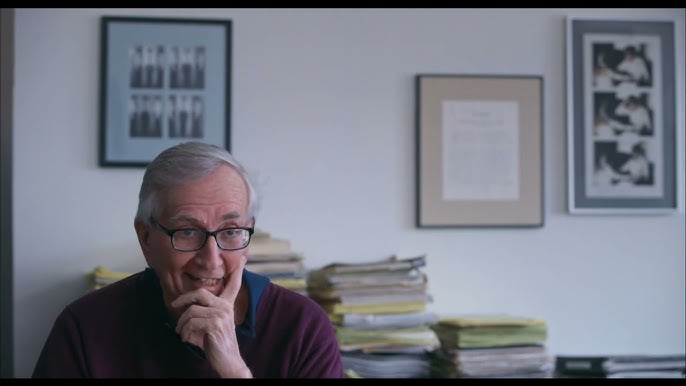
Nevertheless, we come to admire Hersh more as observing more of his professional diligence. During the 2000s, he drew public attention again for his sobering article on what was committed in the name of War on Terror in Iraq, and that certainly made him less welcomed by the US government than before. At this point, he works on the investigative reporting on the ongoing human tragedy in Palestine, and, not so surprisingly, he tries to cover his sources as much as possible even when he generously lets us get some glimpse on his ongoing journalistic project. Although he is approaching to 90 at present, he remains as active as before, and you will be touched by how much he is still driven by his strong professionalism as before.
In conclusion, “Cove-up” is a compelling documentary which presents well its human subject with enough care and interest, and Poitras, who has steadily impressed us with several excellent documentaries including “Citizenfour” (2015) and “All the Beauty and the Bloodshed” (2022), and Obenhaus surely deserve all the praises they have received during this award seasons. Although the documentary does not point out how much American journalism has hit the bottom more than once during last several years, its engaging presentation of Hersh’s intrepid professionalism during last several decades is more than enough to make many of us reflect more on that serious issue in the American society, and you will surely come to think more about that undeniable value of good journalism in democracy.


 Seongyong's Private Place