
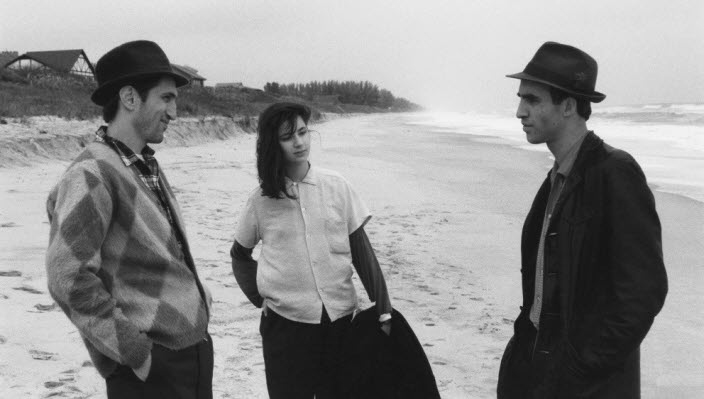
Jim Jarmusch’s 1984 film “Stranger Than Paradise”, which happens to be shown in selected South Korean theaters along with several other works of his as his latest film “Father Mother Sister Brother” (2025) arrives here, is quite dry to say the least. On the surface, nothing much seems to be happening among its main characters, and the movie simply seems to be leisurely rolling along with its deliberately shabby minimalistic mood, but it is also somehow funny and poignant thanks to its offbeat low-key humor and sensitivity.
The story consists of three acts, and the first act establishes its three main characters one by one. Bella “Willie” Molnar (John Lurie) is a small-time Hungarian gambler who has lived in a Brooklyn neighborhood of New York City, and the first scene shows him being rather annoyed by a sudden news. His cousin Eva (Eszter Balint) will soon come from Hungary for visiting their old aunt living in Cleveland, Ohio, but their aunt has to be in a hospital due to some illness during next several days, so he has to let Eva stay in his little shabby apartment before she will eventually go to Cleveland later.
The main source of humor during the first act comes from the strained relationship development between Willie and Eva. Right from her first day in his apartment, Willie is not very friendly to Eva, and we observe some friction between them during their first several days. Nevertheless, he gradually becomes a bit protective as he comes to spend more time with her, and he also introduces her to his close friend Eddie (Richard Edson), who wholeheartedly welcomes her from the beginning.
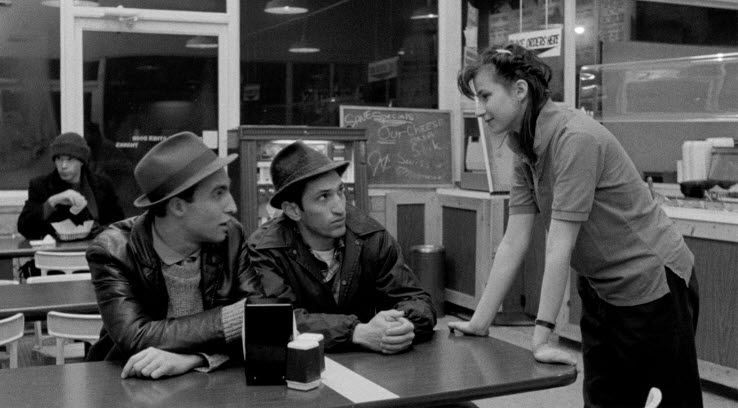
Doling out one dryly humorous moment after another along its slow narrative flow, the movie gradually engages us via its own style and sensibility. While it was shot in grainy black and white film, the resulting shabby visual qualities fit well with the deadpan attitude of the movie. Although its three main characters are more or less than broad archetypes, they have each own personality to distinguish in one way or another, and we are all the amused as observing some low-key comic moments generated among them (My favorite moment is the one involved with a vacuum cleaner, by the way).
Around its middle point, the story moves to Cleveland. Not long after Eva goes to Cleveland to see and then stay with their aunt, Willie decides to go to Cleveland along with Eddie just because they happen to get enough money for going there. Although they are initially welcomed by Eva and Aunt Lotte (Cecillia Stark), it becomes apparent that Aunt Lotte does not like Willie much, and we get tickled a bit whenever she grumbles in Hungarian. I do not know how authentic her Hungarian speaking actually is compared to the AI-corrected Hungarian speaking in Brady Corbet’s “The Brutalist” (2024), but I can tell you instead at least that that Stark’s colorful supporting performance effortlessly steals the show from the beginning to the end.
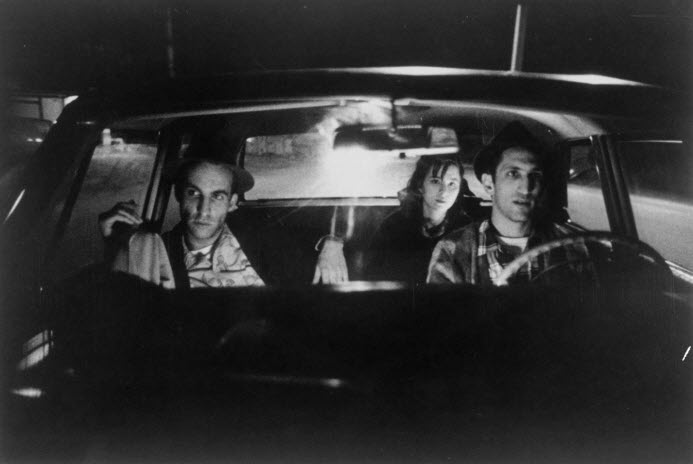
Anyway, it turns out that Eva has been pretty bored and frustrated with living in Cleveland, and that eventually prompts Willie and Eddie to take her to Florida later in the story. Not so surprisingly, there comes a big trouble not long before they arrive in Miami, and the movie accordingly becomes a bit more tense and serious than before.
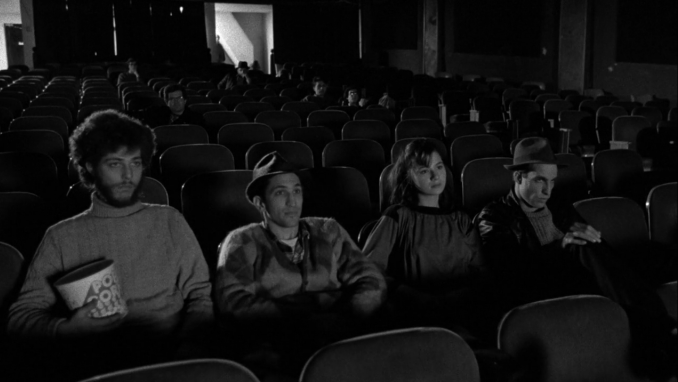
Nevertheless, the movie does not lose any of its humor and sensitivity even at that point. There is a melancholic but lovely moment when Eva and Willie simply spend some time along with Eddie at a nearby beach, and we come to sense more of the relationship development between them even though they do not signify much on the surface. Around the end of the story, we are caught off guard by a little unexpected plot turn, and this rather jarring plot turn eventually leads the story and characters to the haunting finale to remember.
Although the movie is Jarmusch’s second feature film after “Permanent Vacation” (1980), it clearly shows that Jarmusch already established and then developed his own idiosyncratic style and mood even at that point. Every scene in the film was shot in single long takes with no standard coverage, and their beginnings and ends are always punctuated by blackouts or chapter titles. This storytelling approach may look quite simple and plain to you at first, but Jarmusch’s confident direction is evident from how he subtly builds up mood and humor on the screen, and he also draws good comic performances from his main cast members, who are often as amusingly deadpan as the performers of Wes Anderson movies. John Lurie, who also wrote the screenplay a bit with Jarmusch besides composing the score for the movie, and Eszter Balint complement well each other throughout the film, and they and Richard Edson ably generate genuine comic chemistry among them whenever they are together on the screen.
Overall, “Stranger Than Fiction” remains one of the highpoints in Jarmusch’s long and illustrious filmmaking career, and I must tell you that I enjoyed it more than when I watched it for the first time around 20 years ago. At that time, many works of his works were a sort of acquired taste to me, but then he interested and then impressed me more with his several subsequent acclaimed works such as “Broken Flowers” (2005) and “Patterson” (2016), and his latest film “Father Mother Sister Brother” demonstrates again that he is still one of the most interesting filmmakers in our time. Sure, you may be initially baffled by “Stranger Than Paradise” and many of his dryly idiosyncratic works out there, but they will probably grow on you more, and you may come to want to savor their distinctive nuances and details more.


 Seongyong's Private Place