
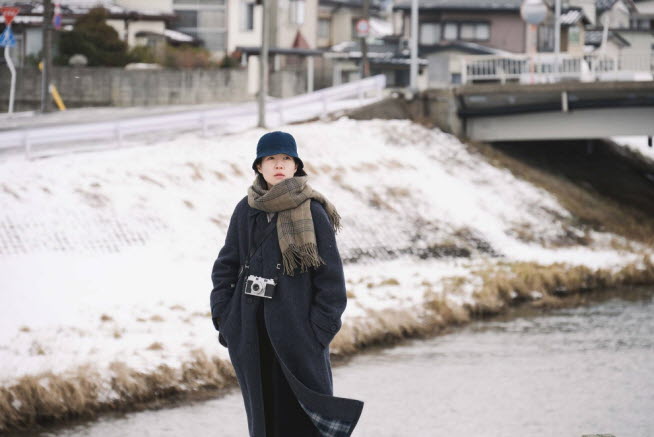
Japanese filmmaker Shô Miyake’s latest film “Two Seasons, Two Strangers” is another modest but engaging work from its talented filmmaker. Consisting of the two different parts, the movie calmly and sensitively follows the journey of its wandering heroine, and its simple but haunting presentation moments will linger on your mind for a while after it is over.
The heroine of the movie is Lee (Shim Eun-kyung), a female South Korean filmmaker living and working in Japan. During the brief opening scene, the movie observes her trying to begin the first scene of a short film to be written by her, and the first half of the film alternates between her writing process and the short film eventually made by her director.
The short film in the movie is set in some remote island, and it is mainly about the accidental relationship between two different young people. Nagisa (Yuumi Kawai) simply comes to the island for summer vacation just like a few other visitors in the island, but she cannot help but feel bored as she merely wanders around here and there in the island. At one point, she drops by a little museum presenting the old history of the island, but she does not seem to be particularly interested in anything inside the museum.
Anyway, as wandering more around the island, Nagisa eventually comes across a lad named Natsuo (Mansaku Takada), who comes to the island because it is his mother’s hometown and looks as bored as Nagisa. Although their first encounter is rather awkward, these two young people eventually come to spend more time with each other, and this makes them a bit less bored than before, even when they and the other visitors are subsequently stuck in the island due to the approaching typhoon.
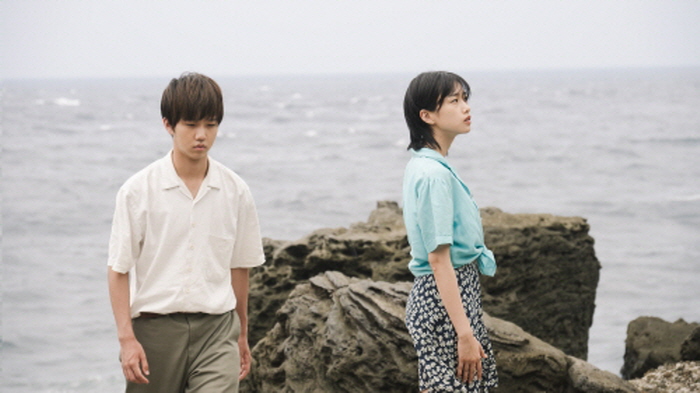
In the end, the short film in the movie arrives at the dramatic finale at a beach during one rainy day. Natsuo impulsively decides to swim a bit in the sea, and the mood surely becomes intense as the weather becomes gradually stormier. Nevertheless, Natsuo becomes a little more energized than before, while Nagisa watches him from the distance.
And then the movie steps back from the short film in the story. After the little screening of the short film is over, the perfunctory Q&A session follows, and Lee struggles to answer the questions thrown at her and her director. It seems that nobody particularly understands or appreciates much of what she tried to do for the short film, and you may get amused a bit by the superficial commentary from a middle-aged professor.
And then something quite unexpected happens, and the movie soon moves onto its second half, which is beautifully started with the lovely shot of a train moving across the snowy landscapes of some rural area in Japan during one cold winter season. Lee happens to be on the train, and we come to gather that she is searching for any inspiration for her next screenplay to write.
However, things do not go that well for her right from when Lee arrives at some rural town. Unfortunately, all of the hotels and inns in the town do not have any spare room for her, so she has no choice but to go to some remote inn outside the town alone by herself. She eventually locates that inn in question, and its owner, who is a rather gruff bachelor guy named Ben-zō (Shinichi Tsutsumi), is not so delighted by her appearance, though he soon lets her in his empty inn.
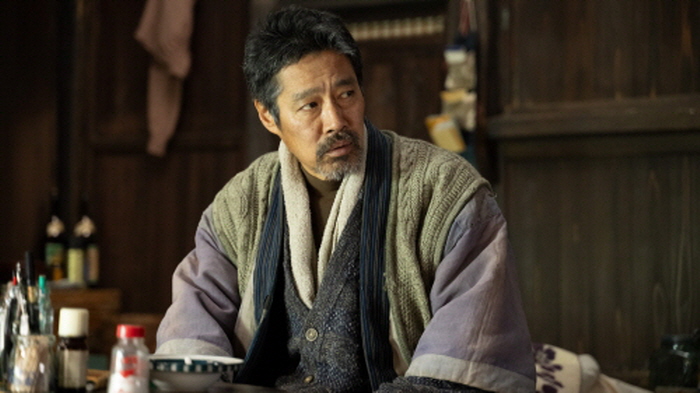
Feeling as isolated as she did in the first scene of the film, Lee keeps trying to begin her new screenplay, but her mind becomes more focused on what she observes inside and around her current staying place. While the sense of isolation is more accentuated by the coldly serene atmosphere surrounding the inn, she also gets to know a bit more Ben-zō, who incidentally had a wife and a daughter but then got separated from them after his divorce.
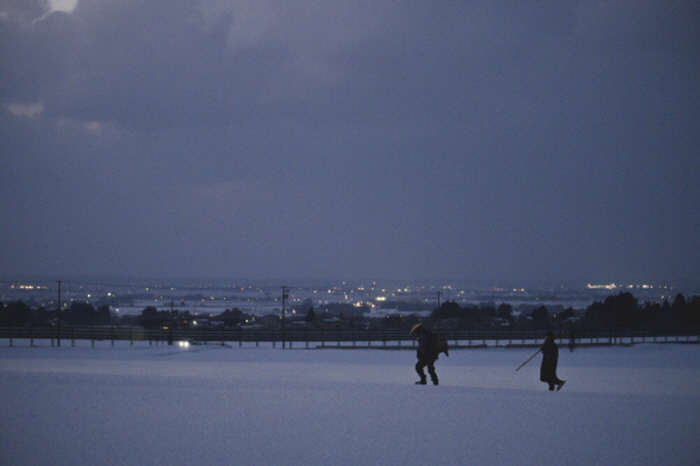
And then Miyake’s screenplay, whose two parts are respectively based on Yoshiharu Tsuge manga short stories “A View of the Seaside” and “Mr. Ben and his Igloo”, adds a bit of humor and suspense. Lee and Ben-zō later decide to try a bit of winter adventure during one very cold evening, and that turns out to be a little riskier than she expected. As they come to commit a little thievery of theirs, the movie throws some small humorous touches such as the quiet stance of a cat which happens to witness them, and you will get some chuckle when Lee and Ben-zō face the consequence of their minor transgression.
Like Miyake’s previous films such as “Small, Slow but Steady” (2022) and “All The Long Nights” (2024), the movie is mainly driven by mood and nuance as rolling its simple and modest story, and cinematographer Yuta Tsukinaga did a splendid job of filling the screen with the two contrasting seasonal atmospheres for the two different parts of the movie, respectively. In case of its small main cast members, Shim Eun-kyung, who has appeared in a number of notable Japanese and South Korean films such as “The Journalist” (2019) and “Sunny” (2021), carries the film well with her diligent low-key acting, and she is also supported well by several other cast members including Yuumi Kawai, Mansaku Takada, Shirō Sano, and Shinichi Tsutsumi.
On the whole, “Two Seasons, Two Strangers”, which received the Golden Leopard award when it was show at the Locarno Film Festival several months ago, is recommendable for its skillful handling of mood, story, and character. I must confess that Miyake’s works are still sort of an acquired taste for me, but it is also undeniable that he is an interesting filmmaker to watch, and I will keep following his advancing filmmaking career as before.


 Seongyong's Private Place