
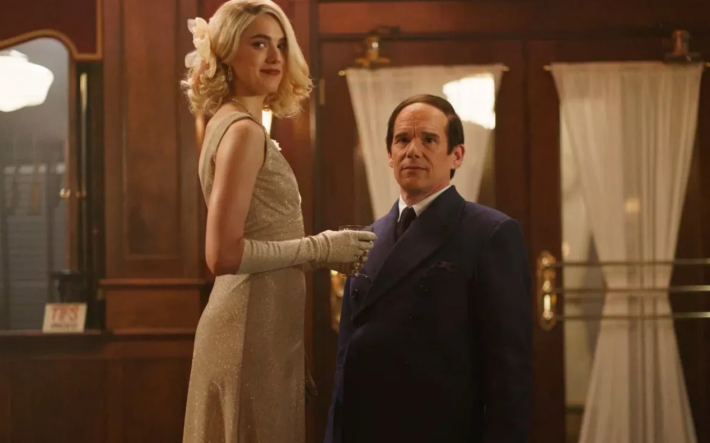
“Blue Moon”, which is incidentally one of the Richard Linklater’s two movies released during this year, is a biographical drama film packed with a lot of insight and personality. Mainly focusing on one particularly complicated night of a famous American lyricist in the 1940s, the movie vividly illuminates the considerable passion and spirit inside this interesting figure, and the result is quite enjoyable to say the least.
The figure in question is Lorenz Hart, who collaborated with Richard Rodgers for more than 25 years before Rodgers moved onto Oscar Hammerstein II. Because of the enormous success of Rodgers and Hammerstein, Hart and Rodgers’ partnership may look relatively less important in comparison, but they did create a number of memorable songs to remember, and some of them including, yes, “Blue Moon” have survived the passage of time to be recognized and then embraced by many of us even at this point.
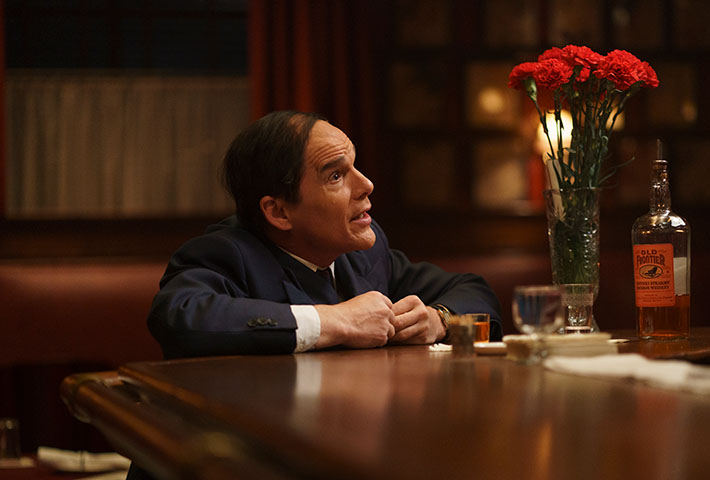
After the prologue scene showing its hero’s tragic death in November 1943, the story starts with the opening night of Rodgers and Hammerstein’s successful Broadway musical “Oklahoma!” on March 31st of the same year. While many of the audiences are quite entertained to say the least, Hart, played by Ethan Hawke, is not so amused in contrast. Although he came to the show with his mother, he leaves the theater even before the end of the performance, and then he goes to a nearby restaurant for drinking at its bar before Rodgers and Hammerstein and many others will come for the opening night celebration.
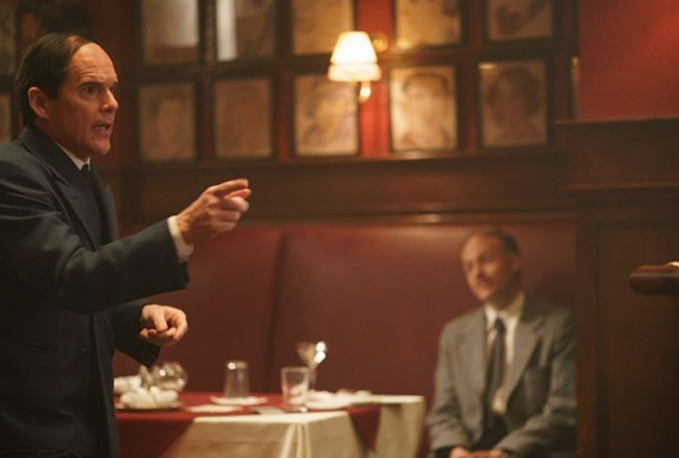
As he talks with the bartender and a few others who happen to be there, it becomes apparent to us that Hart is really sour about the big success to be enjoyed by Rodgers and his new partner. He brutally criticizes a lot on how corny and sentimental “Oklahoma!” is many aspects, but he also bitterly recognizes that it will be wholeheartedly welcomed by audiences and critics exactly for that. As some of you know, this classic musical actually won the Pulitzer Prize at that time, and it surely would have won a bunch of Tony Awards if it had been made around, say, 10 years later.
Anyway, Hart is looking forward to meeting a young female art college student Elizabeth Weiland (Margaret Qualley). While encouraging her artistic aspiration for a while, Hart has been quite infatuated with her youthful energy, and he is even willing to ignore his homosexuality just for getting closer to that. Nevertheless, he cannot help but become a sort of drama queen in front of the bartender and a few others around him, and they gladly go along with him because, well, he is quite a fun raconteur to observe despite getting more and more drunk.
Needless to say, the screenplay by Robert Kaplow, who previously worked with Linklater in “Me and Orson Welles” (2010), needs a very talented actor who can ably handle those numerous wordy moments with a lot of wit and personality, and Hawke, who previously collaborated with Linklater in the Before Trilogy and “Boyhood” (2014), is simply superb as vividly embodying his colorful character from the beginning to the end. Although he is actually much taller than real Hart, Hawke looks convincingly short in addition to wearing a lot of makeup as required, and he also delves deep into his hero’s aching misery and loneliness. While he is not a very social person, Hart always needs someone to work or talk with, and you can clearly sense how much he feels hurt by his former partner’s decision to end their partnership.
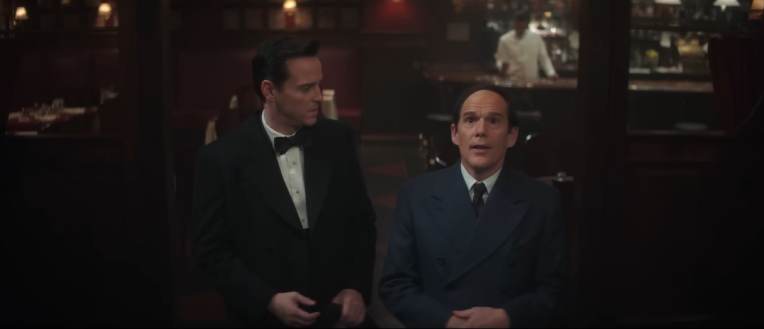
When Rodgers and Hammerstein later arrive, they show some respect to Hart in each own way, though Rodgers, played by Andrew Scott, still wants to put some distance between him and Hart. He is willing to work with Hart on the revival of one of their old works, but he also points out how much he tolerated Hart’s many human flaws including his worsening alcoholism, and you can clearly sense that he has already decided that enough is enough even while appreciating Hart’s contribution to their success a lot. Scott, who deservedly won the Silver Bear for Best Supporting Performance when the movie was shown at the Berlin International Film Festival early in this year, did a good job of subtly conveying to us Rodgers’ complex feelings on Hart, and Simon Delaney has a little fun moment as Hammerstein when his character gladly introduces to Hart his little young protégé (This kid’s surname is never mentioned in the film, but some of you surely know that he is none other than Stephen Sondheim). .
Like Scott and Delaney, several other main cast members function as the effective counterpoints to Hawke’s charismatic acting. As the bartender always ready to serve another drink to Hart, Bobby Cannavale often throws some humorous zaps as required, and Jonah Lee and Patrick Kennedy are also effective as the two other main figures hanging around Hart in the movie (You may appreciate a brief but amusing scene where Hart gives a nice story idea to Kennedy’s character, who is incidentally a real-life writer famous for several classic books for children). In case of Margaret Qualley, who has been more prominent as appearing in a series of acclaimed movies including Coralie Fargeat’s recent Oscar-winning film “The Substance” (2024), she exudes a lot of charm and spirit right from her very first scene in the film, and she and Hawke are quite effortless during a little private moment between their characters later in the story.
In conclusion, “Blue Moon” is another compelling work from Linklater, who has seldom disappointed me and others during last 30 years. Although it is mostly confined inside its limited main background, the movie never feels stuffy or stagy thanks to Linklater’s skillful direction, and it will actually make you check more on its main subject. That is what a good biography drama can do, isn’t it?


 Seongyong's Private Place
Pingback: 10 movies of 2025 – and more: Part 2 | Seongyong's Private Place
Pingback: My Prediction on the 98th Academy Awards | Seongyong's Private Place