
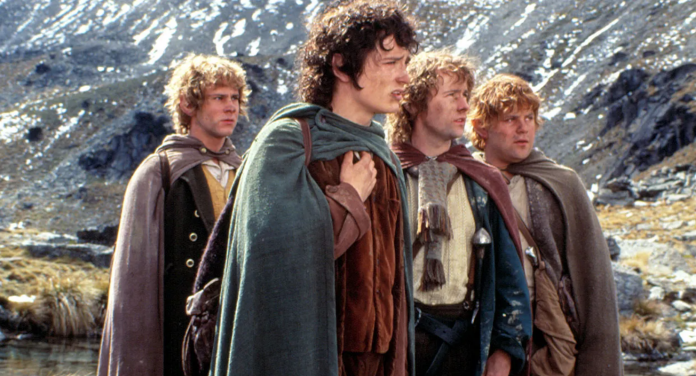
Revisiting Peter Jackson’s 2001 film “The Lord of the Rings: The Fellowship of the Rings”, which was recently re-released in selected South Korean theaters, felt like a task to me at first. After all, more than 20 years have passed since it came out, there have been a lot of fantasy films after the enormous success of its trilogy besides the considerable advance of special effects. In fact, I was a bit afraid that the movie would look rather dated to me now.
I am happy to report to you that the movie remains quite engaging and exciting as before. Although it inherently feels incomplete as the opening chapter of its trilogy, the movie immerses us into its memorable fantasy world full of mood and details to be appreciated in addition to providing a lot of spectacular action to behold. Above all, it also makes us care about several main characters at the center of the story.
One of them is Frodo Baggins (Elijah Wood), a young hobbit living in a small country area called Shire. As many of you know, hobbits, which are often called “halflings” for their small appearance, are one of the tribes in the Middle Earth, and the early part of the movie pays some attention to their folksy country life in Shire as everyone has been quite excited about the 111th birthday part of Frodo’s uncle Bilbo (Ian Holm).
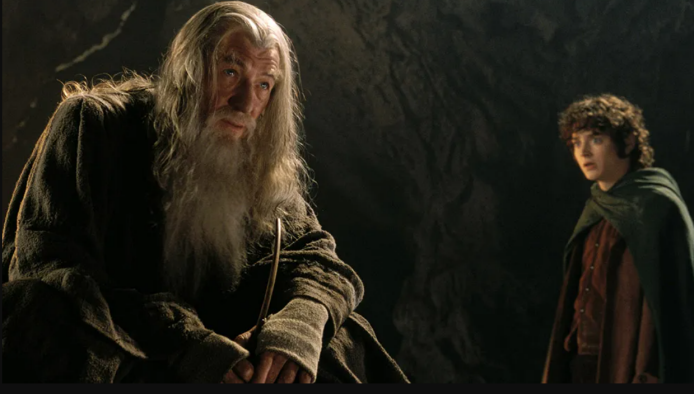
It turns out that Bilbo has a secret plan behind his back. He is going to leave behind almost everything around the end of his birthday party, and his old wizard friend Gandalf the Grey (Ian McKellen) makes sure that Bilbo really leaves one particular thing to Frodo. On the surface, it looks like a simple magic ring which can make its wearer invisible, but, as Gandalf eventually confirms to Frodo later, the ring turns out to be a very powerful object once belonging to a certain evil figure in Mordor. Although he was supposed to be vanquished many years ago, this evil figure has been on the rise again, and he is certainly looking for that ring for regaining his absolute power over the Middle Earth.
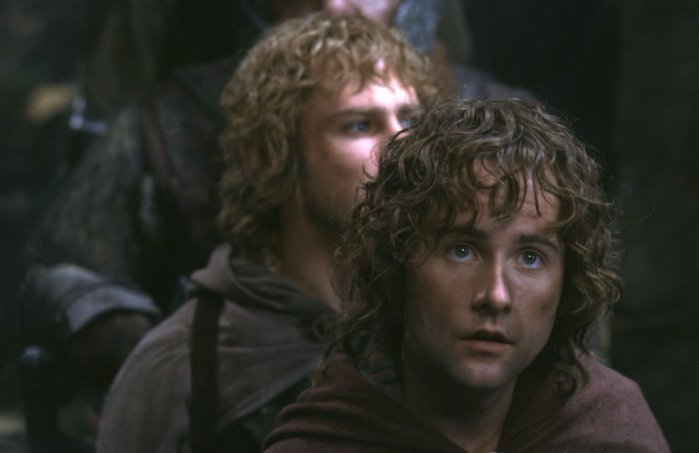
After coming to learn more about the ring from Gandalf, Frodo accepts a potentially dangerous task. While Gandalf is absent for a while, he must take the ring to a region belonging one of the leaders of the elves in the Middle Earth, and he is subsequently joined by three young fellow hobbits: Samwise Gamgee (Sean Astin, Peregrin Took (Billy Boyd), and Meriadoc Brandybuck (Dominic Monaghan).
While these four hobbits go through a series of dangerous moments along the story, the movie delves more into the Middle Earth, and cinematographer Andrew Lesnie, who won an Oscar for this movie (The movie also won the awards for Best Score, Best Special Effects, and Best Makeup in addition to being nominated for several other categories including Best Director and Best Picture, by the way), did a splendid job of filling the screen with more awe and wonder. Besides effectively utilizing the vast landscapes of the various wild locations in New Zealand, Jackson and his crew vividly present the fantasy world based on the rich imagination of J.R.R. Tolkien, and the result still looks awesome at times on big screen. While the sequence unfolded in a town belonging to the men in the Middle Earth is drenched in a sense of danger and anxiety along with some muddy qualities, the scenes involved with the world of the elves look as gracefully ethereal as required, and the part unfolded inside one huge cavernous space will often overwhelm you with its darkly epic scope.
After more than 20 years, some of the special effects in the film surely look a bit dated at present, but its technical aspects remain admirable as they were at that time. Jackson and his crew skillfully mix digital and practical special effects throughout the movie, and their main performers look and feel fairly convincing even though they are surrounded by a lot of digital special effects on the screen – particularly when Frodo and his several companions confront a mighty demonic entity living inside that huge cavernous space.
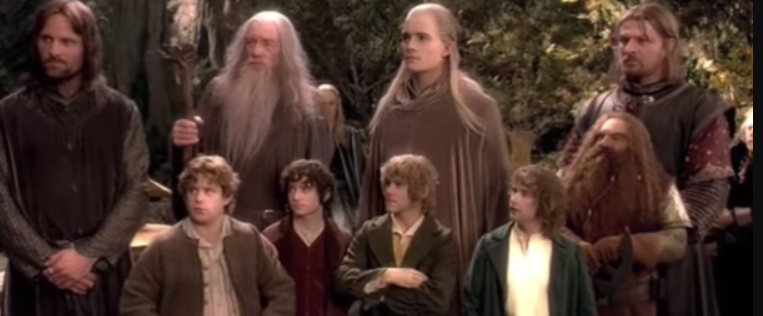
In the meantime, the screenplay by Jackson and his co-writers Fran Walsh Philippa Boyens, which flexibly adapted Tolkien’s novel, stays focused on the drama of its main characters. Although most of them are more or less than archetypes, they are imbued with each own personality at least, and the main cast members of the movie ably embody their respective roles. While Elijah Wood, Sean Astin, Billy Boyd, and Dominic Monaghan are solid as the four different hobbits at the center of the story, Ian McKellen has a lot of fun with his wizard character, and he deservedly received an Oscar nomination for that. In case of several other main cast members, Viggo Mortensen, John Rhys-Davies, Orlando Bloom, Hugo Weaving, Liv Tyler, Ian Holm, Sean Bean, and Christopher Lee fill their respective spots with each own presence, and Cate Blanchett is particularly good during her brief but mesmerizing appearance later in the story.
In conclusion, “The Lord of the Rings: The Fellowship of the Rings” holds fairly well its own place well in the movie history even at this point. Along with “Harry Potter and the Philosopher’s Stone” (2001), it opened the door for more fantasy movies to come during next 24 years, and its milestone status remains same as before without being surpassed at all. Although it looks relatively less awesome to me and others now due to the passage of time, I admire it a lot despite that, and I am willing to follow its epic journey again.


 Seongyong's Private Place