
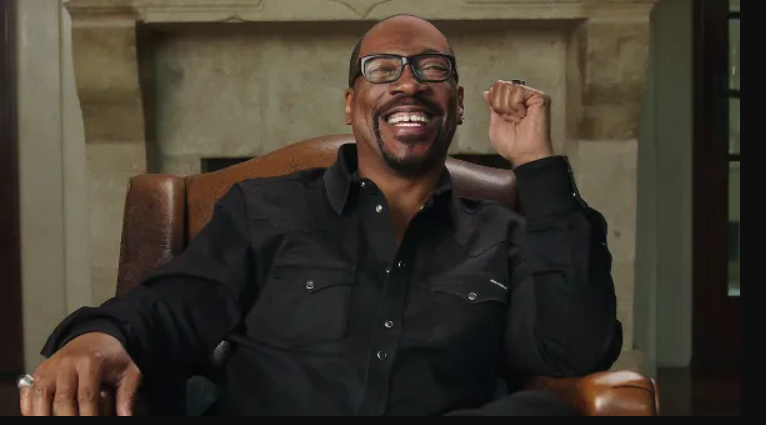
Netflix documentary film “Being Eddie”, which was released on last Wednesday, will not impress you that much, especially if you are familiar with all those safe celebrity documentaries during last several years. Although its titular figure seems quite ready to present a lot of himself in front of the camera, the documentary only mildly mentions and then praises his career achievements from the beginning to the end, and it eventually becomes another passable documentary product from Netflix.
The main human subject of the documentary is none other than Eddie Murphy, a legendary black American comedian who swiftly rose to his immense fame in the early 1980s. Despite being over 60 at present, he still looks like a mischievous but spirited kid to observe, and you can clearly see that he has not lost any of his star quality yet even though he is going through the later chapters of his life and career at present.
At first, he frankly talks about how he grew up and then came to have big ambition for his life and career. Even before he became 18, he was quite determined to become very famous and popular someday, and he was fortunate enough to get an unlikely opportunity for that. Not long after he started his stand-up comedian career in New York City in the early 1980s, he got selected as a new cast member of “Saturday Night Live”, and, what do you know, everyone came to pay more attention to him after his first season.
When he subsequently appeared along with Nick Nolte in “48 Hrs.” (1982), he wonderfully nailed down every juicy comic moment allowed to him. As many of you remember well, Murphy was quite funny and charismatic in one particular scene set in a bar full of white people, and that was pretty much like the big announcement of a new big talent to watch.
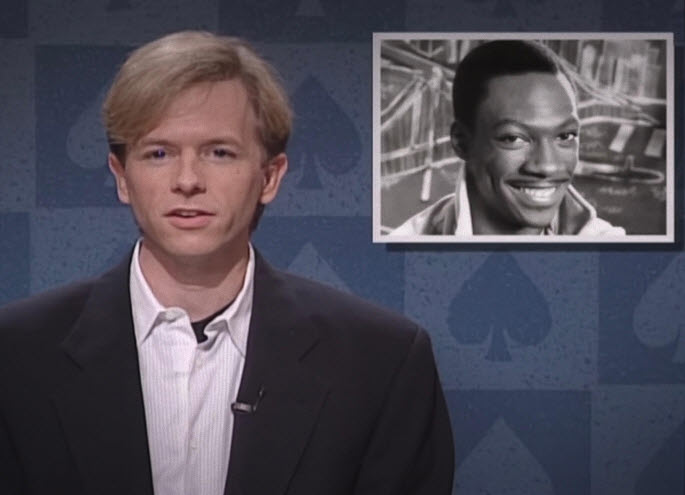
After the commercial success of “48 Hrs.”, Murphy appeared in a number of equally successful films to boost his movie acting career further. Although “Trading Places” (1983) was intended for Gene Wilder and Richard Pryor at first, Murphy eventually took the role due to a little unfortunate drug accident upon Pryor, and his another good comic performance solidified his movie star status in Hollywood. In the very next year, he appeared in “Beverly Hills Cop” (1984), and its considerable box office success confirmed again that he was indeed the next black American star on the rise.
As he frankly admitted in front of the camera, Murphy was certainly excited and dazzled by his enormous career success, but the documentary does not go that deep into whatever he went through during that peak period of his career and life. According to him, he has seldom tried on drug or alcohol unlike many of his contemporary comedians, and he reminiscences a bit about when he refused to try a bit of cocaine along with two certain famous comedians.
In the meantime, Murphy tried to keep focusing on his stand-up comedy as before. However, despite the expected huge success from his stand-up comedy performances, he soon found himself less inclined toward stand-up comedy around the late 1980s just because he ran out of materials to write and then perform, and he does not feel any regret about that.
In my humble opinion, he feels some real regret on a series of disastrous films such as “Harlem Nights” (1989), which was incidentally also directed by him. He talks a bit about how it was fun to work along with Pryor and several other legendary black American comedians, but he and the documentary do not go into details here on how spectacularly that movie failed (The movie garnered his first Raspberry Award, by the way). As a matter of fact, he seems more ashamed of “Vampire in Brooklyn” (1995), where he played its vampire hero who is going to bite the neck of his co-star Angela Bassett.
After that low point, Murphy bounced back via several successful family comedy films such “The Nutty Professor” (1996) and “Dr. Dolittle” (1997), and he also gave wonderful voice performances in acclaimed animations films such as “Mulan” (1998) and “Shreck” (2001). When he eventually demonstrated more of his acting skill in “Dreamgirls” (2006), there was a lot of talk about his possibility of winning a Best Supporting Actor Oscar, but then his very next film “Norbit” (2007), which was incidentally regarded as one of the worst comedy movies ever in his career. That infamous turkey ruined his Oscar campaign to some degree, and he certainly looked quite disappointed when his name was not called out at the Academy Awards ceremony.
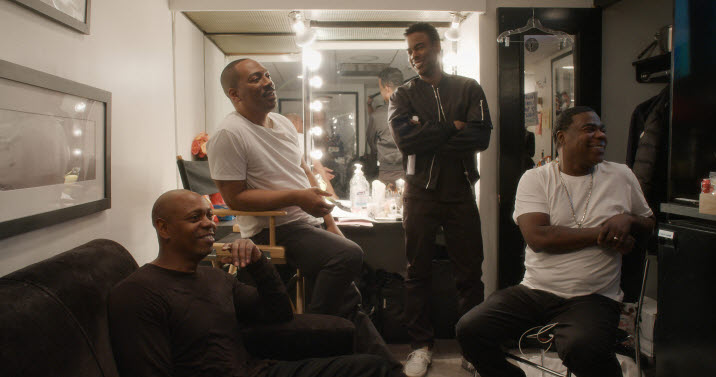
Nevertheless, Murphy kept going as usual while having some ups and downs in his career as usual. Around the end of the 2010s, he surprised us with another splendid performance “Dolemite Is My Name” (2019), and then he made a successful guest appearance in “Saturday Night Live”, which earned him an Emmy award later. Later in the documentary, we see the archival footage clips showing Murphy enthusiastically preparing along with the cast and crew members of “Saturday Night Live”, and he is certainly happy to be joined by several notable junior black American comedians who have certainly revered him for years.
On the whole, “Being Eddie”, directed by Angus Hall, gives us a fairly jolly time along with Murphy, but, despite having many notable interviewees besides Murphy, it still feels merely mild and superficial without presenting anything particularly new about him. He is surely one of the most important and interesting American comedians at present, but he simply entertains us a bit without revealing any truly reveling stuff to interest us, and, folks, that is all as far as I can see.


 Seongyong's Private Place