

Documentary film “Come See Me in the Good Light”, which was released on Apple TV+ a few days ago, is about one loving couple coping with the impending end of their long relationship due to a terminal illness. As following how they actively try to live together as long as possible during several years, the documentary often touches us with a number of sincere and intimate moments observed from this interesting couple, and it surely earns some tears in the end as handling their powerful love story with a lot of care and respect.
The couple in question are poet/activist Andrea Gibson and their spouse Megan Falley, and the documentary opens with this couple working a bit on Gibson’s latest poem. As a fellow poet of theirs who is also her spouse’s editor, Falley often functions as the whetstone for Gibson’s creative process, and we are amused a bit as watching how they pull and push each other over some little details on Gibson’s latest work. As Gibson admits later, Falley is usually right in her objective assessment on her spouse’s works, and Gibson respects that even though they cannot help but feel hurt in their ego at times.
Anyway, the documentary soon goes straight into that big problem in Gibson and Falley’s daily life. In 2021, Gibson was diagnosed with malignant ovarian cancer, and they subsequently went through one surgery and two periods of chemotherapy during next several years. Alas, their cancer returned not long after that, and it is already metastasized around many parts of their body. In other words, they came to have only a few years to live even under the best condition, and that was certainly a devastating news for not only them and Falley but also many of their close friends and colleagues.
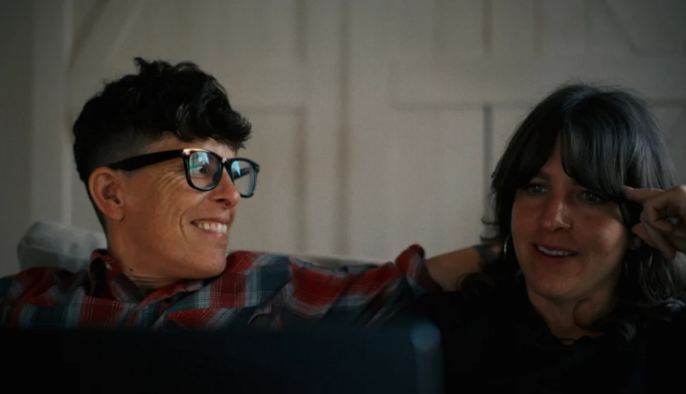
Nevertheless, Gibson and their spouse decided to try more for extending Gibson’s remaining life as long as possible. Besides paying more attention to the physical condition of their body, Gibson also tried one new therapy after another, and Falley, who was almost close to leaving Gibson for some other personal issue between them before Gibson’s terminal illness, was ready to stand by her spouse to the end. Knowing well that they did not have much time between them, Gibson and Falley came to spend more time together in their little residence in Colorado, and there is a genuinely joyful scene where they come to have a little fun dinner talk with an invited friend of theirs.
Both Falley and Gibson are quite frank about themselves in front of the camera, and they certainly talk a lot about their respective pasts. Although they did not know much about sexual minority people during their childhood and adolescent period, Gibson became more aware that they were different from many other girls around them, and then they became interested in poetry. Although they did not know much about poetry at first, they were eventually drawn to slam poetry, and the following creative activities of theirs helped them a lot in becoming more certain and confident about their sexual identity.
As Gibson became quite prominent as an artist of slam poetry during next several years, they got romantically involved with one person after another, and then there came Falley. As they spent more time together as fellow poets, Gibson found themselves more attracted to Falley, and Falley was rather surprised mainly because she was not so confident about her body. Thanks to her following romance with Gibson, she came to have much more self-esteem than before, and she and Gibson eventually came to live together.
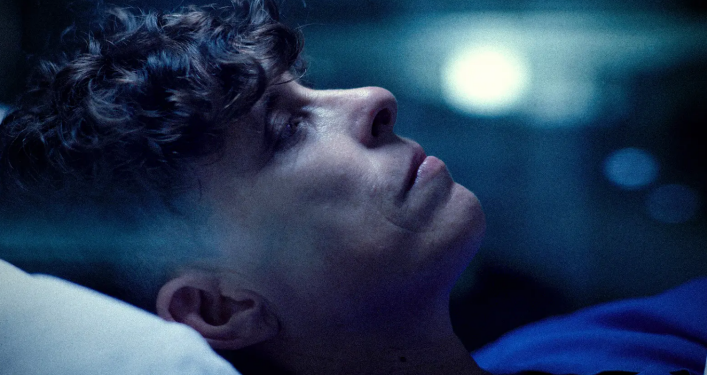
While often conscious of the camera observing them, Gibson and Falley do not hesitate to show more of their personal feelings and thoughts on how their relationship can be ended at any point. Whenever they are about to check the latest medical examination result on Gibson’s body, both Gibson and Falley cannot help but become quite nervous, but that makes them appreciate more of another day to live together for them. They are certainly willing to try anything for more time for them, but then they confront a serious dilemma because the latest therapy for Gibson may seriously affect their ability to speak, and both they and their spouse become conflicted about whether they can actually take this considerable risk or not.
As going up and down along with Falley and Gibson over its free-flowing narrative, the documentary effortlessly alternates between humor and sadness, and everything in the narrative eventually culminates to when Gibson tries what turns out to be the last slam poetry performance in their life (They sadly died several months after the documentary was premiered at the Sundance Film Festival early in this year, by the way). Although their body is becoming more fragile day by day, Gibson try their best nonetheless, and we see how much their presentation of their several works moves their audiences as well as Falley.
Overall, “Come See Me in the Good Light”, which deservedly received the Festival Favorite Award at the Sundance Film Festival, is one of the better documentaries of this year, and director/co-producer Ryan White, who previously made a number of acclaimed documentaries including “Ask Dr. Ruth” (2019) and “Good Night Oppy” (2022), did a commendable job of bringing a lot of intimacy and sensitivity to his documentary. In my inconsequential opinion, this is one of the best documentaries of this year, and I sincerely recommend you to check it out as soon as possible.


 Seongyong's Private Place
Pingback: 10 movies of 2025 – and more: Part 2 | Seongyong's Private Place
Pingback: My Prediction on the 98th Academy Awards | Seongyong's Private Place