

“Bird” is another raw coming-of-age drama from Andrea Arnold, who previously gave us “Fish Tank” (2008) and “American Honey” (2016). Closely following its young heroine’s small and big struggles, the movie presents a rough but vivid slice of life which engages and then touches us more than expected, and we do not mind at all even when it tries a bit of magic realism later.
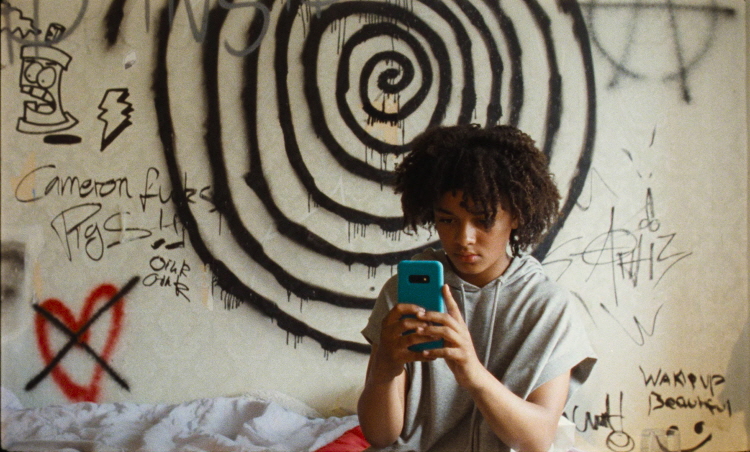
At the beginning, the movie quickly establishes the shabby daily life of Bailey (Nykiya Adams), a 12-year-old girl living with her young father Bug (Barry Keoghan) and her older half-brother Hunter (Jason Buda). While he is your average working-class bum, Bug has a little business plan which looks rather outrageous to say the least, and he is also planning to marry his current girlfriend Kayleigh (Frankie Box), who incidentally comes with her little daughter.
Not so surprisingly, Bailey does not like his father’s upcoming marriage at all, and she clashes a bit with Bug on a little matter involved with his wedding ceremony. Feeling quite suffocated and frustrated with her daily life, she becomes more interested in a little vigilante activity involved with her older half-brother, but Hunter does not let her participate in that activity because, after all, she is still too young for that.
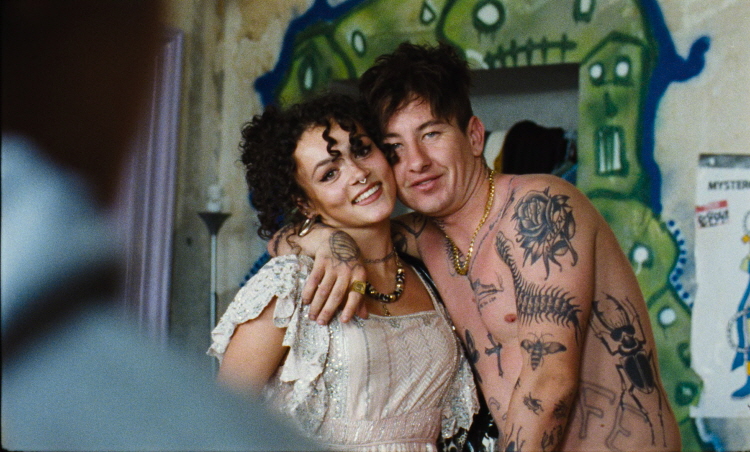
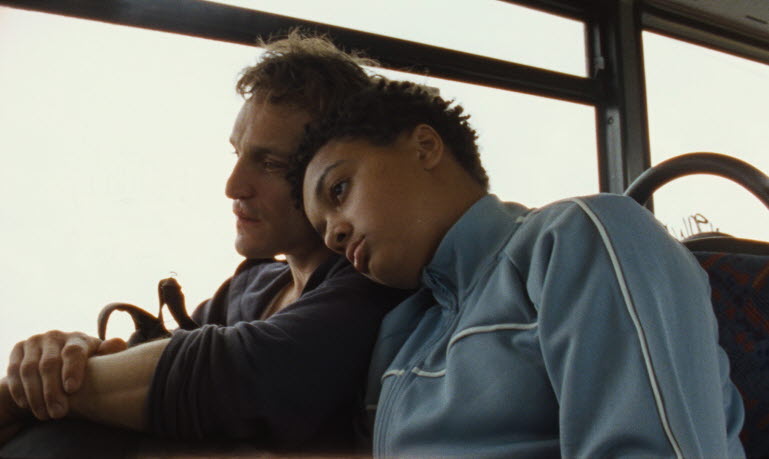
Feeling more alienated and lonelier than before, Baliely comes to spend the following night in a field outside her neighborhood, and that is how she comes to encounter an odd guy who simply introduces himself as “Bird” (Franz Rogowski). He has been looking for his parents he lost many years ago even though he does not remember much about them, and Bailey decides to help this weird guy even though he is a total stranger to her from the start.
As she gets more involved with Bird, Bailey notices more of how strange he is. While he does not talk much about his past except his lost parents, he also shows some weird behaviors which are not so far from what we usually observe from birds, and that makes Baliey all the more curious about him. As a fellow loner, she cannot help but become more sympathetic to him, and Bird seems to appreciate her help and support as revealing more of a wounded child behind his distant attitude.
These two different main characters’ growing relationship certainly feels unconventional. Despite their considerable age gap, they become more aware of something common between them, and Bailey becomes more determined to help her unexpected friend even though she is burdened with several other issues besides her father’s upcoming wedding. When she visits her mother for getting more information about Bird’s parents, she sees how her mother and her half-siblings have been quite miserable due to her mother’s current boyfriend. She seriously considers getting some help from her older half-brother and his fellow vigilantes, but Hunter happens to have a serious issue of his own to deal with right now.
Freely rolling its main characters from one narrative point to another, the movie immerses us more into the shabby working-class environment inhabited by its young heroine and many others around her, and Arnold and her crew members including cinematographer Robbie Ryan, who has steadily collaborated with her since her first feature film “Red Road” (2006), did a commendable job of bringing a lot of palpable sense of life to the film. Although it often feels quite shaky, Ryan’s handheld camera vividly and intimately captures the raw emotional intensity of several key dramatic scenes in the film, and that makes us all the more engaged in our young heroine’s drama.
By the way, you will probably be caught off guard by what happens during its last act due to a sudden dose of magic realism. It may feel a bit too jarring at first, but this unexpected moment somehow works thanks to what has been established so realistically up to that point, and it is also touching to observe how this part leads the story and its young heroine toward a bit of genuine hope and optimism during the following ending.
As usual, Andrea draws an impressive natural performance from her lead actress. Although she did not have any movie acting experience before this film, Nykiya Adams ably holds the center with her unforgettable performance while demonstrating considerable potential here as another new talented actress to watch, and she is also supported well by several good supporting performers. While Frankie Box, Jasmine Jobson, and Jason Buda are well-cast in their respective roles, Barry Keoghan and Franz Rogowski bring extra personality to the movie without overshadowing Adams at all, and both of them remind us again that they are two of the most reliable character actors in our time. Keoghan, to whom I have paid attention since I noticed his small but crucial supporting turn in Yann Demange’s “’71” (2014), effortlessly brings human qualities to his rather childish character, and Rogowski, who has seldom disappointed since his breakthrough turn in Michael Haneke’s “Happy End” (2017), is simply perfect for his role due to his own offbeat qualities.
On the whole, “Bird”, which belatedly came to South Korean theaters as “Bailey and Bird” on last Wednesday, is an excellent coming-of-age drama to be cherished for its vivid realism and several strong performances to watch. While being relatively less edgy than “Fish Tank” and “American Honey”, this is another terrific achievement from Arnold, and you will surely look forward to watching her next film after it is over.


 Seongyong's Private Place