
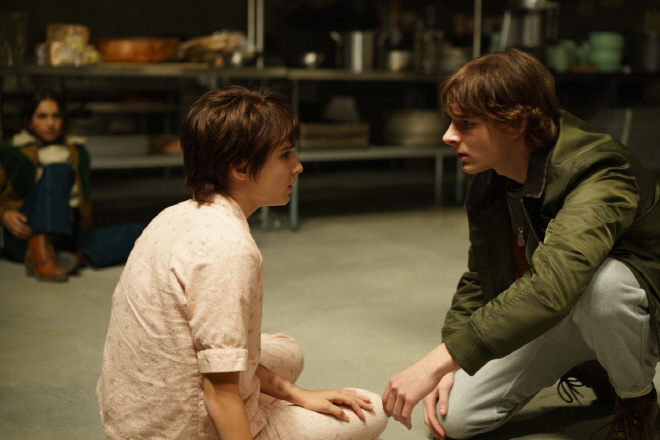
“Black Phone 2” is a sequel which is seemingly unnecessary at first but turns out to be more entertaining than expected. While it is closely connected with its predecessor in terms of story and characters, the movie wisely avoids being repetitive as trying to do something different for another good dose of thrill and dread for us, and you will gladly go along with that.
At first, the movie, which is set in 1982, focuses on how things are still not that good for Finney (Mason Thames) and his younger sister Gwen (Madeleine McGraw) several years after what happened in “The Black Phone” (2021). In that movie, Finney was kidnapped by a notorious local serial killer nicknamed “the Grabber” (Ethan Hawke), but he managed to not only survive and but also kill his captor thanks to some unexpected help from the ghosts of the previous victims and Gwen, who incidentally has some psychic ability. However, Finney has struggled with the remaining trauma from that horrible experience of his during last several years, and both Gwen and their recovering alcoholic father Terrence (Jeremy Davies) do not know what to do about that.
And then something odd happens to Gwen. She begins to have a series of disturbing dreams about several kids horribly murdered at some remote spot, which turns out to be an old Christian youth camp connected with her and Finney’s dead mother. After learning that their mother worked there 27 years ago, Gwen becomes all the more determined to find the reason behind those unnerving dreams of hers, but Finney is understandably not so eager to accompany her and her boyfriend Ernesto (Miguel Moa), who is incidentally the younger brother of one of the Grabber’s victims. However, he eventually decides to go to that Christian youth camp along with them, and we soon see these three kids arriving at that place on one particularly snowy day.
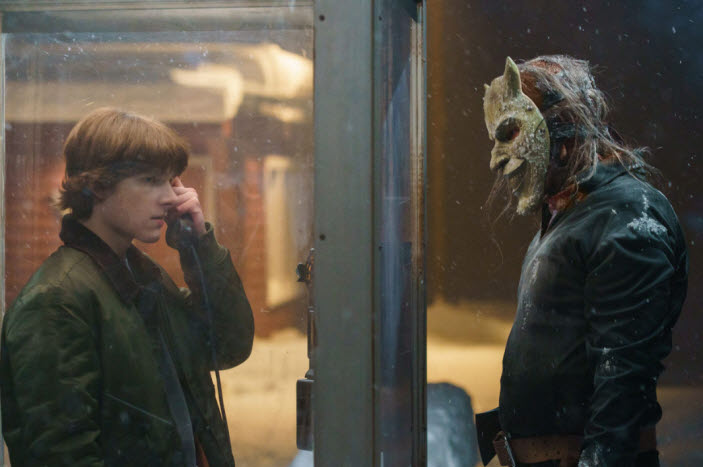
Right from their arrival at the camp, the mood is pretty moody to say the least. Due to the ongoing snowstorm, the camp is virtually empty except its owner Armando (Demián Bichir) and his very few main staff members including his plucky daughter. In addition, Gwen has to sleep alone in a separate cabin not so far from the one for Finney and Ernesto due the camp regulation, and she certainly becomes all the more nervous as she is about to sleep.
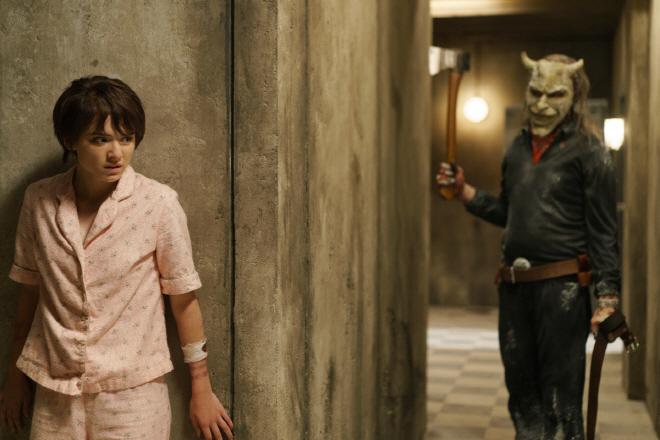
Of course, more strange things soon happen around Gwen and her brother, and they eventually come to learn something quite terrifying. Although he is dead now, the Grabber has been hovering over the camp and its surrounding region as a malevolent spirit, and he turns out to be capable of coming into their dreams just like Freddy Krueger in Wes Craven’s classic horror film “A Nightmare on Elm Street” (1984). As the Grabber menaces Gwen more and more in her dreams, she and Finney must find a way to defeat their powerful opponent, but then they and several others around them are cornered by the Grabber in one way or another along the story.
As its several main characters embark on their fight against the Grabber, the movie constantly fills the screen with a chilly sense of dread. Whenever Gwen gets asleep, the movie adds a nice visual touch for accentuating the rather hazy condition of her unconsciousness, and we seldom get confused even when it busily goes back and forth between reality and dream. While surely often reminiscent of Craven’s aforementioned movie and its several sequels, the movie distinguishes itself with a number of effective moments to unnerve or thrill us, and it does not disappoint us at all when everything in the story culminates to the climactic sequence unfolded across a big frozen lake.
Most of all, the movie did a good job of making us care about its main characters more. While it touchingly handles the ongoing drama surrounding Gwen and Finney’s strained relationship, there are also some extra warmth and personality via several other main characters around them, and I especially like a quietly moving moment when Armando gives Finney a sincere and thoughtful advice on his ongoing personal struggle.
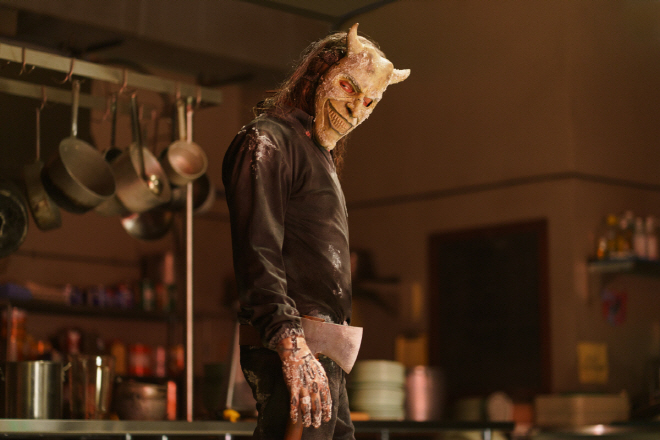
As the center of the story, Mason Thames and Madeleine McGraw diligently carry the film to the end. While Thames is convincing in his character’s gradual inner transformation along the story, McGraw brings genuine poignancy to several key scenes of hers in the film, and they are also supported well by a number of good performers placed around them. Miguel Mora, who previously played a supporting character in the previous film, has a couple of sweet scenes between him and McGraw, and Demián Bichir and Jeremy Davies are reliable as usual while imbuing their respective supporting roles with enough sense of life. In case of Ethan Hawke, he has another naughty fun with his uncompromisingly evil character, and it is clear that he relishes every minute of his despite being mostly masked throughout the movie just like he was in the previous film.
In conclusion, “Black Phone” has its own dark fun just like its predecessor, and director/co-writer/co-producer Scott Derrickson, who wrote the screenplay with co-producer C. Robert Cargill, adds another solid genre film to his filmmaking career, which was incidentally started with “Hellraiser: Inferno” (2000). Although it is not totally necessary, the movie accomplishes its goal fairly well on the whole, and I will not grumble for now.


 Seongyong's Private Place