
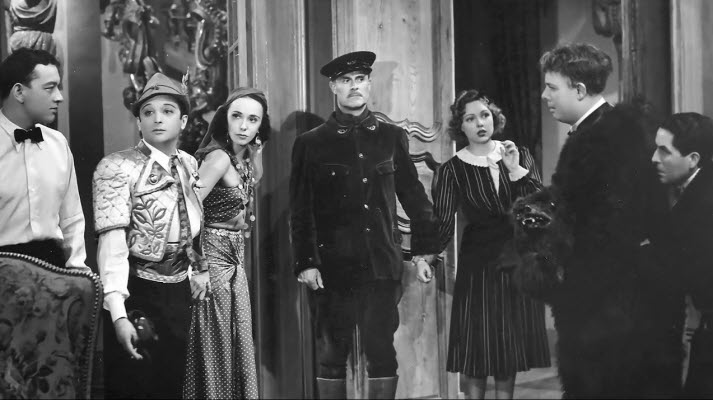
Jean Renoir’s 1939 film “The Rules of the Game” has been regarded as one of the greatest works in the movie history, and it deserves such admiration like that for good reasons. While it is still a very witty class comedy of manners which gives a sharp and biting commentary on the European society right before World War II, the movie is also often quite compelling for its vibrantly timeless cinematic qualities from its top-notch technical aspects, and it does not feel aged at all just like many of other great films out there.
The title of the movie refers to the social rules and codes supposedly maintaining the status quo for all of the main characters in the story, and most of the most amusing moments of the movie come from how many of them casually do not follow their social rules and codes that much while a few others actually do in contrast. In case of André Jurieux (Roland Toutain), a famous aviator who has just made another world record at the beginning of the story, he has been in love with Christine (Nora Gregor) even though she is married to a rich Jewish aristocrat, and he is not so pleased when Christine does not show up at all during what is supposed to be one of the grandest moments in his life. As a result, he impulsively expresses his bitter private feelings in front of a group of reporters, and this certainly embarrasses Christine.
In case of her husband Robert (Marcel Dalio), he is not concerned that much because 1) he is usually occupied with collecting sophisticated (and expensive) toy machines and 2) he has also been involved with some other woman behind his back. As his wife becomes rather distressed due to André, he briefly considers breaking up with his mistress, but, not so surprisingly, he quickly changes his mind when he visits her later. After all, everything is fine as long as both he and his wife do not tell or ask anything about their respective infidelities, and it seems that they will be able to continue their pretension as before.

Things eventually become a bit more complicated when André is subsequently invited to a country manor belonging to Robert because of some persuasion from André and Christine’s mutual friend Octave, who is incidentally played by Renoir himself. Even while knowing well how it will be rather awkward between André and him, Robert does not object to this at all, and Christine seems willing to put some distance between her and André for a while.
Needless to say, both Christine and André soon find themselves emotionally entangled more with each other than before. Although she manages to keep her reputation as high as before while respectfully welcoming André in front of many of her guests, Christine only becomes more attracted to him, and, to our little amusement, it later turns out that there is some other dude who has also been in love with her just like André. In case of Robert, he must deal with his mistress who is also invited, and this certainly causes more troubles inside his country manor.
As humorously illustrating the absurdities among these and many other members of high society, the movie also pays attention to what is going on among Robert’s and his guests’ servants, who are no better than their employers on the whole as often mirroring the moral callousness of their employers. In case of Christine’s personal maid Lisette (Paulette Dubost), she is married to Robert’s gamekeeper Edouard (Gaston Modot), but she does not love him that much while being willing to have some fun of her own. When a poacher comes to join the serving staff of Robert’s country manor after ingratiating himself a bit with Robert, she does not mind flirting with this dude, and Edouard is not so amused to say the least.
While cheerfully juggling numerous figures in one way another, the movie immerses more into their little closed world, and cinematography by Jean Bachelet is inarguably crucial for that. His camera frequently moves as attentively following the characters’ actions and movements, and the deft utilization of deep focus throughout the film often makes us more aware of what is happening in the background as well as the foreground. The achievement by Bachelet here in this film is remarkable, considering that 1) deep focus and several other cinematography techniques used in the film were quite new and challenging at that time and 2) the overall result still looks effortless on the whole.
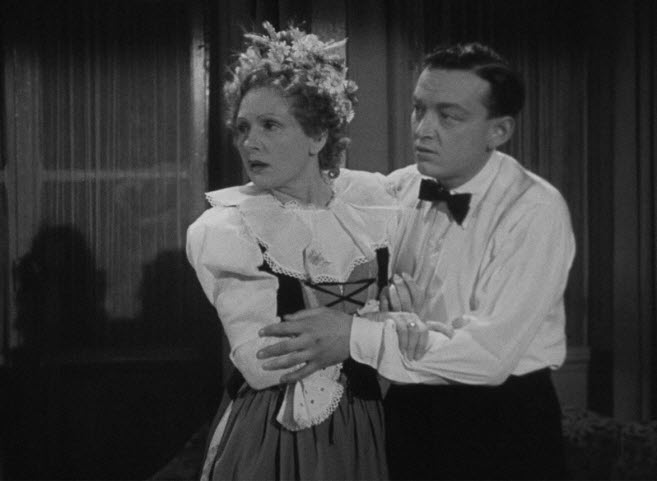
Meanwhile, the indirect but acerbic social commentary of the film gradually emerges from its busy and labyrinthine narrative. There is a hunting sequence which is now regarded as the critical reflection on how many people in Europe remained callous and indifferent to what would soon shake up their world. And there is an inevitable moment of violence and tragedy around the end of the story, which is incidentally preceded by a textbook comic situation of mistaken identity.
It is rather ironic that the movie could have been lost forever right after its theatrical release in France in 1939. Despite being one of the most expensive movies during its time, the movie was a critical and commercial flop, and then it was heavily cut down from 113 minutes to 85 minutes by Renoir himself. Its original negative was deemed to be destroyed after its storage place was heavily bombed during World War II, but the movie fortunately went through an extensive restoration process in the late 1950s. Although it does not contain one minor scene, the resulting restored version was wholeheartedly approved by Renoir himself, and the movie has remained around the top of many lists of great movies during last seven decades.
In conclusion, “The Rules of the Game” still shines as a masterpiece which has influenced a bunch of subsequent films such as Robert Altman’s “Gosford Park” (2001), which is also a quintessential upstairs/downstairs comedy film about class and manner. When I watched it for the first time in the early 2000s, it was just a homework for me as a young movie fan, but now I came to admire and appreciate it more after revisiting it yesterday, and I am certainly willing to learn and feel more from this great film.


 Seongyong's Private Place