
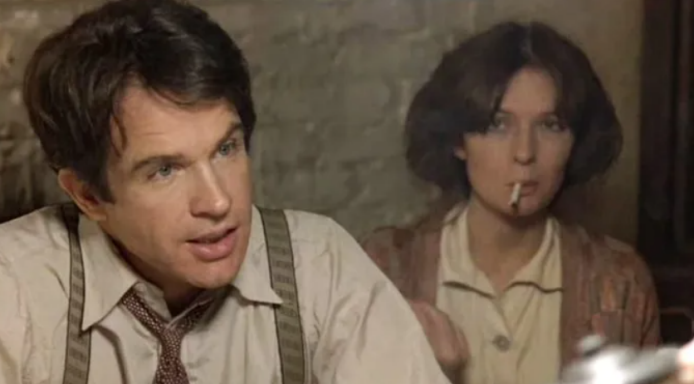
While revisiting Warren Beatty’s 1981 film “Reds” at last night, I observed how it stays focused on ideas and emotions behind its grand and ambitious attempt to illustrate the life and career of its real-life left-wing American journalist hero. Yes, there are a number of epic moments to reflect the big historical changes surrounding him, but the movie is ultimately about his complicated relationship with a smart and interesting woman who tried to understand and deal with his left-wing idealism, and it handles their rather messy love story with a lot of care, intelligence, and sensitivity.
The hero of the movie is John Silas “Jack” Reed (1887 ~ 1920), who is incidentally played by Beatty himself. Although he was quite famous for his 1919 book “Ten Days That Shook the World” during his time, he was mostly forgotten when Beatty became interested in making a movie about him in the late 1960s, and it is really amazing that Beatty managed to get the production of this passion project of his green-lighted inside Hollywood around 10 years later, especially considering how the American society came to take a big right turn with the election of President Ronald Reagan in 1980.
The first act of the film establishes Reed’s relationship with Louise Bryant (Diane Keaton), who was quite a progressive liberal lady despite being married to some boring dentist in Oregon, Portland in 1915. At the beginning, Bryant simply encounters Reed as a writer/journalist interested in writing about him and his left-wing ideology, but, what do you know, they click so well with each other as they talk and talk with each other during next several hours. Eventually, Bryant agrees to go to New York City along with Reed, though she makes it quite clear to him from the beginning that she will not be a mere lover to elope with.
Once they come to New York City, Bryant soon finds herself often overwhelmed by the wild and passionate political mood among Reed’s artist and activist friends including Emma Goldman (Maureen Stapleton). In addition, despite being a caring lover, Reed is frequently absent due to his constant journalistic assignments here and there in the country, and that makes her all the more frustrated about their relationship. Even after they eventually move to a quieter place outside the city, Reed cannot help but driven more by his work and left-wing idealism, and this consequently leads to Bryant’s affair with Eugene O’Neill (Jack Nicholson), a legendary playwright who is a close friend of Reed but has been smitten with Bryant right from when he sees her for the first time.
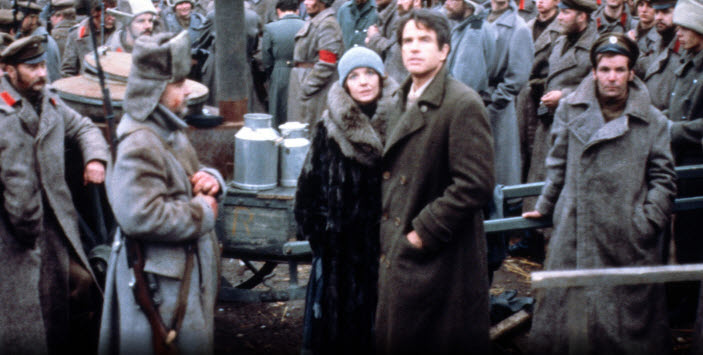
In the end, Bryant decides to go for her own journalist career for herself without Reed’s help or support, but then they meet each other again in 1917 when they are reporting on the final chapter of World War I. When Reed suggests that they should go to Russia for reporting on the ongoing Bolshevik Revolution, Bryant hesitates at first, but she eventually accompanies him, and they come to have the most productive time in their relationship as enthusiastically reporting on one of the biggest historical moments in the early 20th century.
Around that narrative point, the movie immerses us more into the story of Reed and Bryant, and Beatty and his crew members including cinematographer Vittorio Storaro, who deservedly won his second Oscar for this film, throws a series of big and impressive moments which surely take you back to David Lean’s classic film “Doctor Zhivago” (1965). Never losing its personal perspectives, the movie vividly and dramatically conveys to us how the Bolshevik Revolution intrigued and excited many left-wing American figures like Reed during that time, and it also does not overlook the following frustration and disillusionment experienced by Reed and several other figures around him.
Meanwhile, the story is often intercut with the interview clips of a bunch of real-life figures who are simply presented as “the Witnesses”. As the people who knew Reed and Bryant during that time, they all surely have something to tell, and what they willingly tell provides extra insight on Reed, Bryant, and that interesting period surrounding them, while also bringing genuine human poignancy to the story.
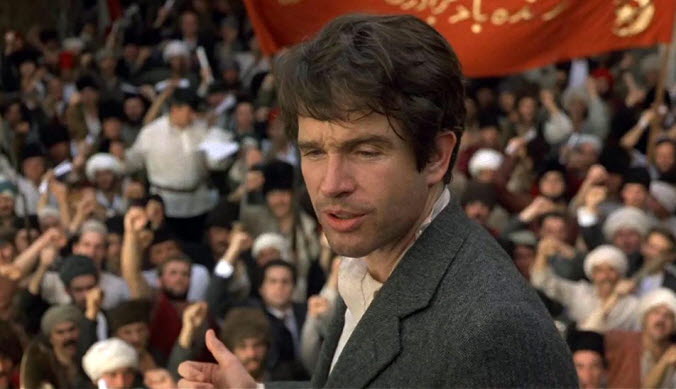
Although the screenplay Beatty and his co-writer Trevor Griffiths trudges a bit during its last act, the movie continues to engage us up to its somber but powerful final scene under the excellent direction of Beatty, who won a Best Director Oscar for his movie (The movie received the total 12 nominations at that time, though it lost the Best Picture award to Hugh Hudson’s “Chariots of Fire” (1981)). The movie is certainly one of the high points in his legendary movie career, and it is a bit shame that he did not direct many movies after this remarkable achievement.
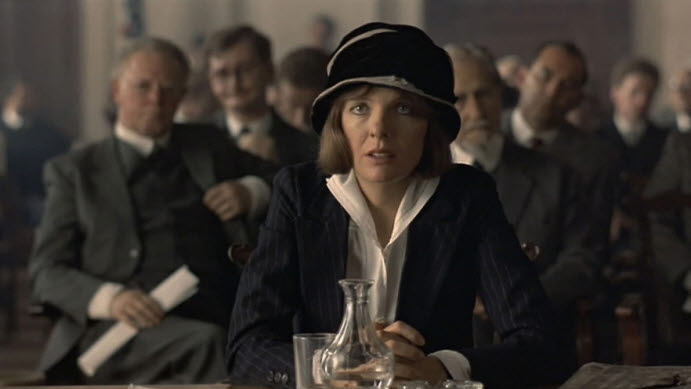
Beatty also gives an effective lead performance as the center of the story, and he is complemented well by the equally interesting performance by Diane Keaton, who sadly passed away a few days ago. From the beginning to the end, Beatty and Keaton are convincing as their characters pull or push each other along the story, and their good chemistry on the screen is one of the main reasons why the movie keeps engaging us despite its long running time (195 minutes).
Around himself and Keaton, Beatty assembles a bunch of notable performers to enjoy. Jack Nicholson, who ably dialed down himself here a lot right after his full-throttle manic performance in Stanley Kubrick’s “The Shining” (1980), has several sensitive moments with Keaton, and that led to another Oscar nomination for him. Although her appearance in the film is rather short. Maureen Stapleton quietly and effortlessly steals every moment of hers, and she rightfully garnered a Best Supporting Actress Oscar for that. While Gene Hackman briefly appeared early in the story, several recognizable performers including Edward Herrmann and Paul Sorvino are well-cast in their respective supporting parts.
On the whole, “Reds” may require a bit of patience from you as taking its time for developing its main characters and building up the big historical picture surrounding them, but it is still worthwhile to watch for its many top-notch aspects to be admired and appreciated. It may not be a great film, but it is an epic work to remember, and it deserves some more attention in my humble opinion.


 Seongyong's Private Place