

Many of Christian Petzold’s films are interesting for the fascinating psychological tension under their dry and somber mood, and his latest film “Miroirs No.3” is no exception. As revolving around one odd relationship development between its two lead characters, the movie subtly conveys to us whatever is happening between them under the surface, and we come to wonder and care more about what may happen next between them.
At first, the movie introduces us to Laura (Paula Beer), a young woman not so pleased about traveling to somewhere along with her boyfriend and some other couple. In the end, she comes to change her mind, and her boyfriend reluctantly agrees to drive her to a nearby station where she can take a train for going back to Berlin alone by herself.
However, something quite unexpected happens in the middle of their drive. When they are passing by some small rural town, they happen to come across some middle-aged woman, who is incidentally painting the white fence of her house. Shortly after this encounter, an unfortunate accident occurs, and Laura’s boyfriend dies while Laura is luckily injured a bit on the whole.
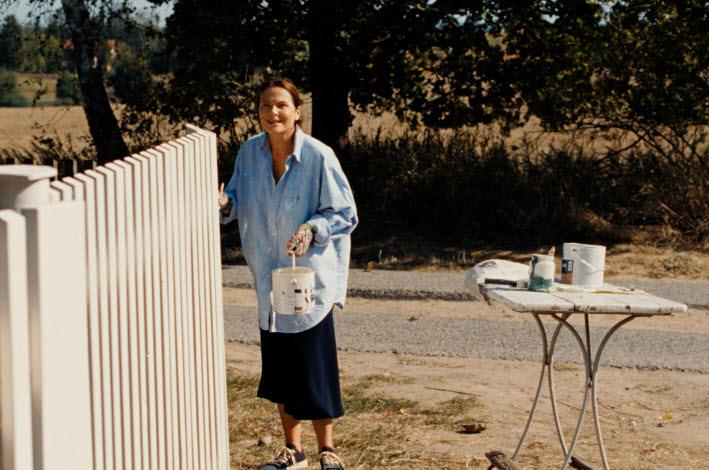
Once she sees what has just happened to Laura, that middle-aged woman quickly calls for help. Her name is Betty (Barbara Auer), and she has no problem at all when Laura, who is quite shocked by the incident, needs a place to stay for more recovery for her mind. She willingly lets Laura into her cozy house with warm hospitality, and Laura surely appreciates the kindness of a stranger, but we sense more of a hidden motive behind Betty, especially when she inadvertently calls Laura by some other name.
As days go by, Laura and Betty become closer to each other, and we get to know a bit more about Betty. She is married, but she lives alone in her house while her husband and their adult son, both of whom are incidentally car mechanics, have been living apart from her due to some personal reason. When Betty later invites them just for introducing them to Laura, they are not so amused because they clearly see whatever is happening between Betty and Laura, though it is evident to us that they still care a lot about Betty despite that. As a matter of fact, they fix a few things including an old washing machine in the kitchen of Betty’s house before they leave, and they come to spend more time with Laura without much complaint.
However, the movie keeps reminding us that something is not all right beneath the surface. Some town residents stare at Betty and Laura a bit too long without a word when they pass by Betty’s house. Betty’s husband comes to have more private conversations with his wife, and Laura only hears a bit of their conversations as watching them from the distance, while Betty’s son seems quite conflicted about something in his rather sullen appearance.
Around that narrative point, you will probably have a pretty good idea on Betty’s personal motive behind her developing relationship with Laura, but you will also wonder more about how Larua exactly feels about her ongoing situation. While she is not so devastated by her boyfriend’s death as coming to accept that she does not love him as much as she thought, she just seems fine with being taken care of by Betty, who comes to regard Laura more like her own daughter. Is she so desperately alone that she needs anyone who can be someone to lean on? And has she ever wondered why Betty is so nice and kind to her from the very beginning?
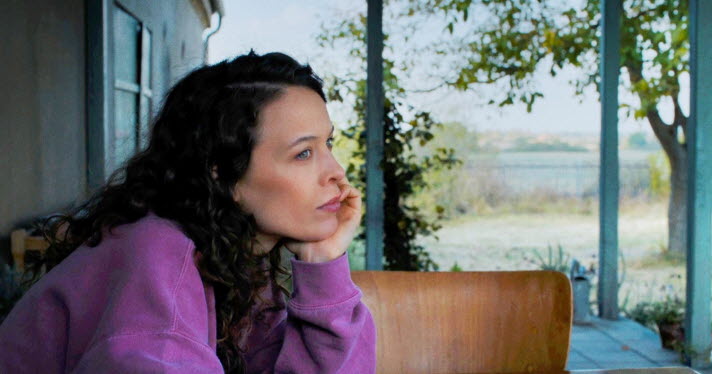
Of course, the movie eventually arrives at the point where both of these two main characters face the true nature of their relationship, and that is where the movie stumbles a bit. In my trivial opinion, the story pulls out its ending a bit too hurriedly, and it may leave you wondering about whatever is exchanged between Betty and Laura in the end.
Nevertheless, Petzold’s skillfully handling of story and characters continue to hold our attention during the rather short running time (86 minutes). Although it is reported that he shot the film within a few days, the overall result does not feel rough or shabby at all, and he and cinematographer Hans Fromm did a solid job of establishing the tranquil but subtly uneasy atmosphere surrounding the main characters on the screen.
The main cast members are commendable for ably suggesting the hidden emotional undercurrents among their characters. While Paula Beer, who previously collaborated with Petzold in “Undine”, always brightens up the screen with her distinctive presence, Barbara Auer is splendid as her character gets more emotionally entangled with Beer’s character along the story, and Matthias Brandt and Enno Trebs are also effective in their respective substantial supporting roles.
In conclusion, “Miroirs No.3” does not reach to the level of Petzold’s better works such as “Phoenix” (2014) and “Afire” (2023), but it is still recommendable for its engaging mood, storytelling, and performance. If you are familiar with Petzold’s movies, you will instantly see what you will get, and you will probably be satisfied even though it does not exceed your expectation.



 Seongyong's Private Place
Pingback: 10 movies of 2025 – and more: Part 2 | Seongyong's Private Place