
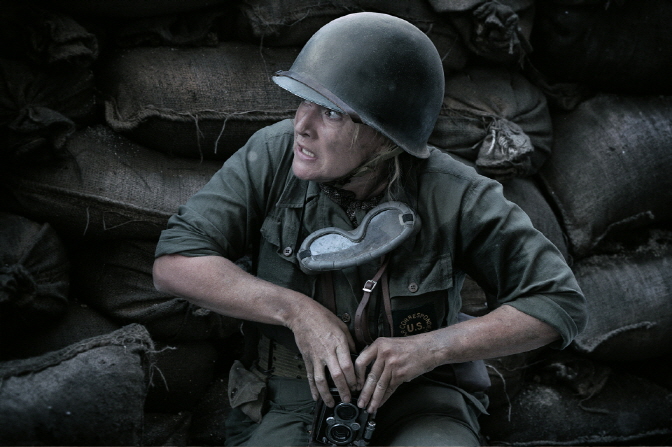
Lee Miller was surely a remarkable woman to remember. Despite sexism and many other obstacles in front of her, this exceptional American woman willingly pursued her professional passion during the World War II, and her numerous photographs shot during that period are certainly another valuable historical record on the horror and tragedy of the World War II.
However, Ellen Kuras’ “Lee”, which happens to be released belatedly in South Korean theaters, does not satisfy me enough as merely following Miller’s life and career during the 1930-40s. While there are some good moments illuminating Miller’s female perspective on the war to some degree, the movie remains to be your average biographical drama film, and that is a shame considering the solid efforts shown from the screen.
Miller is played by Kate Winslet, who is no stranger to playing strong female figures like Miller. The movie begins with a private interview between older Miller and some young man in 1977, and the bitter and sardonic attitude of older Miller is contrasted with the following scene showing how she was wild and lively during the late 1930s. While she initially worked as a model, Miller subsequently started to pursue the career of a professional photographer, and she became all the more determined about that even after she married Roland Penrose (Alexander Skarsgård), a handsome British artist she came across during a little afternoon party with her close friends.
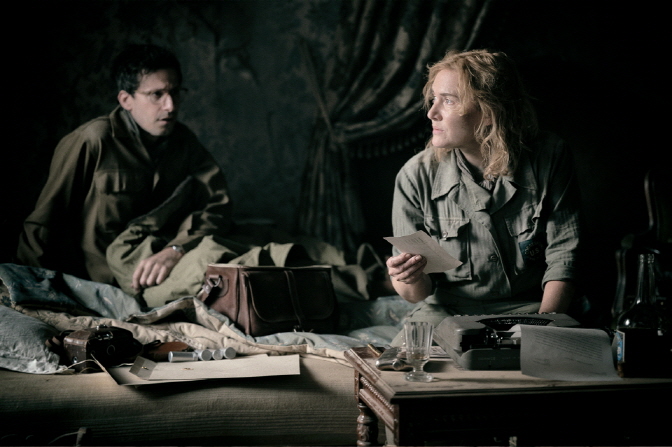
Not long after Miller and her husband got married, World War II began, and that was when she went further for her professional career. Around the time when her husband joins the British Army, she gets hired as a photographer in Vogue magazine, and she begins to photograph how British people endure the frequent bombings by Nazi Germany, but that is still not enough for her at all. She wants to go to the frontlines of the ongoing war just like many of those male photographers, but, of course, she is not allowed to do that at first mainly because of sexism.
Nevertheless, Miller eventually finds the solution for her problem, and we soon see her arriving in Normandy, France along with her fellow American photojournalist David Scherman (Andy Samberg) shortly after the Normandy Landings in June 1944. Again, she is reminded of how often she can be limited by the prevalent sexism among many male soldiers and officers, but she usually knows how to get things done, and her diligent efforts are appreciated a lot by both Scherman and her no-nonsense magazine editor Audrey Withers (Andrea Riseborough).
The war is being closer to the end around the point when Paris is liberated a few months later, but that does not daunt Miller at all, and the movie sometimes presents how Miller’s female perspective leads her to some unforgettable moments to remember. At one point, she witnesses and records how several young women are cruelly punished for being associated with Nazi German soldiers, and this will remind you again of how often many women have been brutalized in countless wars throughout the human history.
In early 1945, Miller decides to delve more into whatever happened to thousands of civilians taken away by Nazi Germany during the war, and that is when the story becomes darker than before. She and Scherman eventually arrive in one big concentration camp in Germany, and both of them are certainly shocked and devastated by what they behold from this horrible place. Wisely restraining itself, the movie never overlooks the sheer horror and tragedy in what Miller and Scherman phlegmatically observe and record, and the result is the most effective moment in the film.
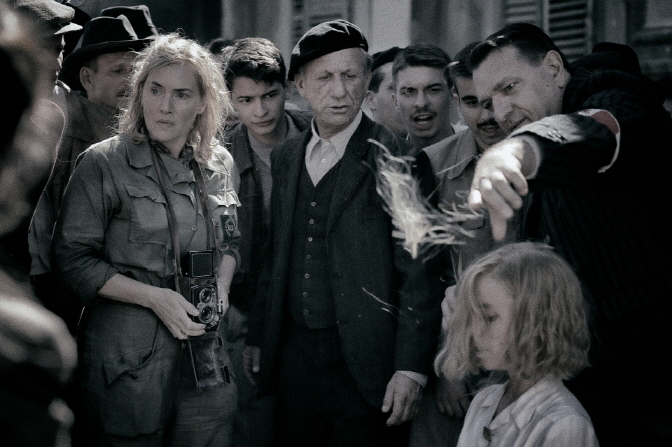
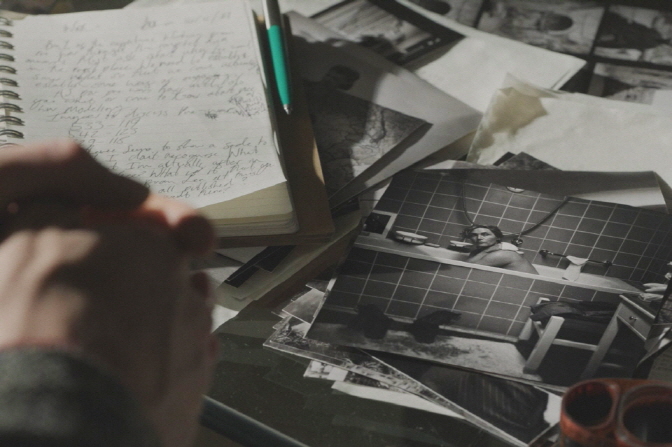
However, the screenplay by Liz Hannah, John Collee, and Marion Hume, which is based on Miller’s only son Antony Penrose’s 1985 biography “The Lives of Lee Miller”, is rather superficial in the presentation of Miller’s life and career. Sure, the movie did a fairly competent job of presenting the high points of her career including that famous photograph shot in the bathroom of Adolf Hitler’s private apartment in Berlin, but it does not go deeper into her personality and humanity, and this weak aspect of its narrative is exacerbated more by the mostly under-developed supporting characters surrounding Miller.
Anyway, Winslet is dependable as usual at least, and her good performance steadily carries us to the predictably sentimental ending of the film. In case of several notable main cast members including Alexander Skarsgård, Marion Cotillard, Andrea Riseborough, Noémie Merlant, Josh O’Connor, and Andy Samberg, they are sadly under-utilized on the whole, though Samberg surprisingly demonstrates the more serious side of his acting talent in contrast to his usual comic persona.
Needless to say, director Ellen Kuras, who was Oscar-nominated for documentary film “The Betrayal” (2008) and also worked in a number of notable films and documentaries such as “Eternal Sunshine of the Spotless Mind” (2004) and “Jane” (2017), tries to handle the main human subject of her film with care and respect, but I think “Lee” a bit too dissatisfying to recommend. Yes, I came to admire Miller’s life and career more after watching the film, but the movie itself does not go beyond what I can instantly learn via checking Wikipedia right now, and that is a disappointment in my humble opinion.


 Seongyong's Private Place