
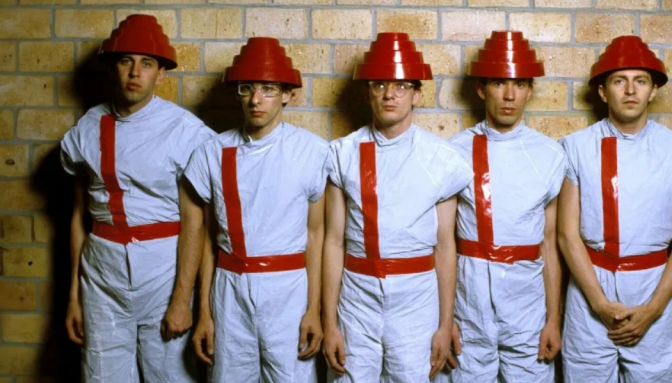
Netflix documentary film “Devo”, which was released in last month, looks into the history of Devo, a defiantly unconventional American band which simply tried to do something quite different during the 1970-80s. To the frustration and bafflement of its members, the social messages behind the absurdly subversive artistic musical expressions from the band were not often appreciated enough even when it was pretty popular, but they do not regret anything at all, and the documentary cheerfully takes us into some of the best and worst points in the career of their band.
At first, the documentary shows and tells us how the band was conceived mainly via the interview clips of the two members of Devo, Mark Mothersbaugh and Gerald Casale. Around the early 1970s, Mothersbaugh and Casale were studying at Kent University in Ohio, US, and, just like many other young American people during that time, they were influenced a lot by the turbulent social/political situation of the American Society during that period. As the hope and optimism in the American society during the early 1960s got smashed and dissipated, the country seemed to be on the way toward regression and devolution instead, and that inspired Mothersbaugh and Casale to found a little avant-garde band of theirs for throwing urgent social messages on what was happening around them and many others in the American society.
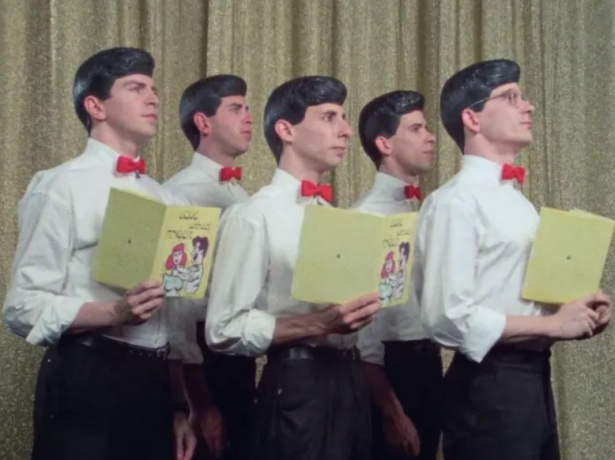
Although the first public performance of Devo was not exactly successful to say the least, that did not deter Mothersbaugh and Casale at all, as they became more confident about their artistic vision. Around the time when Mothersbaugh’s brother Bob Mothersbaugh, Casale’s brother Bob Casale, and Alan Myers joined the band, they willingly went for many different unconventional stuffs, and they even made a number of cheap but amusing short music films, which can be regarded as the precursors to all those bold and flashy music videos during the 1980s.
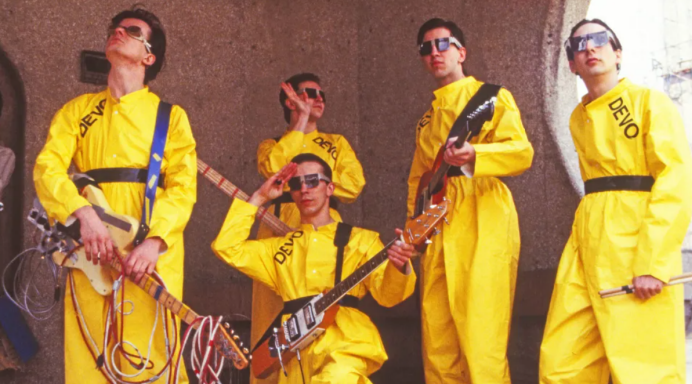
In the end, Devo came to amass a considerable number of fans and admirers as one of their short music films got a lot of attention at several notable film festivals. As the band eventually performed not only in LA but also New York City, the unorthodox style and performance of the band drew more public attention than before, and the members of the band were certainly excited when David Bowie showed his interest in working along with them on their first album. Although Bowie later gave up their project because of juggling too many projects during that time, he introduced the band to Brian Eno instead, and their eventual first album, “Q: Are We Not Men? A: We Are Devo!”, led the band to a big breakthrough in 1978.
Because they were already quite accustomed to mixing music along with theatrics and visual styles thanks to making their short music films, the members of Devo got quickly comfortable with the rise of MTV around the early 1980s. As its popularity got boosted further by MTV, Devo kept advancing with several hit songs including “Whip It”, and the members of the band ironically found themselves stuck inside the mainstream they had frequently criticized and satirized via their music.
As Mothersbaugh and Casale frankly admit in their interviews, they and their fellow band members tried to be practical as balancing themselves between their artistic integrity and the constant demands from their record company. Thanks to their ongoing commercial success, they were allowed to have some artistic freedom, and they kept defying against the expectations from critics and fans as much as possible. However, there eventually came a point where the band began to lose its popularity in public, and everyone in the band became more aware of the beginning of the end when their sixth album turned out to be a big commercial failure despite their good efforts.

However, what really bothered and baffled the members of the band was how most of their audiences responded to their music. Even though the satiric messages on the rise of social/commercial conformism in the American society are quite evident in many of their hit songs, their audiences usually regarded the songs as another cool new ones to consume and then discard, and the documentary does not miss the sheer irony and absurdity in that. As reflected by the name of their band, the members of Devo tried to warn about the human devolution caused by social/commercial conformism, but their works and the messages inside them were inevitably diluted or buried as they became a part of the American mainstream pop culture.
Moreover, as many of us know too well, things have only gotten worse and worse in not only the American society but also the whole world during last several decades. Mothersbaugh and Casale understandably feel bitter about that, but they remain proud about their band in addition to being quite active artists even at present, and, as some of you know, Mothersbaugh has been one of the most prominent film music composers working in Hollywood.
In conclusion, “Devo” is an engaging documentary which gives us enough insight on its fascinating main subject, and director Chris Smith, who has been mainly known for “American Movie” (1999), did a competent job of presenting a fairly comprehensive picture of the rise and fall of Devo. Yes, I must confess that I did not know much about its main subject from the beginning, but the documentary intrigued and informed me enough, and that is more than enough for recommendation in my trivial opinion.


 Seongyong's Private Place