
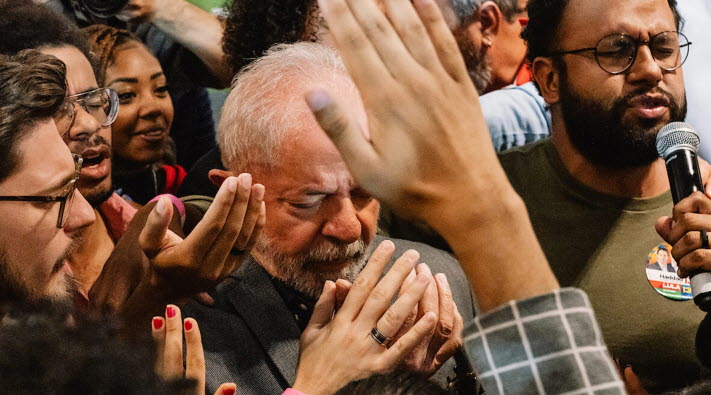
Watching Netflix documentary film “Apocalypse in the Tropics” is one of the most alarming experiences I have ever had during this year. To be frank with you, I and many other people in South Korea recently went through a political crisis not so far from the one presented in the documentary, and I could not help but notice how many moments in the documentary frighteningly resonate with what I saw from the South Korean society during last several months.
The documentary can be regarded as the next chapter coming after director/co-producer/co-writer Petra Costa’s Oscar-nominated Netflix documentary “The Edge of Democracy” (2019). In that documentary, Costa calmly observed on how the Brazilian democracy was seriously threatened by the rapid political rise of Jair Bolsonaro, a far-right Chrisitan politician who eventually won the Presidential Election in late 2018 as shown around the end of that documentary. In case of “Apocalypse in the Tropics”, it observes the following social/political turmoil in the Brazilian society during the Bolsonaro presidency, and it also examines the big political/religious groups behind it, which are still exerting a considerable influence over many Brazilian citizens in the name of faith and God even at this point.
Some of the key moments in the documentary focus on Silas Malafaia, who has been one of the most prominent figures in the evangelical movement in Brazilian politics. In front of the camera, Malafaia is quite frank about his aggressive mix of politics and religion, and he certainly boasts a lot about his longtime role as a kingmaker in Brazilian politics. As a matter of fact, he actually associated himself with Luiz Inácio Lula da Silva in the early 2000s, but then he moved onto one right-wing politician after another before eventually supporting Bolsonaro around the 2010s.
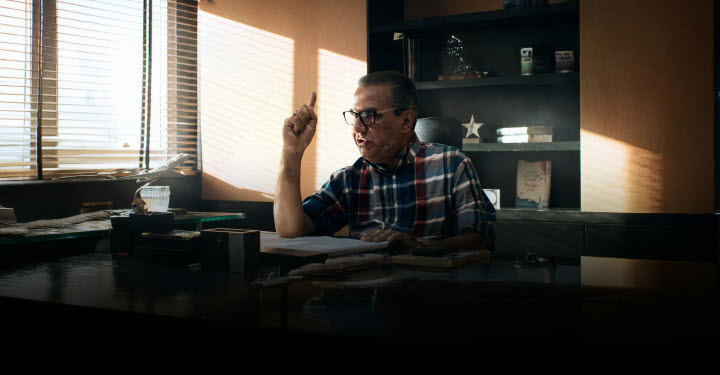
And he is just one of many influential evangelists out there in Brazil. Right from the beginning, the documentary shows us how many of powerful Brazilian politicians have been associated with the big evangelical groups in one way or another, and you will be amazed to see that some of these politicians are also pastors. They all are quite willing to make the Brazilian society and government dominated more by their religion than before, and it is disturbing to see that they do not have any problem with that.
As looking back on the past of her country, Costa sharply points out the dark origin of the evangelical movement in Brazil. Around the 1960s, Brazil seemed quite ready to embrace democracy more as reflected by the construction of its new capital city, but there came a military coup d’état, and the American government had no problem with going along with that as a part of its Cold War game. As many Catholic priests in Brazil leaned more on social justice, the US government was very determined to suppress this via spreading its own evangelism here and there in Brazil, and you will not be surprised to see who led this political/religious movement during that time.
The documentary also shrewdly observes that the basis of the aggressive political stance of both the American and Brazilian evangelical movement came from a radical but game-changing interpretation on the Book of Revelation by one Irish pastor in the 19th century. This radical interpretation virtually justifies the holy war for the apocalypse to come, and, as many of you know too well, this inherently fanatic idea has driven many Christians toward more hate and intolerance on the people outside their groups.
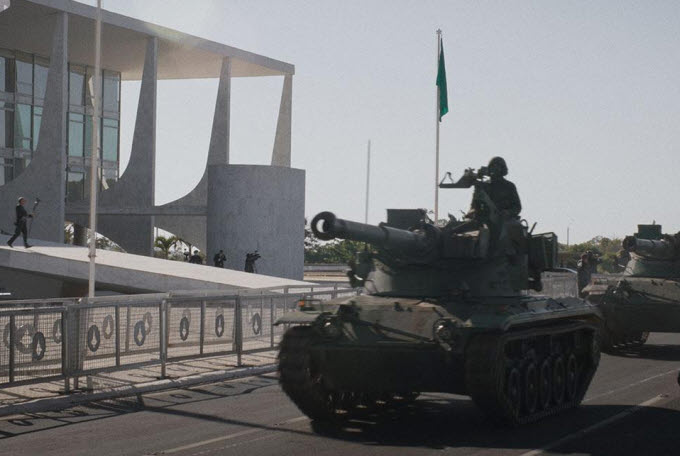
Even when the Brazilian society got turned upside down during the COVID-19 pandemic period due to the sheer incompetence and irresponsibility of the Bolsonaro Presidency, millions of Christian Brazilians kept supporting Bolsonaro as told by their evangelical leaders, and it is really depressing to observe some of these people showing the worst sides of the humanity without any shame or hesitation. When Lula was released from a prison and then allowed to run for the Presidential Election in 2022, Malafaia and many other evangelists were certainly ready for stopping Lula by any means necessary, and, as reflected by one brief interview with a Christian lady, their followers believed in their false information and fake news without much doubt.
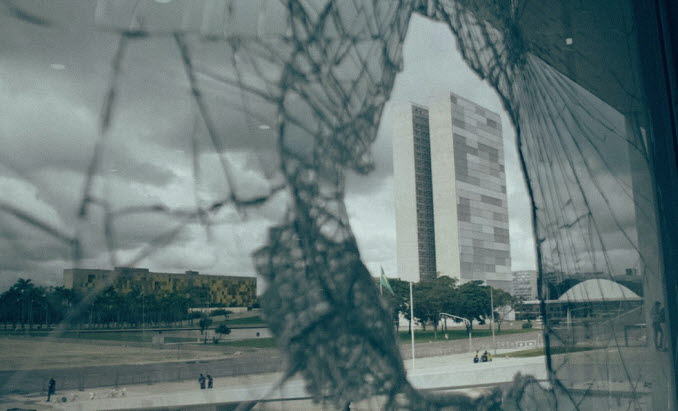
As observing more of the social/political turmoil in Brazil during that time which inevitably culminated to the 2022–2023 Brazilian election protests orchestrated by Bolsonaro and his supporters, I bitterly reflected more on how much the South Korean society and politics are influenced by those influential right-wing evangelical leaders in South Korea in these days. Closely associating themselves with President Yoon Suk-yeol and his deplorable cronies during last several years, these evangelical groups kept aggressively expanding their political power and influence, and many of prominent South Korean politicians remain associated with them as before, even though many of these evangelical groups willingly supported President Yoon’s shocking attempt of coup d’état in last December. His successor, President Lee Jae-myung, seemed to represent the democratic defiance against President Yoon when he eventually won the Presidential Election in last month, but then, what do you know, he made a lot compromise here and there just for getting more future political support from the local evangelical groups later, like, as shown later in the documentary, Lula did right before eventually winning the 2022 Presidential Election by a narrow margin.
In conclusion, “Apocalypse in the Tropics” is a sobering political documentary which feels all the more important considering the current political situation of our world, and Costa, who also did the narration as she previous did in “The Edge of Democracy”, succeeds in going further than what she admirably achieved in her previous documentary. Yes, this is definitely not something you can casually watch on Sunday afternoon, but it will surely lead you to a lot of concern and reflection on our increasingly disconcerting era.


 Seongyong's Private Place
Pingback: 10 movies of 2025 – and more: Part 2 | Seongyong's Private Place