

Barry Levinson’s 2010 HBO TV movie “You Don’t Know Jack” observes the legal troubles of Jack Kevorkian (1928 ~ 2011), an American pathologist who became quite controversial as a prominent euthanasia proponent during the 1990s. As sticking to its somber non-judgmental viewpoint, the movie depicts how far he was willing to go for his stubborn belief, and the result is a thoughtful human drama to remember.
The movie begins with how Kevorkian, played by Al Pacino, went further for the assisted suicides for those terminal patients out there in the early 1990s. After seeing how hard one young terminal patient had to fight for his legal permit to die, Kevorkian becomes more convinced that he should really step forward as an advocate for euthanasia, and his close friend Neal Nicol (John Goodman), who is incidentally a medical technician, and his sister Margaret (Brenda Vaccaro) are willing to help and assist him even though both of them are well aware of the legal risks of his personal project.
First, they must select a terminal patient really ready to die, and that is how Janet Good (Susan Sarandon) enters the picture. As the founder of the Michigan chapter of the Hemlock Society, Good strongly believes in a human right to die, and she is certainly willing to help him as possible as possible just like Nicol and Margaret, though she cannot help him that much when he eventually assists a suicide for the first time later.
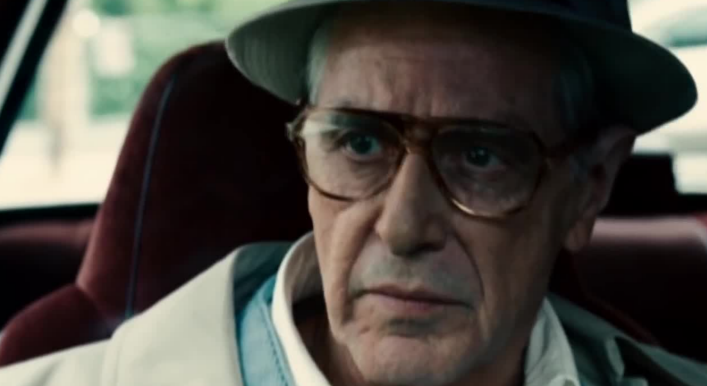
Kevorkian’s first case of assisted suicide certainly leads to a lot of legal trouble for him, so, as continuing to assist the suicide of some other terminal patients, he goes to a local lawyer named Geoffrey Fieger (Danny Huston), who assures his client that he will be all right for good reasons. Fortunately, Kevorkian always records his private interview between him and a patient, and, as Fieger correctly observes, those video records always work on the human sympathy of the members of the jury.
As the state prosecution keeps trying to win those legal cases against him, Kevorkian consequently finds himself in the middle of the growing controversy surrounding euthanasia, but he is ready to defend himself and his belief in public, no matter how much he is criticized by those pro-life activists out there. After his successful TV interview with Barbara Walters, he becomes more famous (or infamous) with his nickname Dr. Death, and that eventually prompts him to challenge against the legal system more than before.
When its hero later crosses some lines for his belief, the screenplay by Adam Mazer, which is based on Neal Nicol and Harry Wylie’s book “Between the Dying and the Dead”, stays on its neutral mode as before, but it shows a lot of sympathy and understanding toward to those suffering people coming to Kevorkian. Each of them has an understandable reason to give up living, and Kevorkian and his associates must be gentle and cautious about confirming whether it is right to perform a euthanasia for their client. Sometimes they have to reject some of the clients (One of them is briefly played by Adam Driver, who looks almost unrecognizable behind his heavy makeups), and the movie indirectly recognizes those tricky aspects of deciding on the matter of life and death.
And we get to know more about what motivates Kevorkian, who can be charming at times but does not open himself that much to others including his sister. At one point later in the story, one of his associates asks him about his painful experience from when he was quite helpless about the suffering of his ailing mother, and we come to see that he does care a lot about life as well as death.
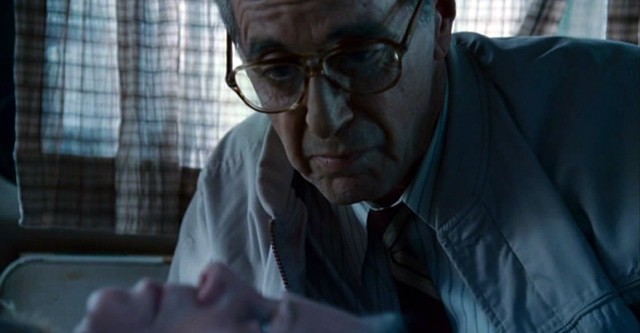
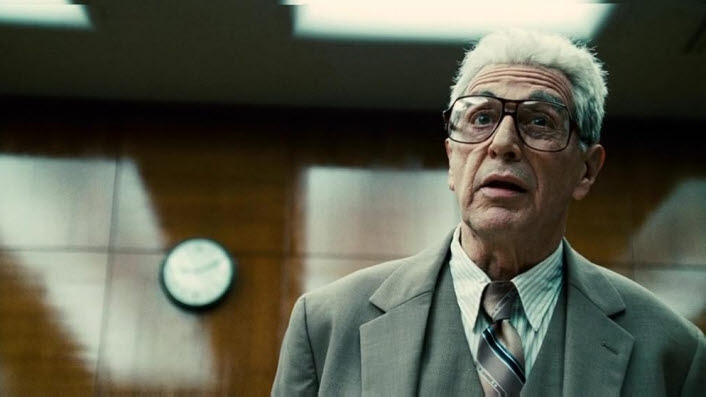
Ironically, this human aspect of his subsequently leads to his eventual conviction around 1999. He lets the video clip of him performing another euthanasia broadcast on TV just because he believes that this will generate more discussion on legalizing euthanasia, but the state prosecution is quite prepared to win this case, while he comes to defend himself at the trial as Feiger steps aside for his ongoing state governor campaign. Not so surprisingly, Kevorkian becomes his worst enemy during the trial, and his clumsy defense is frequently blocked by both the state prosecution and the judge presiding over the case.
As the center of the story, Pacino, who won an Emmy for this film, gives one of his best performances during last 20 years. While he can be quite showy as shown from many of his famous movies such as “Heat” (1995), Pacino can also dial down his presence and intensity a lot as shown from “Donnie Brasco” (1997), and his restrained but rich performance here in this film quietly conveys to us his hero’s complex humanity. Around Pacino, several notable performers including John Goodman, Danny Huston, Susan Sarandon, and Brenda Vaccaro have each own moment to shine, and they all are effective as the colorful counterparts to Pacino’s low-key acting.
Although it came out 15 years ago, “You Don’t Know Jack” is still interesting for not only its thought-provoking subject but also the strong performances from Pacino and his fellow cast members. Regardless of what you think about Kevorkian, it will make you reflect more on what he cared a lot about, and then we may have some discussion on those complex human matters of life and death surrounding euthanasia.


 Seongyong's Private Place