
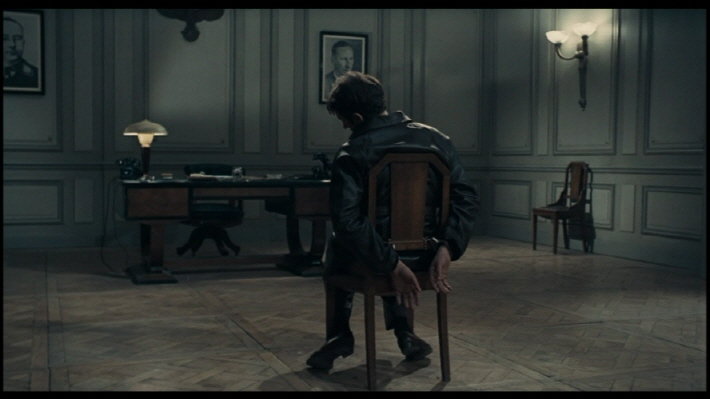
Jean-Pierre Melville’s 1969 film “Army of Shadows”, which was released in South Korean theaters on this Wednesday, is a cold and gloomy World War II drama about the perilous struggles of a bunch of French Resistance members in the middle of the wartime. While most of them believe in their righteous cause, there are always the possibilities of danger and death around them, and the movie stays focused on their grim human condition without any unnecessary sentimentality.
The movie, which is mainly set in France between 1942~1943, begins with the introduction of Philippe Gerbier (Lino Ventura), a civil engineer who has been the leader of a French Resistance cell but is now being sent to a prison after his recent arrest. As stuck with several other prisoners in one big cell, he patiently waits for any possibility for escape, and then there comes an unexpected opportunity later, and he manages to escape in the end.
Once Gerbier returns to his group, we get to know more about several other members working under him. Most of them were mere civilians before the war, and this aspect is evident when they are going to handle someone who betrayed one of them. Under Gerbier’s order, they seem ready to eliminate that traitor in question at first, but they turn out to be quite clumsy in accomplishing this questionable task, and that leads to a very uncomfortable moment which feels all the more disturbing because of the coldly objective attitude of the film to what eventually occurs among them.
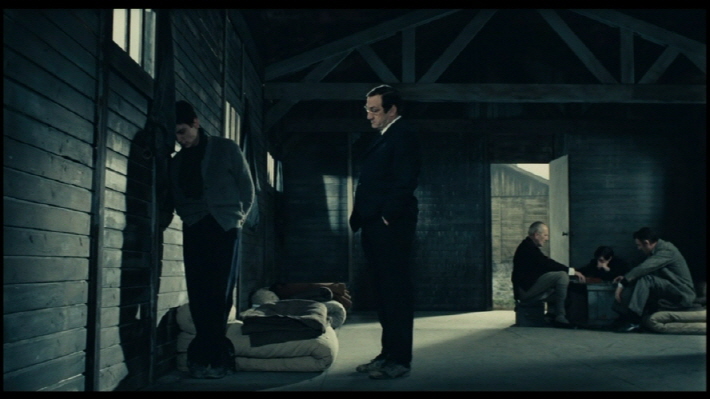
The movie often conveys to us how dangerously Gerbier and his comrades operate in the midst a lot of uncertainty and ambiguity. While their opponents including those Nazi German soldiers and Gestapo officers remain firm and ruthless as before, there is not much help coming from the Allied Forces in UK, and the liberation of their country still seems beyond their reach no matter how much they struggle in corners and shadows. Furthermore, they must keep themselves in secret as much as possible, and there is an ironic scene where two close brothers do not reveal anything to each other without knowing at all that they actually work in the same Resistance group.
The movie is based on the novel of the same name by Joseph Kessel, which is partially inspired by Kessel’s own resistance experience. Melville, who adapted the novel, also had a fair share of resistance experience during the wartime, and that is the main reason why the movie sharply and coolly observes the story and characters with no pretension at all. Yes, Gerbier and his several comrades are courageous people indeed, but they often find themselves entering those gray moral areas as their belief is tested a lot in one way or another, and that is particularly evident from when Gerbier faces an impending matter of life and death later in the film. He certainly wants to stick to his belief to the end, but, ironically, his following brief moment of weakness comes to save him at the last minute, and he bitterly muses a bit on that later.
Meanwhile, the movie keeps holding our attention via several suspenseful sequences to remember including the one where several Resistance members attempt to save an incarcerated member of theirs. As they manage to avoid the suspicion of the German soldiers for infiltrating into the prison step by step, the movie deftly dials up the level of tension step by step under the surface, and the resulting tense mood surrounding the Resistance members is accentuated further by the absence of music.
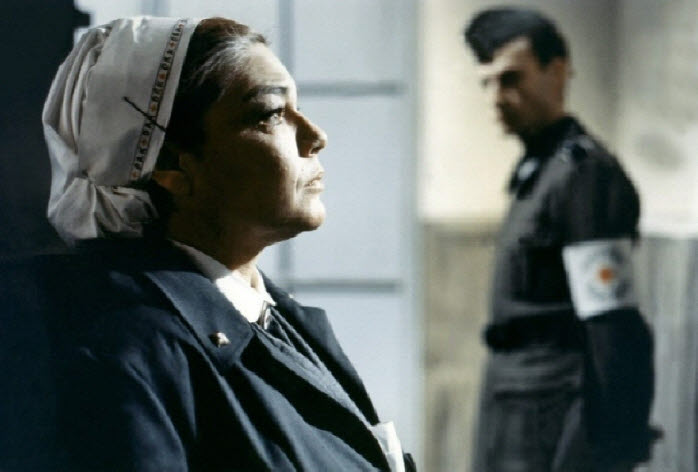
The movie also provides some little bright moments at times. When Gerbier and a senior member of his Resistance group come to London via a very tricky route, they come to have a short moment of respite, but they are also often reminded of how the war is being continued as before, and they eventually return to France for joining their comrades. One of their comrades is a woman named Mathilde (Simone Signoret), who turns out to be quite brave and resourceful and then becomes Gerbier’s right-hand figure, though she also has her own vulnerability just like her comrades.
Ably tunning their performance to the overall moody tone of the film, the cast members of the film are all excellent in their respective parts. While Lino Ventura steadily holds the ground as required, Paul Meurisse, Jean-Pierre Cassel, Claude Mann, Paul Crauchet, and Christian Barbier have each own moment to remember. As the sole substantial female character in the story, Signoret does much more than holding her own place among her male co-stars, and her best moment in the film comes from when her character confronts the inevitability of her impossible circumstance around the end of the story.
On the whole, “Army of Shadows”, which was incidentally not introduced to American audiences before 2006 mainly because it unfairly received the harsh political criticisms from many French movie critics when it was released in France in 1969 (They thought it was the glorification of Charles de Gaulle, by the way), is one of the best films from Melville, and it clearly shows his own distinctive touches to be appreciated. Just like his notable crime drama films such as “Bob le flambeur” (1956), “Le Samouraï” (1967), and “Le Cercle Rouge” (1970), the movie is shrouded in a dark and bitter mix of suspense and pessimism, and those Resistance members in the story actually do not look that different from those lonely or desperate criminal heroes of his crime drama films. Although this is not a comfortable experience at all, you will soon be engaged in its bleak but undeniable compelling drama once you go along with its patient storytelling, and you will be chilled more when it finally arrives at its stark epilogue.


 Seongyong's Private Place