

South Korean film “Can We Get Married?” starts as a comedy and then becomes something more serious and painful. Although I am not so sure about whether its mix between broad comedy and sentimental drama works as well as intended, the movie engages us to some degree as observing its hero’s realistic financial problem along the story, and it will probably make you reflect more on the importance of health insurance once it is over.
At first, the movie observes how things have been good for Seon-woo (Lee Dong-hwi) and Woo-jeong (Han Ji-eun). They have been lovers during last several years, and Woo-jeong is eager to get married and then live along with her boyfriend, but Seon-woo still hesitates for a good reason. While he is teaching architecture at a local university, he has not been officially hired as a professor yet, and he also has to do a part-time job at a construction site for earning more for him as well as his future life with Woo-jeong.
In case of his family, they do not have much problem with Woo-jeong at all, but they turn out to be rather problematic. Seon-woo’s father is a loser who has lived with his senile mother since his divorce, and he cannot help but become petty when his younger brother, who is incidentally much more affluent in comparison, comes to his residence. Seon-woo’s mother does not want to get involved with her ex-husband anymore, but she agrees to meet Woo-jeong’s mother along with him just for her dear son.
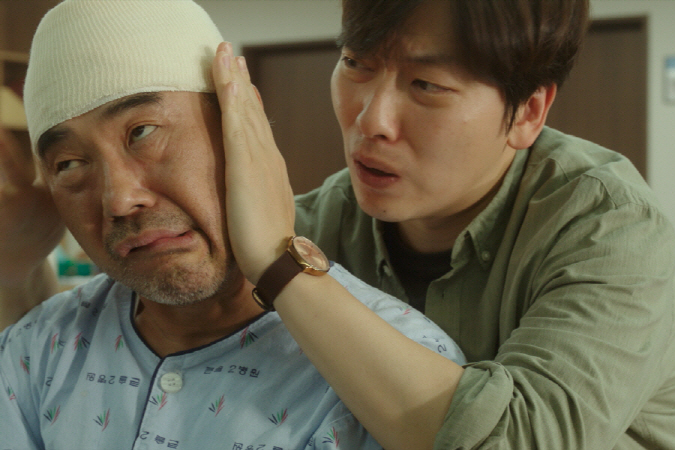
However, there comes an unexpected happening right before that meeting. Seon-woo’s father is suddenly sent to a big hospital due to cerebral hemorrhage, and he subsequently comes to have a couple of brain surgeries due to his serious illness. Needless to say, his hospital bill is quite expensive to say the least, but, alas, Seon-woo belatedly comes to learn that his father does not have any medical insurance to cover his hospital bill. As the closest family member of his father, he will have to take care of this alone by himself in the worst case, and that certainly throws him into more panic.
What follows next is a series of painfully absurd scenes where Seon-woo tries one thing after another for handling this financial emergency. He manages to get his father insured within a short time, but his father needs to be a basic pension recipient. Unfortunately, it soon turns out that his father did not register his current address just because of his serious debt problem. This is just one of many obstacles Seon-woo will have to deal with, and he only becomes more frustrated and exasperated, no matter how much he tries as a dutiful son.
To make matters worse, there is no one to help him around Seon-woo. While Seon-woo’s mother does not have much money from the beginning, Seon-woo’s grandmother is not so reliable due to her current senile status, and Seon-woo’s affluent uncle is not that willing to help his nephew even though showing some concern on his older brother.
At least, Woo-jeong tries to stand by Seon-woo as before, but she only finds herself estranged more and more from him as he is frequently occupied with how to solve his father’s medical bill problem. As she comes to spend more time at a nice coffee shop where she has worked, it turns out that the owner of the coffee shop, who seems like a nice dude, shows her some genuine interest and care, and that makes Woo-jeong more conflicted than before.
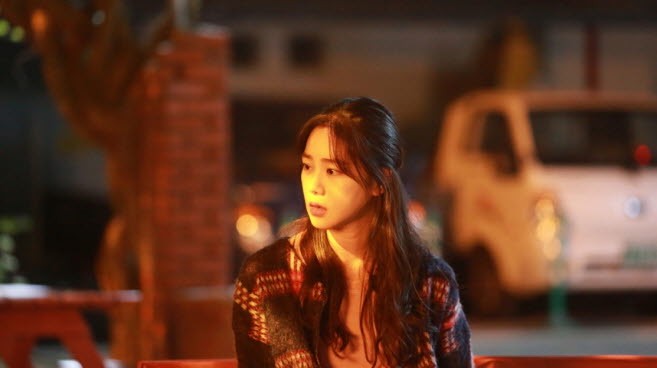
Around that point, the screenplay by director/writer Kim Jin-tae becomes more sentimental and melodramatic as expected, but this often clashes with the lighter aspects of the story. On the one hand, we get a number of harrowing moments showing how hard it really is for Seon-woo to take care of his ill father. On the other hand, we are also served with more absurdity as Seon-woo tries to take care of his father’s medical bill. Instead of generating any narrative synergy between them, these two contrasting parts feel rather disjointed together, and that is the main reason why the ending is glaringly artificial in my inconsequential opinion.
Nevertheless, the movie is equipped with some sincerity and care thanks to the good efforts from its main cast members. In addition to having enough chemistry between them throughout the film, Lee Dong-hwi and Han Ji-eun are convincing as illustrating the gradual change in their characters’ relationship along the story, and there is a poignant moment when Seon-woo and Woo-jeong become more aware of how much their relationship has been strained due to Seon-woo’s ongoing personal matters. In case of several substantial supporting performers in the story, Cha Mi-kyung is effective as her character shows more care than expected, and Kang Shin-il holds his own small place well despite his thankless role.
In conclusion, “Can We Get Married?” did not engage me enough for recommendation due to its rather flawed storytelling, but it makes some good points on its main subject at least. To be frank with you, after watching the movie, I came to think about how my parents can still take care of their health matters with pension and medical insurance despite being over 70 at present, and now I wish more that they will remain like this till the end. Sure, their time will eventually come someday, but, folks, I really hope that my parents will suffer as little as possible without causing too much financial burden for me and my younger brother.


 Seongyong's Private Place