
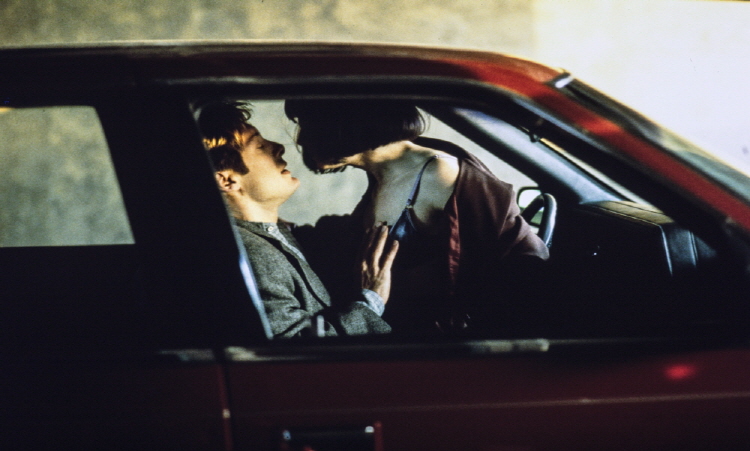
David Cronenberg’s 1996 film “Crash”, which happens to be re-released in South Korea this week, is still capable of challenging us even after almost 30 years since it came out. As a cold and dispassionate exploration of one deliberately weird sexual fetish, it will constantly make you disturbed and uncomfortable, but you may come to admire it for how it boldly handles its tricky main subject with style, intelligence, and commitment.
The story, which is based on the cult novel of the same name written by J. G. Ballard, is pretty much like what may come from an AI screenplay writing software after it studies a lot of those kinky erotic drama films such as Bernardo Bertolucci’s infamous movie “Last Tango in Paris” (1972) and then all those Fast & Furious flicks. While there are lots of physical sex scenes throughout the film, there are also a number of fascinatingly morbid scenes where cars are used for sexual arousal in one way or another. This truly bizarre juxtaposition between metal and flesh will certainly amuse you if you are a fan of Cronenberg’s films, many of which are about the horribly compelling exploration of body and mind.
After the opening scene which will instantly challenge you for a good reason, we are introduced to James Ballard (James Spader) and his wife Catherine (Deborah Kara Under), an odd married couple looking for anything to spice up their sexual relationship. At present, they respectively try on extramarital sex for getting more sexual pleasure between them, but it is apparent that they are already getting bored with that.
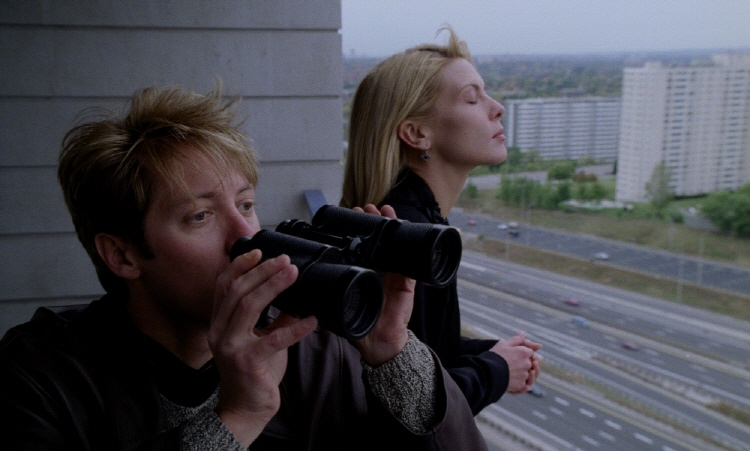
And then something happens at one late night. While returning to his residence by his car, Ballard happens to have an accident due to his serious mistake, and his car crashes right into the car belonging to Dr. Helen Remington (Holly Hunter) and her husband, who instantly gets killed on the spot. As Ballard and Dr. Remington are watching each other across the distance between them, something seems to be aroused between them, and that is accentuated further by Howard Shore’s metallic score.
Quite seriously injured as a consequence just like Dr. Remington, Ballard has to spend a lot of time at a hospital, and that is when he encounters a guy named Robert Vaughan (Elias Koteas) for the first time. At first, this rather weird dude just seems to be fascinated with all those scars and injuries on both Dr. Remington and Ballard, but it later turns out that he has been obsessed with a very weird sexual fetish: car crash.
Now many of you may roll your eyes for this apparently strange (and very unlikely) sexual fetish, but the movie phlegmatically tackles this undeniably strange subject with clinical interest, and we are alternatively horrified and fascinated with how the main characters virtually or literally drive themselves further for more pleasure and thrill. Once he gets himself associated more with Vaughn via Dr. Remington, Ballard soon finds himself drawn more and more to that strange fetish shared along them, and his wife is certainly eager to join them as a person always welcoming anything kinkier.
Needless to say, their sexual obsession with car crashes including those famous cases including James Dean and Jane Mansfield becomes more perilous along the story, but, not so surprisingly, this does not stop them at all. Quite heedless about the undeniable danger of car crash as before, they keep exploring how they can possibly get more kick from their shared sexual fetish. You may understand them to some degree, if you have ever toyed with your own sexual fetish in private just for, well, getting more.
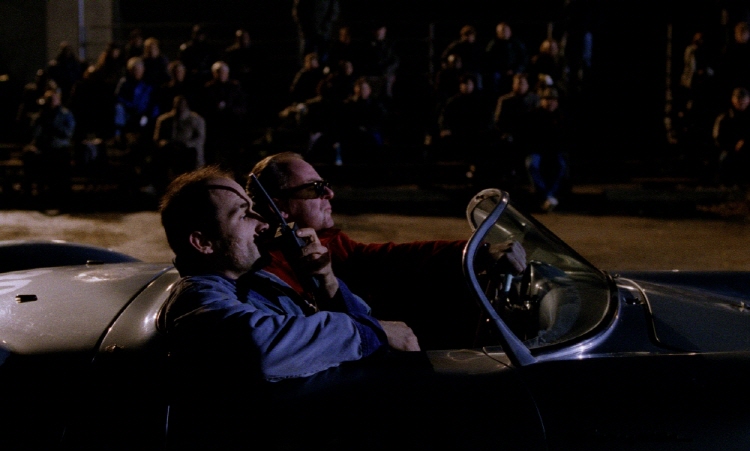
Everything in the movie depends a lot on Cronenberg’s coldly analytical approach to his inherently controversial story materials – and how the main cast members of the film willingly throw themselves into this daring artistic attempt of his. While James Spader, who is usually good at being odd and morbid as shown from Steven Soderbergh’s “Sex, Lies, and Videotape” (1989), brings some offbeat quality to Ballard’s detached fascination with his newly discovered sexual fetish, the other main cast members including Holly Hunter, Elias Koteas, Deborah Kara Unger, and Rosanna Arquette are also equally fearless, and Unger and Koteas are particularly terrific as their respective characters show more of their fluid sexuality later in the story.
Besides being one of the most notable works in Cronenberg’s filmography, “Crash” adamantly remains as one of those challenging cult films you will admire regardless of whether you like it or not in the end. To be frank with you, I still hesitate to embrace it more than before, but I observed its many boldly sexual moments with a lot of fascination from the beginning to the end, and I was sort of glad that the movie is not aged at all in its disturbing but undeniably interesting qualities.
As appreciating more of the distinctive qualities of “Crash”, which should not be confused with that Oscar-winning film at any chance, I now reflect more on how steadily Cronenberg have continued in his distinguished filmmaking career. Even though you may not like all of his films, he has been quite consistent as developing and expanding his own territory for more than 40 years, and, as recently shown from Coralie Fargeat’s “The Substance” (2024), his films have considerably influenced many other filmmakers out there during last two decades. He is indeed one of the most important movie directors of our time, and I sincerely hope that he will keep fascinating us as before.


 Seongyong's Private Place