
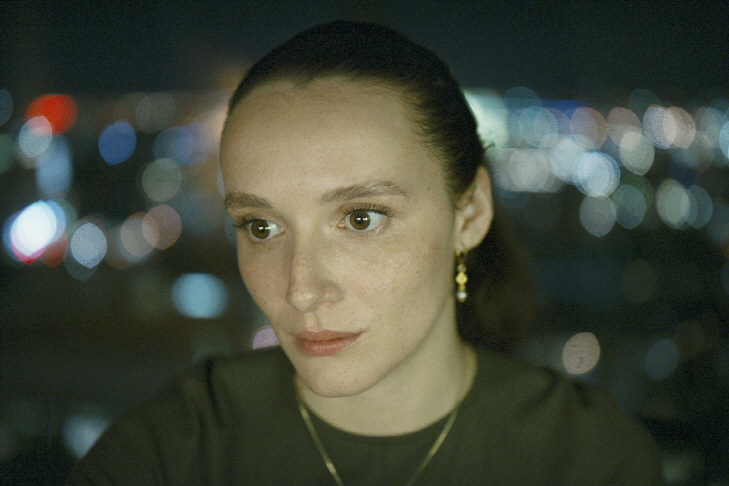
“Red Rooms” is a disturbing but compelling mix of psychological thriller and character study. Closely following the obsessive behaviors of its rather enigmatic heroine, the movie makes us all the more curious about what really makes her tick, and we also come to brace ourselves as she goes deeper and deeper into one unspeakable crime while not looking away at all.
The opening part of the movie succinctly and effectively establishes what Kelly-Anne (Juliette Gariépy) has been obsessed with. When she is not working as a model to be photographed, she spends most of her spare time onto a notorious dark web crime involved with serial killings, which was recently solved with the arrest of the culprit. Right from the first day of the following trial, she patiently waits near the courthouse building early in the morning for getting into the courtroom first, and then we soon see the beginning of the trial, which is impressively presented in one continuous take during next several minutes.
The crime in question is pretty heinous to say the least. The culprit is accused of murdering three adolescent girls not only for his twisted pleasure but also selling the video clips of his atrocious killings in the dark corners of the Internet. It is really fortunate that the culprit was eventually arrested after several months of investigation, but there is not any definite evidence to incriminate him besides several indirect pieces of evidence against him, and his lawyer is already quite determined to emphasize on the reasonable doubt on whether he is really the one who committed all those horrible crimes.

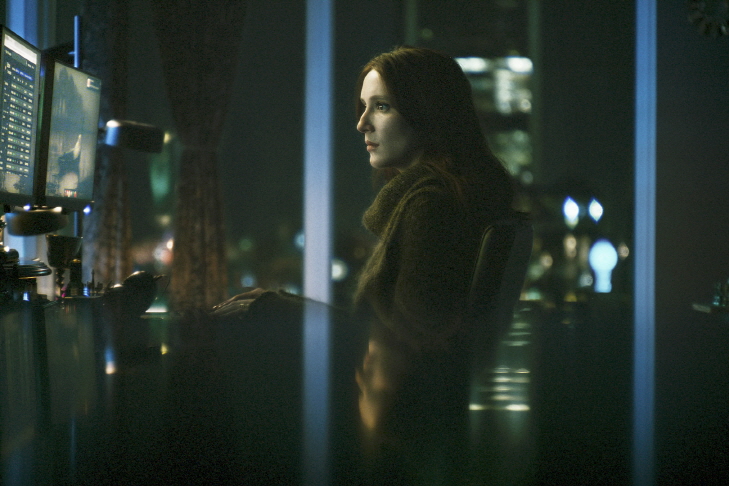
Kelly-Anne simply watches the ongoing trial day by day without signifying much on the surface, and we see more of how much she is obsessed with the case. Because she happens to have a particular set of skills involved with online search and hacking, she can go deeper into where the culprit was supposed to be operating before his eventual arrest, and we slowly come to gather that she has been searching for something important for a while.
However, neither she nor the movie specifies what she exactly wants, and that is the main source of suspense in the film. Does she simply wish for bringing the justice for those unfortunate young girls? Or, does she actually want to jeopardize the trial via whatever she is looking for? Regardless of whatever we think or feel about Kelly-Anne, she remains coldly focused on her little personal mission – even when she happens to befriend a young woman obsessed with the case as much as her.
That young woman’s name is Clémentine (Laurie Babin), and she is a lot more expressive than Kelly-Anne in comparison. As your average groupie, she is apparently quite smitten with the culprit, and she does not hesitate to insist in front of those reporters out there that he is wrongfully accused. It goes without saying that she is troubled as much as Kelly-Anne, but Kelly-Anne later lets Clémentine into her little apartment for an unspecified reason which may be elusive even for herself.
With Clémentine functioning as sort of counterpart for Kelly-Anne, the movie delves further into how willingly Kelly-Anne throws herself more into the case. Around the point where the video clips showing how two of the victims were murdered are presented in the story, the movie thankfully handles this alarming moment with considerable restraint and care, but we are still horrified and chilled even though we simply observe the emotional reactions caused by those reprehensible video clips.
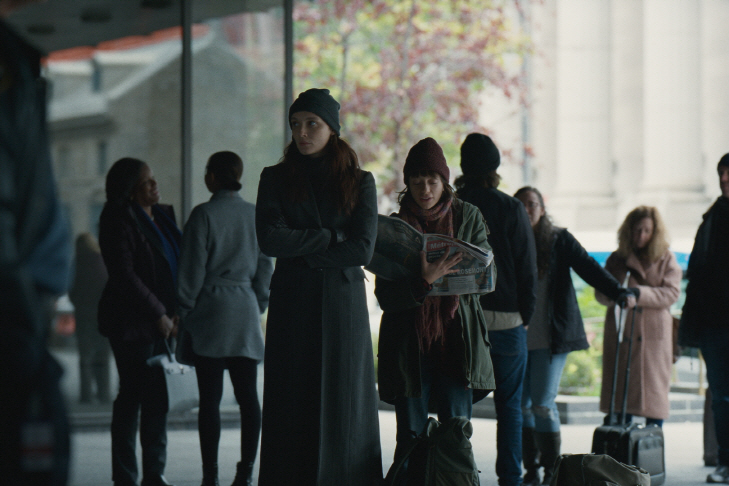
And we come to sense more of how emotionally damaged Kelly-Anne is. Was she really a troubled person from the beginning? Or, was she actually traumatized by whatever she came across during her increasingly risky online investigation? We only keep guessing on her true motive even when she finally gets a golden opportunity to obtain what she has been looking for so long, and what consequently follows next is another powerful moment to remember.
Everything in the movie depends on the detached but undeniably electrifying performance of Juliette Gariépy. Although we do not get to know that much about her character even at the end of the story, there are several key moments where her poker face crumbles a bit to give us some glimpses into whatever is churning inside her character’s mind, and Gariépy did a terrific job of bringing considerable emotional intensity to the screen without any exaggeration at all.
In case of several other supporting performers around Gariépy, they are all effective in their respective roles. While Laurie Babin somehow makes her pathetic character a bit more sympathetic than expected, Elisabeth Locas is often harrowing as the grieving mother of one of the victims, Maxwell McCabe-Lokos is mostly silent but looks suitably creepy as the culprit.
On the whole, “Red Rooms”, directed and written by Pascal Plante, is worthwhile to watch for how it deftly and thoughtfully handles its very sensitive main subject while also working as a first-rate psychological thriller, though this is not definitely something you can watch casually on Sunday afternoon, As Friedrich W. Nietzsche once said, the abyss gazes also onto you when you gaze long into the abyss, but, this time, the abyss not only gazes onto her but also remains inside her, and that surely leaves some thoughts for us.


 Seongyong's Private Place