

South Korean film “Harbin” is so serious and ponderous that it often forgets engaging or entertaining its audiences. I do understand that it attempts to be a grim and gritty period drama about one famous real-life national hero and his several comrades, but, boy, what a piece of dry and mediocre seriousness it is. To be frank with you, there is not particularly anything to surprise and enlighten me and other South Korean audiences on its serious historical subject, and that is the main reason why I observed this rueful dirge without any care or attention at all.
Because I and many other South Koreans already know well about the real-life incident on which the movie is based, I think it is fair to tell you in advance that what Ahn Jung-geun (1879 ~ 1910) and his several comrades planned at the time was succeeded on October 26th, 1909. Their target was Itō Hirobumi, the Prime Minister of Japan who is probably the most notorious Japanese historical figure in the Korean history except Toyotomi Hideyoshi. This dude was the central figure in the Japanese colonization of Korea during the 1900s, and he came to a Chinese city named Harbin, which incidentally belonged to Russia along with its surrounding area during that time, for a diplomatic meeting with Russian government officials on that fateful day.
The story begins with Ahn, played by Hyun Bin, and a bunch of his comrades gather in Vladivostok, Russia seven days before the day of assassination. As they and many other Korean independence fighters are cornered more and more, they eventually decide to assassinate the Prime Minster of Japan when he arrives in Harbin, and despite being still quite devastated by what recently happened to him and many other comrades, Ahn is very determined to accomplish this risky mission. As a matter of fact, he demonstrates his strong will and determination to others via a rather bloody act of oath at one point early in the film.
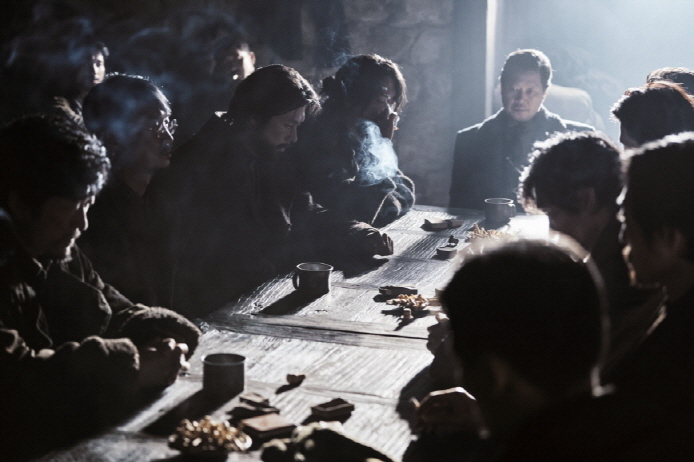
Ahn and several other members including Woo Deok-sun (Park Jeong-min) and Kim Sang-hyun (Jo Woo-jin) quickly embark on the preparation for their assassination plan, and this is alternated with the relentless pursuit by Mori Tatsuo (Park Hoon), a cold-blooded Japanese officer who once encountered Ahn on a battlefield. Although Ahn spared the life of Mori and a few other surviving Japanese soldiers at that time, Mori has felt quite humiliated about that, and he is surely ready to catch Ahn by any means necessary after being informed about the assassination plot.
Around the middle of the story, it becomes apparent to Ahn and his few trusted comrades that there is an informer among them, and the mood becomes more tense as they try to find the informer in addition to avoiding Mori and his men. There is a quietly tense sequence where Ahn and his comrades wait for any incriminating moment on a train, and everything eventually culminates to whether Ahn really can confirm the informer as time is running out for him and his comrades.
However, we cannot care that much about what will inevitably happen in the end because the screenplay by director Woo Min-ho, who has been mainly known for “Inside Men” (2015), his co-writer Kim Min-seong, often meanders and stumbles in terms of characterization. Ahn and many other characters in the film frequently talk and talk about their political belief, but their dialogues and speeches mostly feel flat and bland without giving any insight into their personality or humanity, and you may instead come to notice more of how much they smoke as endlessly discussing on their assassination plan inside those shabby and stuffy places where they are hiding from the Japanese Army.
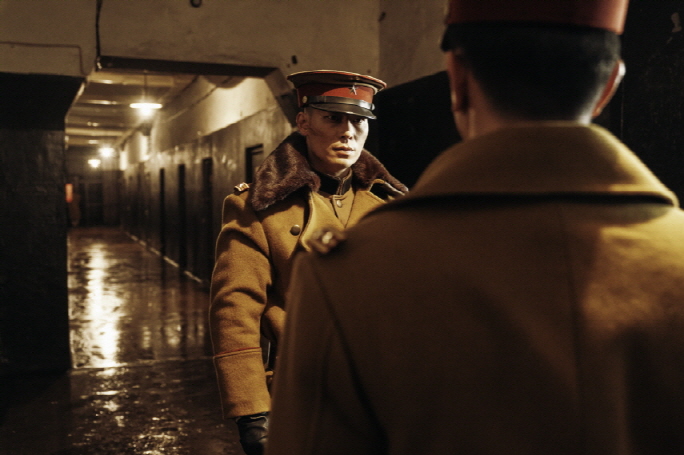
In case of their Japanese opponents in the story, they are also not that interesting either. While Mori merely functions as the main antagonist of the story, the Prime Minister of Japan is depicted as a plain bureaucratic authority simply following the imperialistic interest of his country, and that is sort of refreshing in my humble opinion. Lily Franky, a Japanese actor whom you may remember for his good performances in several works of Hirokazu Kore-eda, is surprisingly believable in his low-key acting, though the movie does not give him many things to do except looking haughty or thoughtful during his brief appearance.
Hyun Bin and several other main cast members in the film try to fill their archetype roles as much they can, but many of them are limited by their flat characters from the very beginning. While Park Hoon is only demanded to look to cold and intense throughout the film, Park Jeong-min and Jo Woo-jin manage to distinguish themselves to some degree, and Jeon Yeo-been is so under-utilized that we cannot help but notice that her role is the only one substantial female character in the story.
In conclusion, “Harbin” does not have enough personality and substance to hold out our attention before eventually arriving in its predetermined finale. At least, it looks slick and competent in technical aspects thanks to the first-rate crew members including cinematographer Hong Kyung-pyo (He previously worked in a number of recent notable South Korean movies including Bong Joon-ho’s Oscar-winning film “Parasite” (2019), by the way), but I was only left with the growing hollow impression on my heart and mind, and I am already quite ready to move onto whatever I can watch during the remaining few days of 2024.


 Seongyong's Private Place