

Documentary film “Sugarcane”, which is currently available in Disney+ in South Korea, is alternatively chilling and heartbreaking with its emerging big picture of one tragic past in Canada. As already known to many of us via recent news reports a few years ago, thousands of young Indigenous people in US and Canada were taken to many Catholic residential schools where they were frequently mistreated and abused, and the documentary looks close into the remaining human pain and trauma resulted by this heinous historical crime.
The documentary is pretty personal to Julian Brave NoiseCat, who directed it along with Emily Kassie. As shown in the documentary, his father Ed was actually born in one of those Catholic residential schools for Indigenous people, which is located near to Williams Lake Indian Reserve No. 1 (It is also called “Sugarcane” by local people, by the way). Ed’s mother, who is still alive, was sexually abused by one of those priests of that Catholic residential school while working there, but she is understandably not so willing to tell anything about what happened to her during that horrible time of hers.
While following NoiseCat’s efforts to get to know more about his hidden family history, the documentary also closely observes the efforts of a local activist named Charlene Belleau, who was crucial in exposing the hidden secret behind that Catholic residential school. It turned out that more than 100 Indigenous people died and then promptly covered up around the school, and, as pointed out to us around the end of the documentary, this is just a small portion of the atrocities committed around many other Catholic residential schools which were established across Canada and US around the 19th century.
The purpose of these horrible schools was pretty deplorable to say the least. By forcing those many young Indigenous people into Westernization and Christianity, the priests and nuns of these schools attempted to eradicate the ethnic/cultural identity of young Indigenous people once for all, and those young Indigenous people had to endure a lot of mistreatment and abuse in addition to constant racial discrimination.
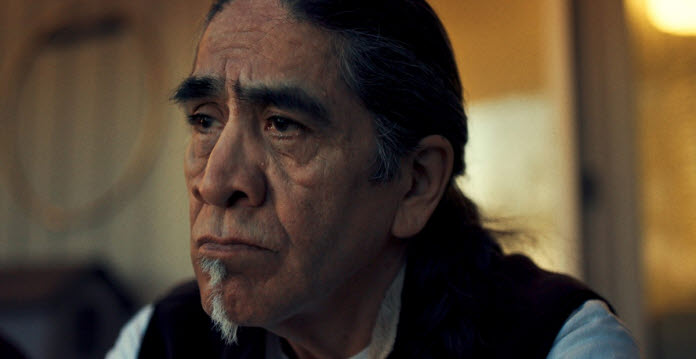
The atrocities of those Catholic residential schools were eventually gone around the late 20th century, but their ramifications remain among many Indigenous people as shown from the documentary. While NoiseCat’s father is still haunted by whatever he had to endure when he was very young, we also meet several old local Indigenous people damaged in one way or another by their traumatic experience with Catholic residential school, and one of the most heartbreaking moments in the documentary comes from when one of these unfortunate people openly expresses about how much he remains angry and traumatized even at present.
In case of Willie Sellars, who is the current chief of Williams Lake First Nation, he is really tries hard to bring more attention from the media and the public to what happened at that Catholic residential school in his region. Thanks to his and many other activists’ efforts, the Prime Minster of Canada eventually comes to Williams Lake Indian Reserve No. 1 for giving a public apology, but there are still a lot of more atrocities to be discovered and exposed, and Sellars and many other activists including Belleau are certainly willing to go for that.
Meanwhile, we are also introduced to Rick Gilbert, the former chief of Williams Lake First Nation. He is a devoted Catholic who sincerely takes care of his small church along with his wife, but he also remembers well how much he was mistreated during his hurtful years at that Catholic residential school, and that is why he and several other Indigenous figures go to the Vatican for meeting Pope Francis.

After meeting the pope, Gilbert subsequently has a brief meeting with a priest who is incidentally the Superior General of the Missionary Oblates of Mary Immaculate, which was closely associated with the Catholic residential school for Indigenous people in US and Canada. The priest listens to Gilbert with genuine care and compassion, but then his following response is as perfunctory as that public statement from the Pope, and we wonder whether anything can be really changed at all in the system.
Deftly juggling its three different narrative lines, the documentary eventually culminates to some powerful personal moments to linger on your mind for a while. At one point later in the documentary, NoiseCat comes to have a more serious conversation with his father, and Ed comes to face how that long struggle with his pain and trauma also affected his family members a lot. Eventually, Ed goes to his mother’s house for an honest conversation with her on their past, but his mother still cannot tell anything about their past. Although we can only listen to their private conversation, her pain and trauma somehow feel quite palpable to us nonetheless, and we can only imagine how much she is still reeling from that.
In conclusion, “Sugarcane”, which won the Directing Award at the US Documentary section of the Sundance Film Festival early in this year (It also recently won the Best Documentary Award at the Nation Board of Review, by the way), is unforgettable in its thoughtful and sensitive presentation of the scars and damages caused by the historical atrocities which should be known more in public. In short, this is one of the best documentaries of this year, and you may want to know more about its important social/historical subject after watching it.


 Seongyong's Private Place
Pingback: 10 movies of 2024– and more: Part 2 | Seongyong's Private Place
Pingback: My Prediction on the 97th Academy Awards | Seongyong's Private Place