

“Small Things Like These” presents a somber but intense drama about one ordinary person who happens to face a very difficult moment of choice. He can simply look away from an ongoing injustice in his little town, but he also cannot possibly ignore what he saw, and the movie did a commendable job of engaging us more in his growing personal conflict along the story.
Cillian Murphy, who also participated in the production of the film, plays Bill Furlong, a coal merchant living with his dear family in a small rural town of Ireland in the middle of the 1980s. As Christmas week is coming, Bill certainly becomes busier than before, and the early part of the film shows us how diligently he works day by day around the town.
On one day, Bill happens to see something rather disturbing. When he does some delivery at a local Catholic convent early in the morning, he witnesses a young woman taken into the convent against her will, and this happening continues to haunt his mind even after he returns to his cozy residence. As shown from a series of following flashback scenes, his mother was unmarried when he was born, and she also could have been taken to the convent if it had not been for the generosity of her wealthy female employer.
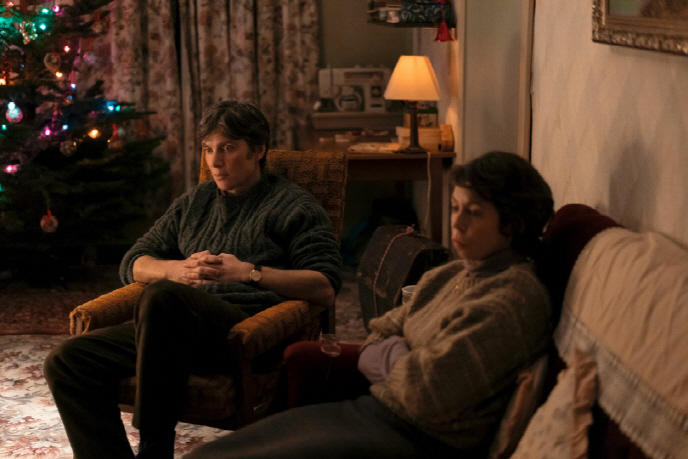
If you have ever seen Peter Mullan’s “The Magdalene Sisters” (2002) or Stephen Frears’ “Philomena” (2013), you surely know what is going on inside the convent. As mentioned at the end of the film, thousands of unmarried pregnant women were confined in those “Magdalene asylums” in Ireland from the 18th to the late 20th centuries, and these “fallen” women had to endure a lot of abuse and labor exploitation in addition to being separated from their babies forever.
The movie quietly illustrates how many people around Bill are willing to look away from this ongoing injustice in their town. Bill later tells his wife about what he witnessed, but she does not care that much because she does not want her husband to disrupt their fairy comfortable daily life at all. As subtly implied to us in one way or another throughout the film, the church has exerted considerable influence over the town and its residents just like many other places in Ireland during that time, and Bill and his family can be stigmatized and then ostracized by many of their neighbors if he ever steps outside the line to which everyone else in the town faithfully sticks under the church.
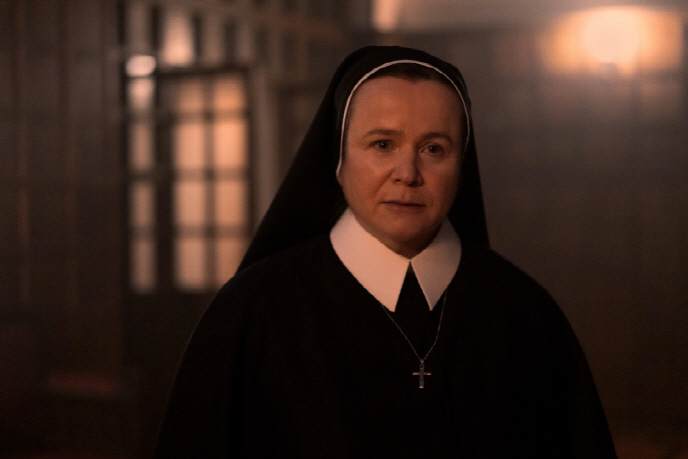
Nevertheless, Bill cannot help but care more, especially after he witnesses a bit more of what is going on inside the church. Reminded more of how his mother would have been without her kind employer, he certainly becomes all the more conflicted, but the oppressive power of the church, which is sternly represented by the Mother Superior of the convent, always hovers around him even when he is alone.
The screenplay by Enda Walsh, which is adapted from the novel of the same name by Claire Keegan (Her other novel “The Quiet Girl” was recently adapted into an Oscar-nominated movie, by the way), takes its time building the tension surrounding its plain hero, and it eventually leads us to a particularly intense scene where Bill comes to have a little private meeting with the Mother Superior of the convent. Their conversation sounds seemingly plain at first, but we come to sense more of what is being exactly exchanged between them below the surface, and this surely unnerves us more.

Murphy, whose career was recently boosted further thanks to his Oscar-winning performance in Christopher Nolan’s “Oppenheimer” (2023), gives us a masterclass of restraint and subtlety. He initially does not seem to be signifying that much on the outside, but his mostly taciturn appearance in the film ably suggests whatever is churning inside his character’s increasingly conflicted mind, and we come to have more empathy and understanding on what is being at stake for his character. When his character eventually makes a small but important decision around the end of the story, Murphy is utterly captivating to watch, and the movie presents this with considerable dramatic effect even though it firmly sticks to its restrained mood as before.
Around Murphy, several other cast members hold each own place well. Young performer Louis Kirwan is poignant as young Bill during several flashback scenes, and he is supported well by Michelle Fairley and Agnes O’Casey, who play Bill’s mother and her generous employer, respectively. While Eileen Walsh is effective as Bill’s concerned wife, Helen Behan and Zara Devlin are also solid in their small but crucial supporting roles, and Emily Watson is often chilling as deftly conveying to us the heartless sides of her character.
On the whole, “Small Things Like These”, which is directed by Tim Mielants, is a modest but undeniably powerful movie to be appreciated for its palpably realistic presentation of the story and characters, and it will remind you of how difficult it is sometime for many of us to do the right thing. As nervously implied during the end credits of the movie, what finally happens at the end of the story may not amount to that much, and the church will surely continue to dominate over the town and its people as usual. Nevertheless, there is also some small light at the end of the dark emotional journey in the movie, and that will make you reflect more on the importance of individual conscience and compassion.


 Seongyong's Private Place