
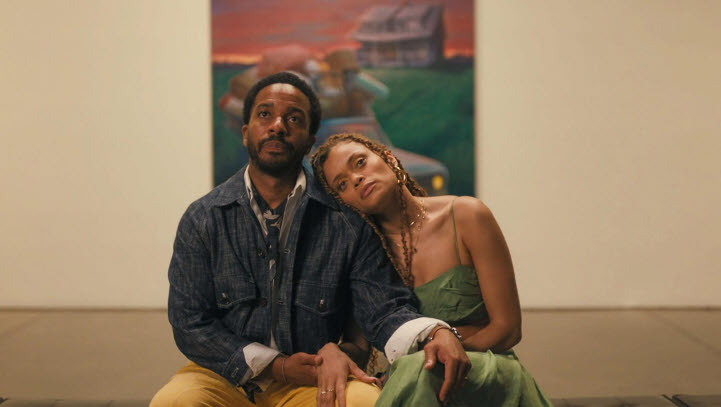
“Exhibiting Forgiveness” looks into the deep trauma of a man still haunted and tormented by his abused childhood. When that painful past of his suddenly returns to him, he has no choice but to face and deal with those old emotional issues with his abuser, and the movie lets us empathize more with his inner struggles as handling his intimate family drama with a lot of sensitivity and thoughtfulness.
The early part of the film succinctly establishes how Tarrell (André Holland) has had a fairly good life on the whole. While he has made a considerable professional success as a rising African American artist, he and his musician wife Aisha (Andra Day) have lived pretty well with their little son, and his mother Joyce (Aunjanue Ellis-Taylor) will soon move to a better neighborhood from her old one, though she is rather reluctant about that.
And then there comes an unexpected thing when Tarrell visits his mother’s neighborhood along with his family for helping her a bit before her upcoming moving day. His drug addict father La’Ron (John Earl Jelks) returned some time ago, and he seems really changed in this time after hitting another bottom of his misery as shown from the opening scene. Still reeling from all those painful memories associated with his father, Tarrell understandably does not want to see his father again at all, but Joyce insists nonetheless that he should try to talk with his father at least, and he eventually decides to do that as advised by his concerned wife.
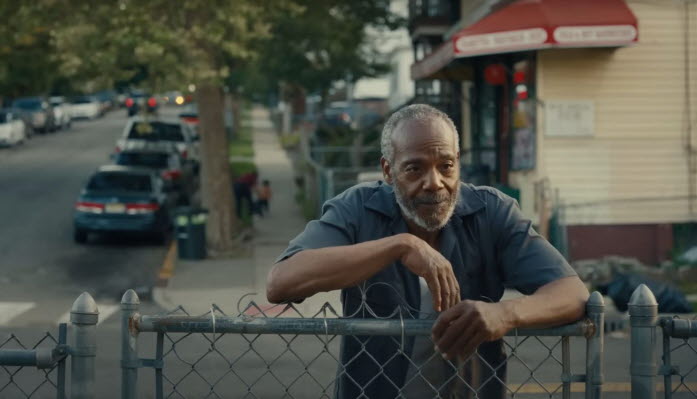
Of course, things do not go that well between Tarrell and his father when they later meet and then begin a little private conversation between them. While La’Ron sincerely wants to be forgiven by his son, he is often inclined to evade what he did to his son during that grim period, and this only exacerbates Tarrell’s old pain and anger, no matter how much he tries to understand and forgive his father. As already shown to us early in the story, his mind still violently reacts to his old childhood trauma, and this certainly scares both his wife and their son.
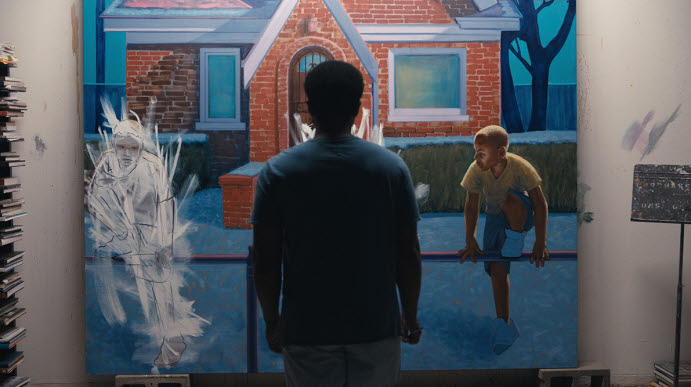
Around its middle act, the movie delves more into Tarrell’s childhood trauma via a series of flashback scenes. We see how much La’Ron cruelly abused young Tarrell (Ian Foreman) just like his father did to him a long time ago, and it is really heartbreaking to observe how much this abuse of his damaged his son’s heart and soul. As a guy still remembering well a number of hurtful moments of physical/emotional punishment committed by my parents and several other adults around me during my childhood and adolescent years, I understand Tarrell’s resulting trauma to some degree, and I must tell you that I often distance myself from my parents no matter how much they emphasize these days that they really love me.
Meanwhile, the screenplay by director/writer/co-producer Titus Kaphar, who has been mostly known for his acclaimed artworks before making a feature film debut here in this movie, shows some care to Tarrell’s family members. In case of a crucial scene between La’Ron and Joyce early in the film, we come to sense a long history of pain and love between them behind their casual conversation, and it becomes more apparent that Joyce still does not forget his worst moments in the past even while actively pushing her ex-husband toward their son. When Tarrell and Joyce become more honest about their respective feelings about La’Ronlater in the film, they are only reminded more of how differently they feel about him, and that leads to another conflict in the story.
While the story eventually arrives at a moment of closure for everyone in the story, the movie wisely avoids getting too sentimental as powerfully reminding us that some emotional scars cannot possibly be erased or healed at all. During the last scene of the film, we get a rather symbolic moment showing how our hero finds a way to make some peace with his childhood trauma at last, but the following small glimpse of hope and optimism is accompanied with a lingering sense of bitterness.

As the center of the story, André Holland, who has been one of the most dependable actors working in Hollywood since his memorable supporting performance in Barry Jenkins’ Oscar-winning film “Moonlight” (2016), gives an engaging performance filled with vivid human nuances and details. While mostly looking calm, gentle, and sensitive throughout the film, Holland is also very convincing in how Tarrell’s mind often gets triggered by his childhood trauma beyond his control, and we come to understand more of how difficult it really is for him to confront his father.
Around Holland, several main cast members have each own moment. While Andra Day does much more than performing the original song for the film, Aunjanue Ellis-Taylor is poignant during her key scene with Holland later in the film, and John Earl Jelks is also excellent as a broken man still struggling to recognize and repent for what he did to his ex-wife and their son. In case of young performer Ian Foreman, he holds his own small place well during his several scenes with Jelks, and his good performance is also connected well with Holland’s without any awkwardness.
In conclusion, “Exhibiting Forgiveness” is a modest but poignant drama about the personal struggles with childhood trauma, and I admire a lot its mood, storytelling, and performance. This is surely a promising start for Kaphar’s filmmaking career, and it will be interesting to see what may come next from him after this commendable debut work.


 Seongyong's Private Place
Pingback: 10 movies of 2024– and more: Part 2 | Seongyong's Private Place