
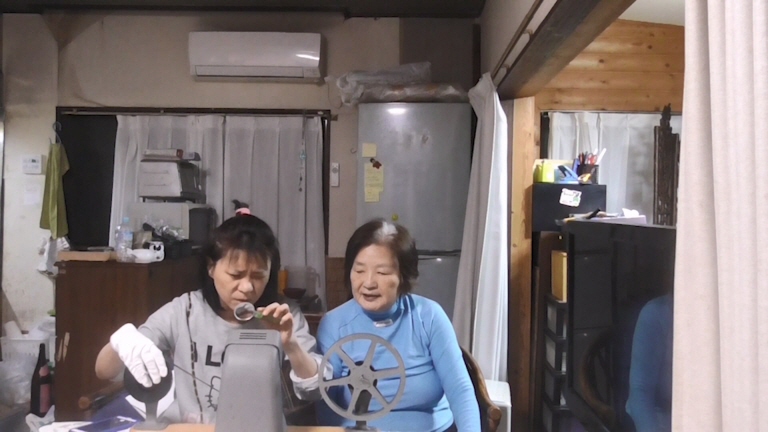
Documentary film “The Voices of the Silences”, which won the Mecenat Award for Best Documentary when it was shown at the Busan International Film Festival in last year, is about one defiant old Korean Japanese woman and her old but valuable chronicles of her fellow Korean people in Japan. As her several old documentary films on Korean Japanese get restored, we get to know more about her and many other Korean people’s struggles against discrimination and injustice, and it is really moving to observe how persistently she has gone her way during last several decades.
Her name is Park Soo-nam, and the documentary begins with a series of old footage clips shot for her independent documentaries which were recently restored for their considerable archival value. Her daughter Park Ma-eui, who made the documentary along with her mother, surely had a lot of things to ask her mother, but their first trial did not go that well because they only came to argue a lot with each other while the camera was between them, and then Park was sent to a hospital due to a sudden illness not long after that.
After being reminded again that her mother does not have much time to live, Park’s daughter resumes their little personal project, and we get to know more about Park’s life and career as the documentary looks over many archival photographs and footage clips. Just like many Korean Japanese people, who are also called Zainichi Koreans, Park had to endure a lot of prejudice and discrimination even when she was young, but that did not deter her at all, and she eventually pursued a writing career after her college graduation.
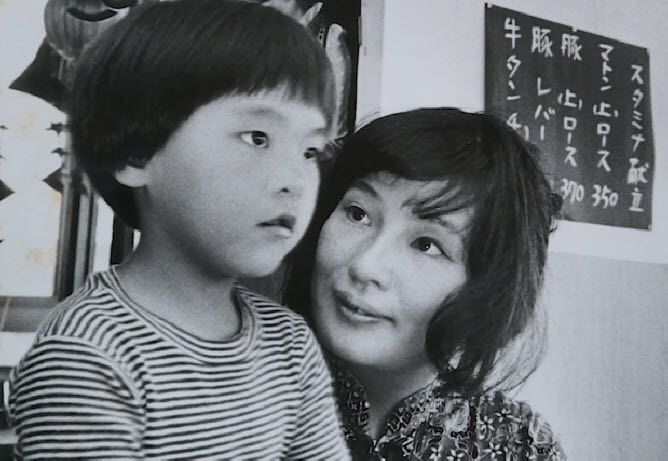
Her first big career break came from one horrible incident where a young Japanese woman was brutally murdered by a Zainichi Korean lad. While many members of the Zainichi Korean communities in Japan were naturally quite sensitive about this incident, Park willingly went forward for reaching out to not only that lad but also the parents of his victim, and her humane efforts for more understanding and compassion led to the publication of the conversation records of her and that lad, who was sadly executed only four years after his arrest.
Since that point, Park became more determined to record and remember the long history of the hardships of her fellow Koreans in Japan. After Korea was colonized by Japan in 1910, many Koreans came to Japan during next 35 years, but they were often treated like second-rated citizens, and I must tell you that they and their descendants are still being ignored and discriminated by the Japanese society and government even at this point.
After coming to realize how camera can be a more effective tool for recording not only facts but also emotions, Park eventually moved on making documentaries, and her first feature documentary film was the one about the Korean Japanese victims of the atomic bombing of Hiroshima in 1945. Yes, there were lots of Korean Japanese people in Hiroshima on that horrible day, but most of the surviving victims were not recognized at all by the Japanese government, and Park and many other activists in Japan have tried a lot for bringing more public awareness of this serious social injustice.
Park also focused on Nagasaki later, and that was how she came to make the documentary about another case of social injustice during the World War II. There were two small islands outside the city where hundreds of Korean and Chinese peopled were forced into labor exploitation, and both the Chinese government and the Korean government were not so amused when the Japanese government later got these two islands registered as the parts of a UNESCO heritage site. While her little documentary did not bring much attention when it was made in the early 1990s, her subsequent efforts during next several years brought more attention, and there is a poignant moment when a middle-aged Zainichi Korean is quite touched to see his father in the restored documentary.
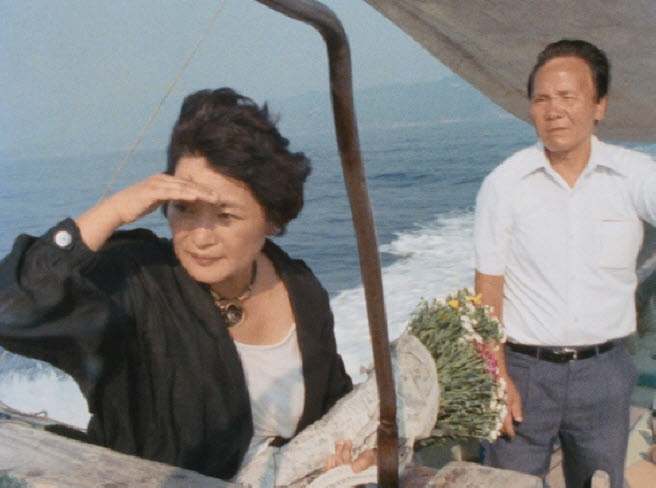
And she is also the one who brought a lot of attention to those unfortunate “comfort women”. After she frankly talked about them on a South Korean TV program around 30 years ago, many of surviving comfort women eventually came forward for demanding the justice for them in addition to bringing more public awareness in both South Korea and Japan, and Park has certainly supported them as much as possible as one of their main allies.
While looking over all those archival footage clips shot by Park, Park and her daughter come to bond more with each other, but they are also reminded more of Park’s impending mortality. Although she remains mostly healthy after recovering from that sudden illness, she subsequently begins to lose her sight, and there is a touching moment as she and her daughter talk about how her mind still remembers everything she diligently recorded for many years. While she cannot record anymore now, her documentaries manage to survive mainly thanks to her persistence, and they will certainly be more valuable in the future as another important chronicle of the Zainichi Korean diaspora in Japan.
In conclusion, “The Voices of the Silenced” is a powerful documentary as encompassing not only Park’s life story but also those life stories of many other Zainichi Koreans, and it is definitely one of the better documentaries of this year. I am not sure about whether it will get more audiences outside South Korea and Japan, but I assure you that it will certainly give you some more enlightenment on its main subject, and you will not easily forget Park and her admirable efforts for a while at least.


 Seongyong's Private Place
Pingback: 10 movies of 2024– and more: Part 3 | Seongyong's Private Place