
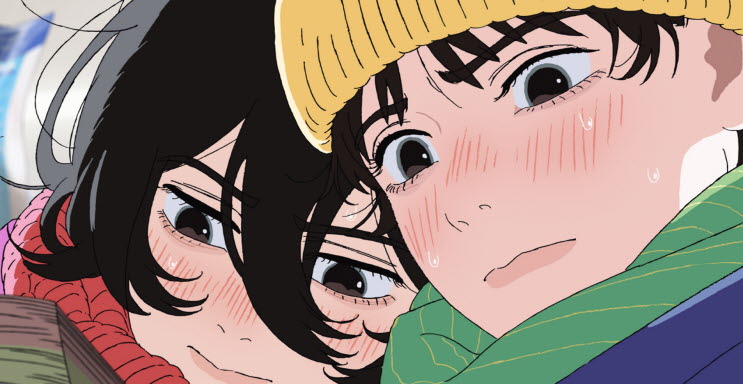
Japanese animation film “Look Back”, which has been enjoying a considerable success in South Korean theaters since it was released two months ago, is a small but poignant coming-of-age drama about the friendship between two young and talented collaborators. Although they are different from each other in many aspects, they get connected with each other via the deep passion toward an art form of their choice, and it is touching to observe how much their brief but precious relationship really means to each other.
The film opens with a wild and humorous scene based on a little comic strip drawn by Fujino (voiced by Yumi Kawai), an elementary school girl who has been quite confident about her drawing skill. This comic strip is her latest work to be included in the school paper, and she surely gets her artistic ego boosted a lot as her teachers and schoolmates give some praise to her latest work.
On one day, Fujino is told that some other female student, who is also quite interested in drawing although being frequently absent in the school due to her extreme shyness, will also contribute a bit as the background illustrator for her next comic strip to be featured on the school paper. What do you know, this student’s illustration work comes to draw more attention because, well, her meticulous drawing skill comes to overshadow Fujino’s relatively simple drawing style, so Fujino tries as much as she can for improving her drawing skill during next two years. Alas, her rival’s illustration still looks like being one or two steps ahead of whatever Fujino draws, and this eventually makes Fujino almost give up drawing around the time of their graduation.

However, something quite unexpected happens to her shortly after their graduation. Fujino is instructed to deliver a diploma to her rival’s residence, and that is how she finally faces her competitor at last. Their first encounter is pretty awkward to say the least, but, to her big surprise, her rival, who is incidentally named Kyomoto (voiced by Mizuki Yoshida), turns out to have been quite enthusiastic about Fujino’s comic strips during last several years, and it does not take much for them to get close to each other via their common passion toward drawing and comic books.
What follows next is a series of heartwarming moments showing how Fujino and Kyomoto support and boost each other during next several years. While Kyomoto diligently provides the illustrations for Fujino, Fujino comes to excel herself more as an aspiring comic book writer, and she also helps Kyomoto come out of her house much more often than before. As they happily work together whenever they are free, their passionate artistic collaboration comes to draw more attention, and it seems that they can go further together in their promising future career in the “manga” industry of Japan.
Around that narrative point, the screenplay by director/writer Kiotaka Oshiyama, which is based on the acclaimed manga of the same name by Tatsuki Fujimoto, brings some conflict to be inevitably followed by the bittersweet moments of regret and nostalgia later in the story. While they get matured more and more as artists, both Fujino and Kyomoto come to have different ideas about their respective careers in the future, and this consequently leads to Fujino belatedly reflecting on how important she and Kyomoto were to each other during those good days of theirs.
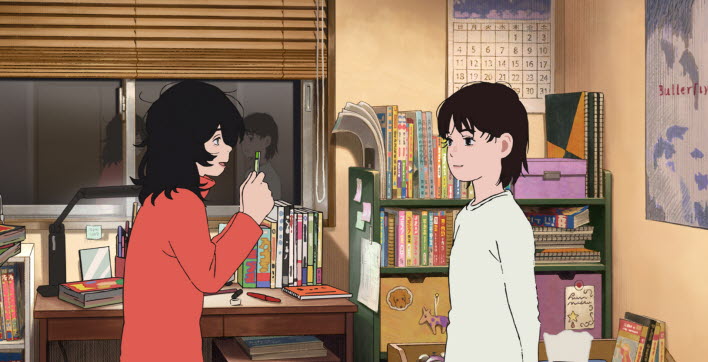
The mood naturally becomes quite melodramatic to say the least, but the film keeps flying with a considerable amount of style and spirit. Like many of recent cell animation films from Japan, the film is constantly filled with small and big details to be noticed, and these details are lovingly presented on the screen via the painstaking cell animation style from Oshiyama and his crew members. As a result, the film feels lean but very compact on the whole, and its rather short running time (58 minutes) does not feel too short at all as it does almost everything necessary for its story and characters without wasting any second of the running time.
The good voice performances from the two principal cast members of the film are also crucial for bringing more heart and soul to the story. While Yumi Kawai, who recently appeared in “Plan 75” (2022), ably fills her role with lots of plucky energy, Mizuki Yoshida effectively complements her co-star with her low-key voice acting, and the effortless chemistry between their voice performances provides a solid ground for several spirited moments of collaboration between their characters. As closely observing how hard their characters work on their little manga project, you will come to appreciate more of the passion and efforts behind not only manga books but also many kinds of graphic novel books out there, and I must confess that the film made me shed more of my remaining little snobbism toward comic books.
In conclusion, “Look Back” is an earnest but undeniably moving piece of work about artistic passion and friendship, and it is definitely one of the best animation films of this year in my humble opinion. Although this is his first directorial work, Oshiyama, who has worked as an animator in a number of acclaimed animation films such as “The First Slam Dunk” (2022) and “The Boy and the Heron” (2023), leaves quite an impression here in this film, and it will be interesting to see whether he will rise further as another promising Japanese animation director to watch during next several years.


 Seongyong's Private Place