
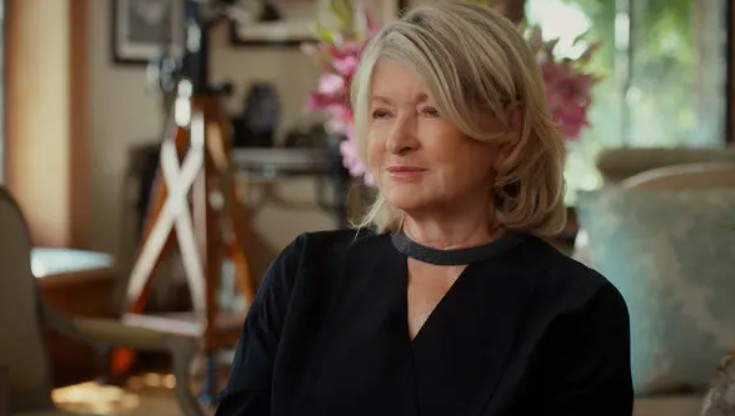
Netflix documentary film “Martha”, which was released in last week, tries to present some human sides of Martha Stewart. While she does not reveal anything particularly revealing about herself or her career, the documentary is mostly watchable as following the rise and fall of her fame in public, and you may wish that it threw harder questions at what was hidden behind her supposedly admirable achievement.
Now currently going through another chapter of her career and life, Stewart seems ready to tell all in front of the camera at the beginning. She reminisces about growing up under her rather problematic father and hard-working mother, and she also talks about how both of her parents influenced her in one way or another. Although he was not a very good father, she inherited his perfectionist attitude from him, and she also learned a lot from her mother’s constant diligence in their domestic environment.
After working as a young model for a while, young Stewart began to study at a college in New York City, and that was when she met and then fell in love with her husband Andrew Stewart. Despite her father’s strong objection, she eventually marries Andrew, and she was expected to become your typical housewife, but then she was not so happy as struggling to raise her only daughter, and that was why she got interested in getting a job once her daughter grew up enough.
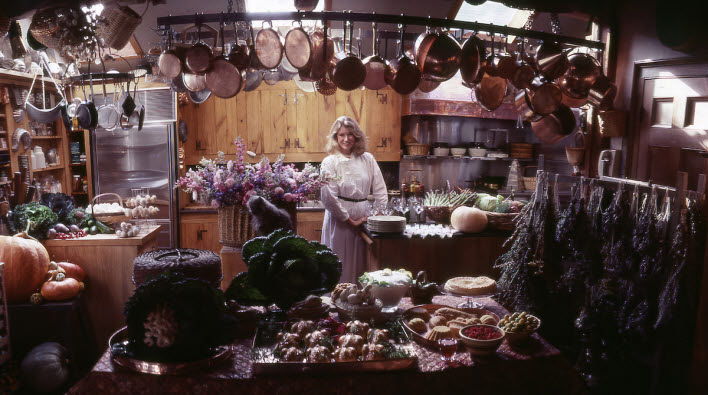
Thanks to her father-in-law, Stewart tried on the stock trading at Wall Street, but then she gave up once she saw how the stock market is often beyond anyone’s control. Like any usual perfectionist, she wanted to run things under total control, so, after quitting her stock trading job, she came to focus on improving a new house for her family in the suburban area outside the city. The house was pretty shabby at first, but it soon got look much better thanks to Stewart’s efforts, and then she began the catering business as often throwing many lovely parties for her friends and neighbors.
Because her husband happened to be a prominent figure in the publishing business in New York City, Stewart was soon approached by a well-known publisher who suggested to her that she should publish a book on homemaking, and, what do you know, that was the first stepping-stone toward her immense fame during next two decades. Once her first book got sold pretty well, she published more and more books on homemaking, and she quickly rose further as expanding her business and public image.
However, things did not go well inside Stewart’s house in the meantime. She and her husband became more and more estranged from each other, and Stewart admits that she had at least one extramarital affair behind her back during that time, though she also points out that her husband had much more affairs behind his back (Director R.J. Cutler and his crew seemed to interview Stewart’s husband, but they do not go into details that much here).
Anyway, Stewart’s eventual divorce with her husband in 1990 did not affect much Stewart’s public image as No.1 American homemaker, and her business kept growing and growing during the 1990s. When her company officially entered the stock market of Wall Street, she earned a lot more money than before, and it looked like the sky was only the limit for her and her company.

Of course, as many of you know, there came an unexpected disaster for Stewart during the early 2000s. She was accused of an insider trading involved with one biotechnology company run by one of her close friends, and she insists that she did not do anything wrong except lying a bit somehow. Anyway, once she became the target of the federal investigation, her public image was tarnished more and more as there came more talks about her toxic behaviors to others working under her, and this negative publicity certainly affected a lot her business.
Stewart does not admit or regret much about those toxic behaviors of hers in the past. and many interviewers keep emphasizing that she would have easily gotten away if she were a male businessman, but I must say that I have some reservation on that. She might deserve some admiration as a trailblazer for many women out there, but, come on, wasn’t she as toxic as, say, Cate Blanchett’s equally problematic character in Todd Field’s “Tár” (2022)?
In the end, Stewart was sentenced to a five-month incarceration, and the excerpts from her personal diary give us a little glimpse into what might be the bottom of her life and career. While quite depressed and devastated at first, she subsequently found some will and strength to endure the next five months, and then she got a chance to re-charge her social status not long after she was released. She reluctantly agreed to appear in a TV show where a bunch of invited celebrities roasted a certain infamous public figure together, and, what do you know, she surprised everyone with much more laughs than expected, and the public came to embrace her again.
Overall, “Martha” does not delve that much into its human subject, but it is mildly enjoyable and informative if you are not that familiar with Stewart’s life and career like me (I only vaguely knew about her public image except that criminal record of hers, by the way). From the documentary, I could only see Martha the businesswoman instead of Martha the human being, but that will probably be enough for you.


 Seongyong's Private Place