

South Korean Netflix film “Uprising”, which was released a few weeks ago, is a bitter and brutal period drama about an intense class conflict in the background of a big historical war in Korea during the 16th century. While it often strikes and shocks us with numerous violent and bloody moments, the movie engages us with broad but strong characters and competent storytelling, and the result is one of the better products from Netflix during this year.
During its early part, the movie establishes the complicated relationship between Cheon Yeong (Gang Dong-won) and Lee Jong-ryeo (Park Jeong-min). Just because her mother became a slave around the time of her pregnancy, young Choen Yeong, played by Jin Jae-hee, also becomes a slave despite his father’s desperate protest, and he is subsequently sent to the house of one of the most influential military officials in the kingdom, where he works as a new whipping boy for the military education of his master’s son.
Of course, the master’s son is none other than young Jong-ryeo, who is played by Lee Yoon-sang. As watching young Jong-ryeo pathetically struggling every day, young Cheon-yeong decides to take care of the matter for himself mainly for avoiding getting whipped a lot by the master, and, what do you know, he comes to show more talent and potential while having a helpful extra training session with the master’s son at every night.
However, though Jong-ryeo’s swordsmanship and other military skills do get improved a lot during next several years, but he is still not good enough to distinguish himself as much as his father desires, let alone pass the annual military annual examination. Again, Cheon-young comes forward to take care of Jong-ryeo’s trouble, and it seems he will be free at last if he helps his master’s son a bit as before.
Not so surprisingly, Cheong-yong finds himself betrayed at the last minute not long after getting that job done, and this only adds more anger and resentment toward not only his master but also the family members of his master including Jong-ryeo. It looks like all is lost for him when he gets captured shortly after his attempt to escape, but then things suddenly get turned upside down in the kingdom when the Japanese Army unexpectedly invades Korea. As not only King Seonjo (Cha Seung-won) but also many ruling class members prepare to leave the capital of their kingdom in advance, thousands of people of lower class in the capital become quite furious to say the least, and we soon see the royal palace being ransacked and then burned down not long after the king runs away along with his underlings to the North.
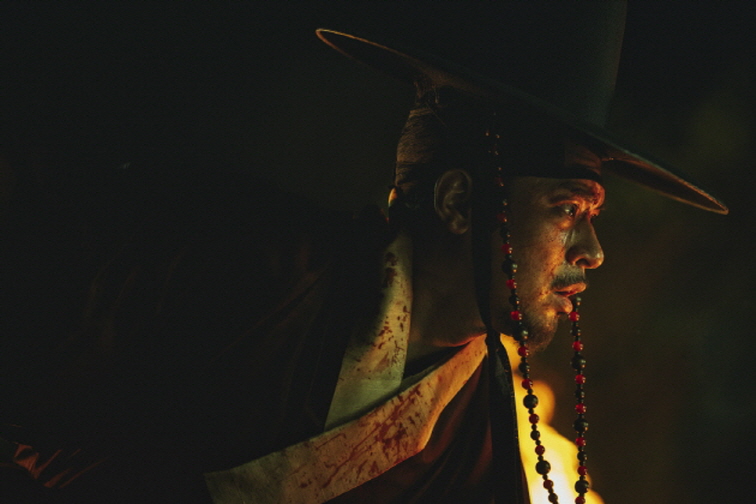
Around the time when Cheon-yeong manage to escape, all of Jong-ryeo’s family members get killed due to the revolt of their angry servants, and Jong-ryeo becomes quite angry and spiteful as shown from the first bloody action sequence in the film. Wrongly believing that Cheon-yeong is the one mainly responsible for the death of his family members, he is determined to catch and then kill Cheon-yeong, and he keeps looking for Cheon-yeong even after the war is eventually over 7 years later.
Meanwhile, after bravely fighting against the Japanese Army during last several years, Cheon-yeong and many other slaves are all hopeful about becoming free as promised to them at first. However, the king is not so willing to do that as more occupied with restoring the royal palace as well as the class system he is going to rule over as before, and he does not even give any damn about how millions of people of his kingdom are starving to death as struggling a lot among the ruins of the war right now.
The screenplay by Shin Cheol and Park Chan-wook adds more bitter irony to the story during its second half as Cheon-yeong and many of his comrades are cruelly betrayed by the king, who gladly gives full authority to Jong-ryeo for eliminating Cheon-yeoing and his comrades once for all. Following Jong-ryeo’s advice, the king also gives full immunity to a bunch of Japanese soldiers including one particularly notorious general, who are soon ordered to track down Cheon-yeong and his comrades in addition to do something else for the king’s benefit.

As Cheon-yeong and others around them get cornered in one way or another, director Kim Sang-man, who took the helm instead because Park was busy with making his recent HBO TV miniseries “The Sympathizer”, and his crew members including cinematographer Ju Sung-rim continue to serve us more bloody and violent action scenes. You will probably wince a lot as many heads and limbs are ruthlessly severed along the story, but they are skillfully presented while also serving the story and characters with considerable dramatic power, and you may get some dark laugh from when the king eventually gets a sort of comeuppance around the end of the story.
It certainly helps that the main cast members of the film fill their archetype roles with enough presence and personality. While Kang Dong-won diligently occupies the center as required, Park Jeong-min holds his own place well as the counterpart for Kang’s character, and Cha Seung-won and Jung Sul-il, who plays the aforementioned Japanese general, are also solid in their substantial supporting roles.
On the whole, “Uprising” works thanks to its good direction, storytelling, and performance, and that is enough to compensate for its several weak aspects including the glaring lack of the substantial female characters (Kim Shin-rok deserves the special mention for bringing enough spirit to the sole female main character in the story, by the way). It could be improved more, but it is mostly entertaining in my humble opinion, so I will not grumble for now.


 Seongyong's Private Place