

South Korean documentary film “Saving a Dragonfly” is painfully personal at times. It initially looks like as an innocuous personal project recording what was the most important period in the director and her classmates’ last high school year, but it comes to focus more on how things were often hard and difficult for many of them even after that period, and you will probably reflect more on how many of young South Korean students are pressured and then ground by their demanding education system even at this point.
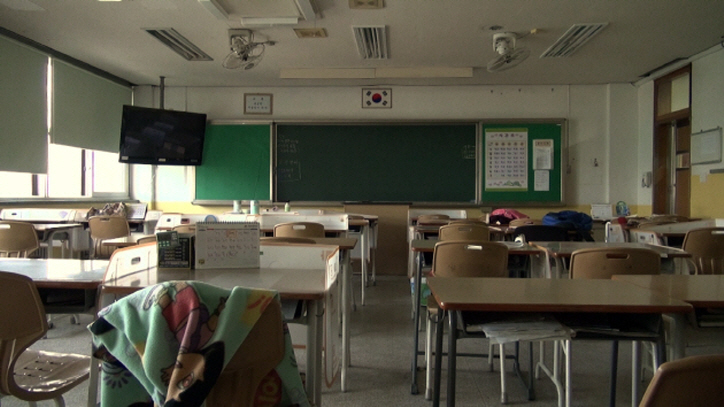
In 2014, director Hong Da-ye was a 17-year-old high school girl, and the first half of the documentary mainly consists of a series of raw footage clips shot by her video camera around November 2014. As some of you know, thousands of senior high school students in South Korea take the national college entrance examination in the middle of every November, and we see how Hong and her classmates were both excited and nervous while the examination was approaching day by day. Nevertheless, quite hopeful about her future, Hong decided to record her classmates for her little project, and her classmates willingly let her do that even though they were not exactly pleased about that as revealed later in the documentary.
After the examination, Hong and her close friends surely felt less pressured than before, but Hong and some of her friends subsequently experienced lots of disappointment due to their dissatisfying examination results. In case of Hong, she had to take another chance in the next year, and there is a brief moment showing how the situation was quite stressful for her as she prepared for the examination of the next year.

Anyway, Hong eventually succeeded in getting a good examination score for attending some prestigious art college where she could study on filmmaking, but she still felt a lot of anxiety and frustration as struggling to adjust herself to her new environment. Like many young people around her age, she believed that everything would go well for her once she went to a college (Full Disclosure: I also did as beginning my first undergraduate year at the Korean Advanced Institute of Science and Technology), but she soon came to face one big difficulty after another as a young adult, and that only made her more insecure and depressed than before.
Needless to say, many of Hong’s classmates also struggled a lot in one way or another. There is a particular friend of hers who is not named here in the documentary in contrast to many of her classmates, and this friend often called for some help and support to Hong. Although she was usually willing to help and support this friend at first, Hong eventually got tired and frustrated with this friend mainly because of struggling with her own mental instability, and this eventually led to the breakup between them.
The documentary presents Hong’s serious personal problems during that time without any hesitation. Often mired in self-hate and depression, she sometimes committed a serious act of harming herself just for feeling like being alive and in control, and she also actually considered suicide more than once. At one point, she reminisces about when she failed to jump from one of those big river bridges in Seoul due to a rather absurd reason, and that incidentally took me back to when I miserably failed in my first suicidal attempt during my high school year (I attempted to kill myself just because I felt quite depressed by my utterly disastrous mathematics test score, by the way).

Nevertheless, Hong kept recording small personal moments from her and others around her during next several years, and you will be often impressed by the honesty and sincerity observed from her earnest filmmaking process. At one point later in the documentary, she and her camera simply observe her parents from the backseat of her father’s car, and the conversation between her and her parents gradually becomes emotionally intense as they frankly talk about her mental struggles during last several years. While they might not have been always there for Hong, Hong’s parents tried their best for their dear daughter, and there is a little touching moment showing a number of sincere personal notes from Hong’s mother.
As looking back at all those raw footage clips shot by her around the last year of her high school period, Hong naturally becomes more reflective more about how she tried to capture what turns out to be a lot more fleeting than expected as time keeps going by. While she is quite different from her younger self at present, she has also grown up with some emotional maturation in addition to being ready to go forward with her life, and so have many of her close friends. Around the end of the documentary, her two friends gladly provide some reflective comments on what Hong shot during last several years, and you will see how much they have changed just like their friend.
In conclusion, “Saving a Dragonfly”, which incidentally comes from the one symbolic recurring moment in the documentary, is worthwhile to watch for its thoughtfully intimate presentation of personal memories and experiences, and, as a guy who has had a lot of problems involved with self-help and depression, I think the documentary will help many high school students out there in the South Korean society, who will come to see that they are not alone at all after watching this good documentary. That may not look like a big help, but it will mean a lot to them, I assure you.


 Seongyong's Private Place