
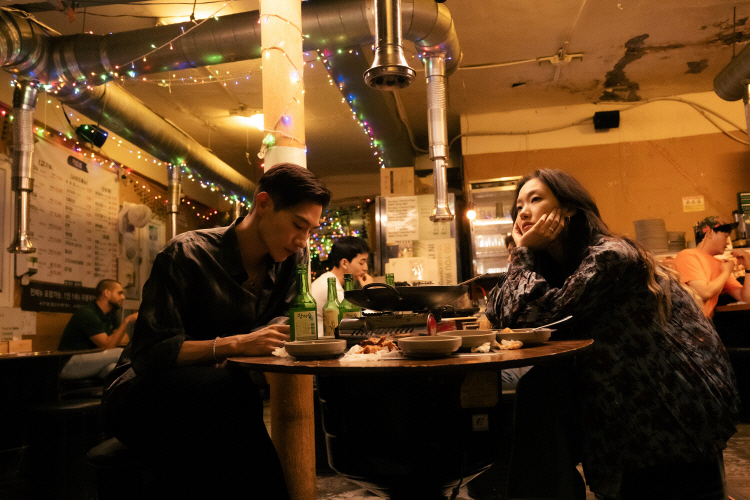
South Korean film “Love in the Big City” looks and feels typical at first. Yes, the unlikely friendship between a gay man and a heterosexual woman is not exactly an unconventional story material these days, but the movie has its heart in the right place in addition to being filled with enough personality and spirit, and we come to care about its two main characters more than expected.
After the prologue scene between its two main characters, the movie flashes backward to when they met each other for the first time during the freshman year of their college time. Right from their orientation week, Jae-hee (Kim Go-eun) draws the attention from many male students for her sassy and forthright attitude, but Heung-soo (Noh Sang-hyun) is just mildly amused mainly because of his homosexuality.
Nevertheless, as they study along with many other students in the French literature of their college, Heung-soo finds himself more fascinated with Jae-hee. She does not hide her irrepressible spirit and personality at all in front of others, and that certainly makes a big contrast with how Heung-soo has been strenuously hiding his homosexuality from others including his widow mother, who has been adamantly in denial since she witnessed her son kissing his first boyfriend.
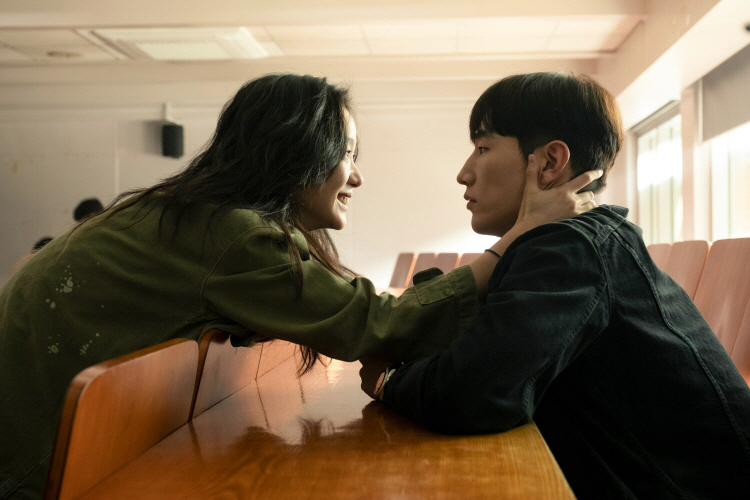
When Jae-hee accidentally discovers that Heung-soo is gay on one day, Heung-soo naturally becomes so anxious that he even considers killing himself at one point, but, what do you know, Jae-hee willingly covers him up when he may get exposed to others in their class, and they become quite close to each other after finding many common things between them. For example, they often enjoy wild nights of dancing and drinking, and Heung-soo is willing to accompany Jae-hee whenever she needs someone safe enough to dance and drink with, and he also introduces her to a bit of his hidden lifestyle.
Of course, others around them begin to talk about whatever is going on around them, but Jae-hee and Heung-soo do not mind at all because Heung-soo can safely hide himself behind this false rumor. As they often spend time together in Jae-hee’s bigger residence, they get more accustomed to each other’s presence, and Heung-soo eventually comes to move into Jae-hee’s residence after one very unpleasant incident happens to her.
And we see more of how much different their viewpoints on love and relationship. While she gets disappointed and devastated more than once due to a series of crummy boyfriends, Jae-hee always finds more will and strength somehow for keeping going in her search of real love. Although he is often as lonely as she is, Heung-soo frequently hesitates to open himself more to his latest boyfriend, and he still cannot be honest about his homosexuality to others around him except Jae-hee. After getting severely beaten by several homophobic guys along with his boyfriend at one point, he becomes more afraid of being true and honest to himself, and that certainly affects his relationship with his boyfriend, who turns out to be a very nice guy who genuinely loves and cares about Heung-soo.
Anyway, Heung-soo and Jae-hee continue to support each other as much as they can, and the story bounces from one episodic moment to another along with them. While they get older along the passage of time, they often push and pull each other like a real couple, but they always depend a lot on each other during the worst moments of their lives, and the story becomes more poignant when Jae-hee finally comes to find someone who can not only love her but also accept who she is.

The screenplay by Kim Na-deul, which is based on a part of the acclaimed novel of the same name by Park Sang-young (The novel was also adapted into a TV miniseries, which will incidentally be released during this month), balances the story and characters well between humor and pathos. While never overlooking how things can be quite grim and difficult to its two main characters due to their status as outsiders, the movie also feels quite cheerful with a considerable amount of youthful energy, and we come to root for them more than before as occasionally amused by the comic moments between them.
The movie is also carried well by the two good lead performers at the center, who did much more than looking believable in their character’s gradual personal growth along the story. As Noh Sang-hyun, who previously appeared in “Seoul Searching” (2016), diligently holds the ground with his earnest acting, Kim Go-eun, a charming and wonderful actress who has steadily advanced since her breakthrough turn in “A Muse” (2012) complements her co-star well with her showier performance, and their solid chemistry on the screen often compensates for several weak points in the movie including a rather under-developed subplot between Heung-soo and his mother.
In conclusion, “Love in the Big City”, directed by Lee Eon-hee, may not bring anything particularly new to South Korean queer cinema, but it works well enough to engage and then touch us, and its wide theatrical release in South Korean theaters reminds me again of how things have been changed a bit compared to when I hesitated to be honest about my homosexuality around the 2000s. Yes, there is still lots of prejudice and hate against me and many other LGBTQ+ people out there in the South Korean society (My parents are still in denial even though I came out to my family in 2016), but the movie may lead to more mainstream queer films to come in the future, and I sincerely hope that they will soon come to me and other South Korean audiences.


 Seongyong's Private Place