

Documentary film “Who We Are: A Chronicle of Racism in America” is basically a two-hour lecture on the American history of racism, but it is a passionate and enlightening one to recommend. Yes, whenever I think I have learned a lot about the American history of racism via books, movies, and documentaries during last few decades, there always comes something to enlighten me more, and this is one of such excellent documentaries.
The center of the documentary is Jeffery Robinson, an African American lawyer who also produced the documentary with directors Emily and Sarah Kunstler. At the beginning of the documentary, he is about to give a lecture on the long history of American racism in front of many audiences, and the documentary alternates between his lecture and his visits to a number of historical sites connected with the main subject of his lecture.
Needless to say, what Robinson and the documentary are going to present is not so pretty to say the least. At one point early in the documentary, he approaches to some white dude proudly holding the Confederate flag at a public spot, and then he starts a brief argument on the Civil War with this white dude, who keeps insisting that slavery was not the main cause of the Civil War even though he gets cornered by Robinson’s arguments bit by bit.
In contrast, the audiences of Robinson’s lecture are much more open-minded as he makes a series of effective presentations based on a bunch of various historical documents and records. Since the first African slaves were sent to America in the early 17th century, racism began to slip more and more into the American society via its inhuman slavery system, and Robinson certainly points out that many of those founding fathers of the US government were actually slave owners and had no particular conflict about that.
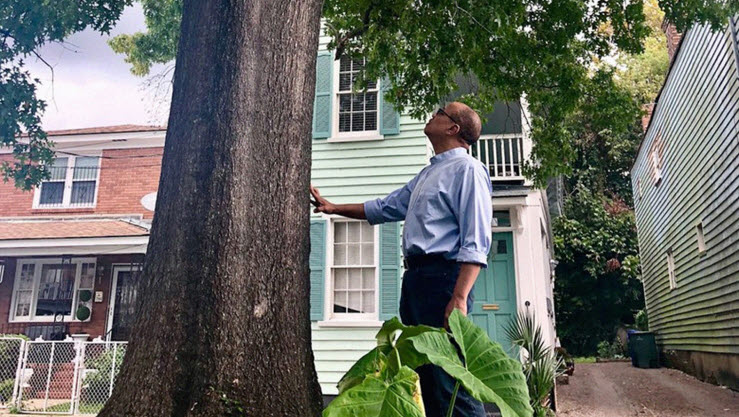
Around the late 19th century, a number of Southern states benefited a lot from their growing plantation industry mainly driven by slavery, and the documentary and Robinson show us how the American slavery system heartlessly crushed the humanity of millions of African slaves before the Civil War. We see a Southern historical site which was once a market for slave trade, and then we see an old building in New York City where many local businessmen earned a lot from slave trade and cotton business in the 19th century. As a matter of fact, even the mayor of New York city during that time openly considered staying neutral between the Union and the Confederate just because of that.
Anyway, the eventual abolition of slavery around the end of the Civil War finally seemed to open the way to freedom for those many emancipated African slaves, but, as many of you know, there soon came a backlash once the US government unwisely withdrew the troops from those Southern states, which were surely ready to oppress African American by any means necessary. Besides that unfair suppression on African American voters which is insidiously being continued even at this point, there were lots of racial violence against African Americans during next several decades, and many white people did not have any problem with that at all. For example, D.W. Griffith’s infamously racist silent film “The Birth of a Nation” (1915) was wholeheartedly embraced by the white population of the American society in addition to contributing a lot to the rise of that notorious racist organization, and it was even openly praised by President Woodrow Wilson at that time.
One of the most tragic incidents of American racism during the early 20th century is the Tulsa Race Massacre in 1921, which belatedly drew more attention during last several years (Full disclosure: I came to learn about it only after watching the HBO TV miniseries “Watchmen”). Just because of one very trivial incident between a young African American man and some white lady, an economically flourishing African American neighborhood in Tulsa, Oklahoma was completely wiped out along with most of its residents by those angry white mobs, and, not so surprisingly, none of the white perpetrators were arrested or punished.
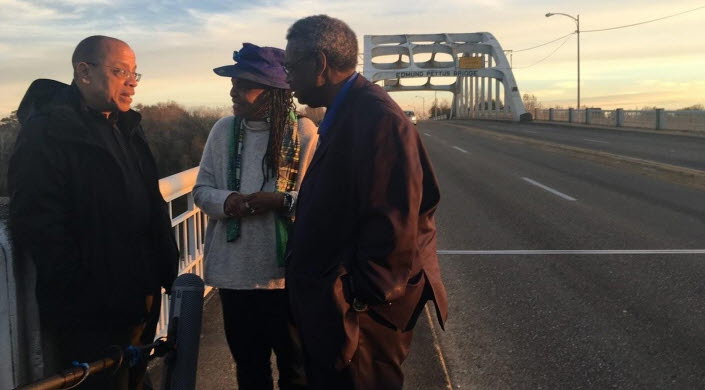
Around the time when Dr. Martin Luther King Jr. and many other civil rights activists came forward for more freedom and equality during the 1950-60s, things looked more hopeful as more people demanded racial justice. However, even King himself admitted later that he and others should be more skeptical and realistic about their long fight against racism, and their righteous movement quickly came to lose its momentum after he was assassinated at a motel of Memphis, Tennessee in 1969.
What was logically followed after that was another backlash against racial equality, and the American society has surely suffered a series of consequences for that. Besides the ever-constant poverty and crime rate in the African American population, we have seen more and more cases of police brutality driven by racism and white supremacy, and the documentary surely mentions some of the recent notable victims including Eric Garner.
Although it understandably feels bitter and skeptical at times, “Who We Are: A Chronicle of Racism in America” ends its lecture with some hope and optimism at least. Again, the American society is going through another social turbulence right now just like it did during the 1960s, and there have been some possibility for real social change despite that traumatic political rise of that orange-faced prick in 2016. I must confess that I am rather skeptical as your average cautious skeptic, but I sincerely hope that things will really get better for the American society and its people in the end.


 Seongyong's Private Place