
South Korean documentary “Life Goes On” is often sad and heartbreaking in its intimate presentation of several different persons who have tried to go on despite tragically losing their loved ones to some of the most traumatic accidents in the South Korean society during last three decades. While painfully accepting their irreversible personal losses, they also show some solidarity and compassion to each other as sharing their personal pain and frustration, and their individual stories remind me again of what has often been seriously disregarded and forgotten in the South Korean society for many years.
The documentary begins with Yoo Kyeong-geun, a plain family man who has been trying to demand more investigation on the sinking of MV Sewol incident on April 16th, 2014, which led to the death of more than 300 passengers including one of his daughters. At that time, his daughter happened to be going to Jeju Island along with many of her schoolmates, and, unfortunately, most of them died mainly due to the gross incompetence of President Park Guen-hye and her South Korean government.
What happened next to Yoo and many other grieving parents was quite unjust to say the least. No matter how much they protested for the truth and justice for their lost children, President Park and her government not only ignored them blatantly but also oppressed them a lot during next several years. For example, her despicable right-wing party and some powerful right-wing media companies willfully insulted and tarnished them by any means necessary, and, believe or not, there were also truly despicable thugs and bullies who gleefully ate junk food right in front of them when Yoo and his colleagues began a desperate hunger protest in public at one point.

In the end, President Park and her government were a lot more criticized as their sheer incompetence in responding to the incident was exposed more later, but Yoo and his colleagues remained dissatisfied as before. After President Park was consequently ousted, her successor, President Moon Jae-in, promised more investigation on the incident, but he and his party did not show much will or determination in keeping their promise, while many South Koreans became more inclined to forget and then move on without much thought or reflection.
This infuriating social apathy was evident when Yoo and his colleagues subsequently tried to install a big memorial for the victims of the incident in their city. While they had a fair share of supporters, there were also lots of people opposing against the memorial. These people impertinently argued that it would make their neighborhood look bad and disreputable, and, what do you now, some of them are the prominent members of President Park’s party.
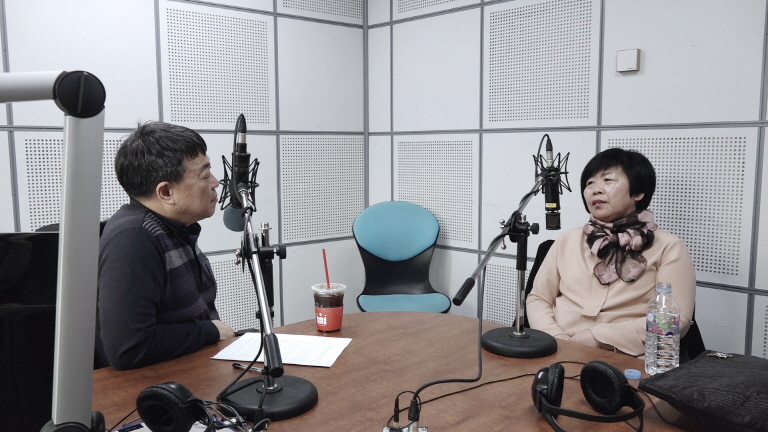
Meanwhile, Yoo began his independent podcast show, and that was how he came to meet and interact with many people who have suffered and endured a lot under the situations not so different from Yoo and his colleagues. In case of a guy named Go Seok, he lost his child to a big fire accident which killed more than 20 people including several young children on June 30th, 1999, and he has surely experienced his own grief and frustration despite his strenuous efforts on bringing more public awareness to child safety. In case of a middle-aged woman named Hwang Myeong-ae, her lost daughter was one of many victims of the Daegu subway fire incident on February 18th, 2003, and she still remembers how she and other surviving family members of the victims had to go there for collecting any remain of the victims for themselves.
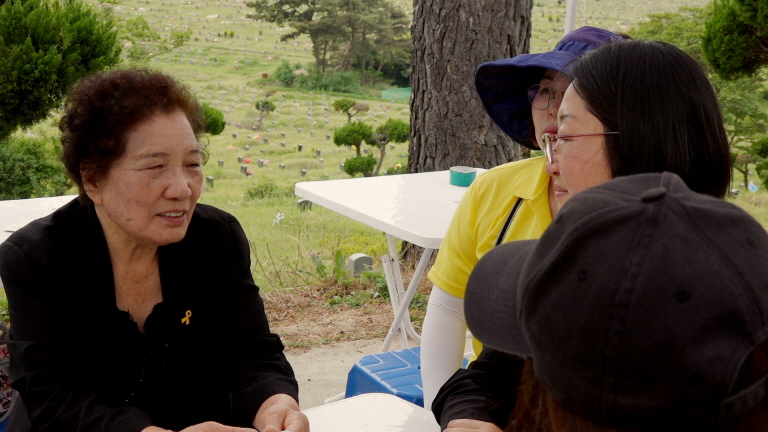
As talking more with these two people and many others via his podcast show, Yoo came to see that he and his colleagues was not alone at all from the beginning. As a matter of fact, late Bae Eun-sim, who had been a prominent public figure since the death of her young democratization activist son in 1987, willingly and openly showed solidarity and compassion to Yoo and his colleagues because she understood well their ongoing plight. Right after her son got killed due to police brutality, Bae bravely stood forward in public along with the parents of many other dead young activists, and they all were harassed and oppressed a lot just because they demanded truth and justice to the government just like Yoo and his colleagues.
Sadly, the South Korean society and people do not seem to learn much even at this point. During last 10 years, the sinking of MV Sewol incident has been faded away from our public consciousness just like many other disastrous incidents caused by negligence and incompetence before that, and I and many other South Korean people had another social/personal trauma when the Seoul Halloween crowd crush incident happened on October 29th, 2022. Again, the South Korean government and its current leader were more occupied with saving their face and position instead of doing anything for us as well as the surviving family members of those unfortunate victims, who also came to experience their own grief and frustration just like Yoo and the other surviving family members of the victims of the sinking of MV Sewol incident.
On the whole, “Life Goes On”, which is directed by Jang Min-gyeong, is a modest but poignant documentary which handles its important main subjects with enough care and respect. Yes, things may not be changed that soon in the South Korean society, but, folks, there is always hope as long as people are still capable of compassion and solidarity, and I and many other South Koreans really should keep remind that to ourselves more than ever.



 Seongyong's Private Place