
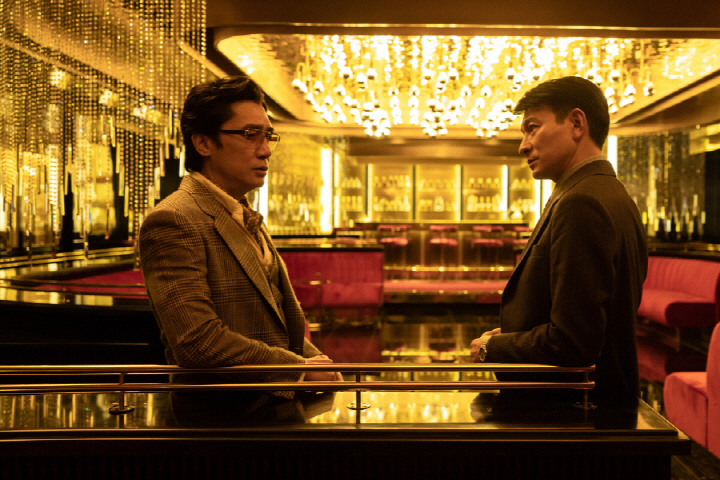
Hong Kong film “The Goldfinger” did not engage me despite lots of happenings during its 2-hour running time. While it wants to be a grand financial crime drama not so far from “The Wolf of Wall Street” (2013) on one hand, it also attempts to be a dry and earnest police procedural on the other hand, but, alas, the resulting mix is often too frustratingly murky and tepid to discern, and these two different story elements only cause jarring discords between them instead of getting mixed well together.
Tony Leung Chiu-wai, who has always brought a touch of class to any movie where he happens to appear, plays Henry Ching Yat-yin, a failed Chinese Singaporean architect who illegally entered Hong Kong in the early 1970s after running away from his hometown and his family due to some serious debt problem. Thanks to a moment of sheer luck, Ching subsequently gets himself involved with the seedy but lucrative real estate business world of Hong Kong, and it does not take much time for him to become one of the most prominent local businessmen operating in the city.
However, as already shown to us during the opening part of the film, everything Ching has built during next several years is about to be collapsed in the early 1990s, and he is also being investigated by the Independent Commission Against Corruption (ICAC), which is mainly represented by one of its principal investigators. Quite determined to arrest and then send Ching to the trial, Lau Kai-yuen (Anday Lau) clearly shows to Ching and his criminal associates from the beginning that he and his investigators are not an easy opponent at all, but Ching remains rather phlegmatic even though it seems everything is really falling down around him.
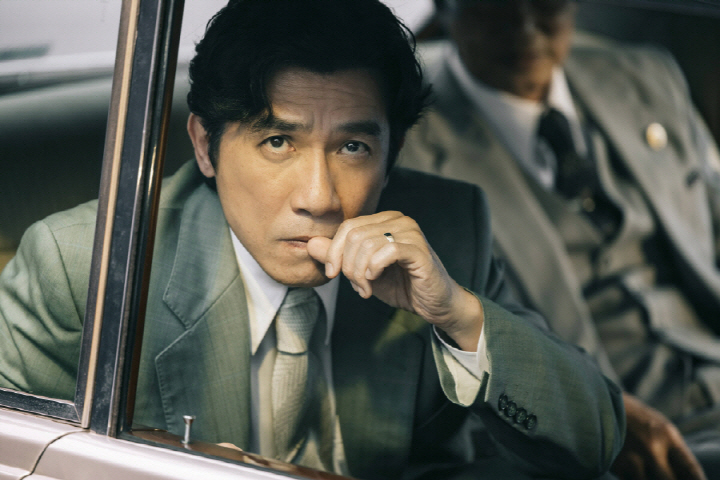
As Lau and his men interrogate Ching and Ching’s associates, the movie often flashes backward to Ching’s prime period during the 1970-80s. With the help from a number of greedy associates around him, Ching rapidly and aggressive expands his corporation step by step, and his corporation eventually becomes one of the biggest ones operating in Hong Kong. While not many people ask how solid the business profit of his corporation actually is just because everybody at the stock market is eager for any next big opportunity for more money, he and his associates often manipulate the stock price of the corporation for making it look much better on the surface day by day, and this will certainly remind you of that infamous Enron Scandal in the early 2000s. Like those scumbag executives of Enron, Ching and his associates care more about raising their stock price and how much they will benefit from that, instead of doing any real business down there.
However, the screenplay by director/writer Felix Chong does not delve much into what makes Ching tick except presenting him as an aloofly greedy bastard who will stop at nothing for his profit. Around its last act, we come to see more of how sneaky and manipulative Ching is, but Ching remains a superficial antagonist not interesting enough to hold our attention, and we still observe him from the distant without much care even during the last act.
The movie also makes several attempts to bring more energy and spirit into the screen, but I must say that the result feels like a pale and clumsy imitation of all those entertainingly excessive moments of “The Wolf of Wall Street”. I guess the movie wants to avoid any possibility of glamorizing the serious crimes of Ching and his associates, but that only reminds us more of how it lacks substance in terms of story and characters. Lots of characters come and go around Ching and Lau from the beginning to the end, but we never get to know any of them enough as none of them is developed enough to interest us, and we only find ourselves dully following Ching’s criminal rise and fall along the story. In addition, you may be also distracted by how a few substantial female characters in the film including Lau’s disgruntled wife are more or less than redundant plot elements.
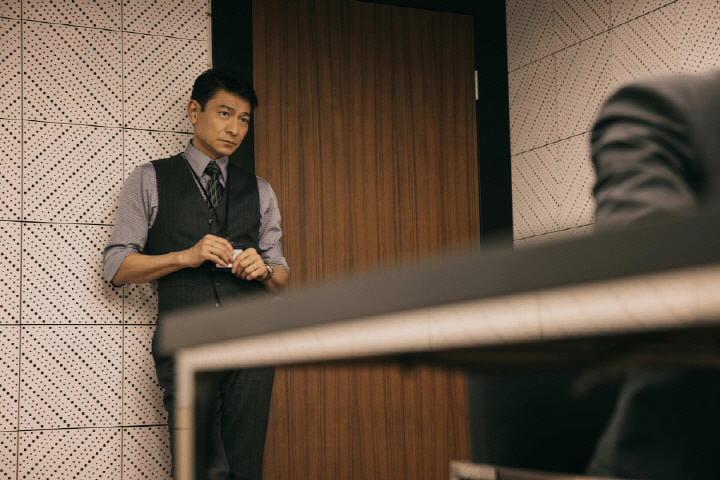
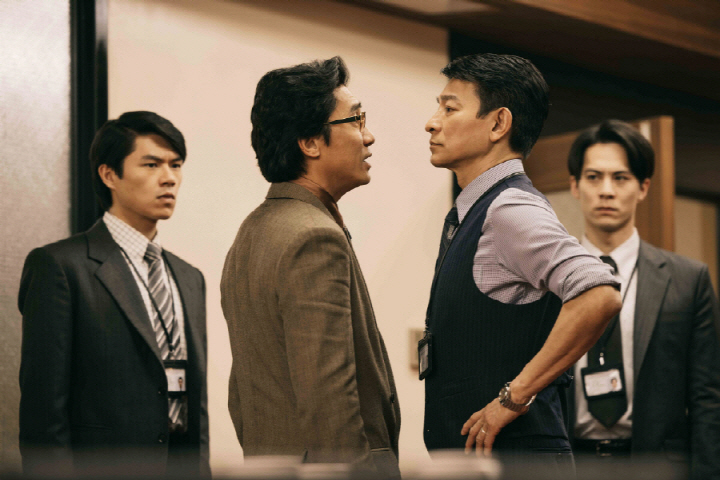
It goes without saying that there will eventually come a dramatic face-off moment between Ching and Lau later in the story, but the movie disappoints us again with its overlong anti-climactic finale which merely fizzles as tediously slouching toward the epilogue. At least, Leung did a fairly good job of embodying an utterly despicable man who always seems to have some strong cards behind his constantly unflappable appearance – even when it looks like there is not any possible way for him to get away with all those dirty deeds committed by him.
On the opposite, Andy Lau, who once appeared along with Leung in “Internal Affairs” (2002), is unfortunately stuck with his blandly stoic role, and it is really a shame that he and Leung do not generate much tension or chemistry between them like they once did in “Internal Affairs”. In case of several other main cast members, they are seriously wasted due to their thin supporting roles, but Simon Yam, who also appeared in “Internal Affairs”, manages to leave some impression as one of Ching’s key associates later in the film.
On the whole, “The Goldfinger”, which is incidentally inspired by a real-life financial business scandal in Hong Kong in the 1990s, blandly fails as trying to do a little too many different things together. Quite dissatisfied for watching its two charismatic lead actors getting wasted on the screen, my mind kept being taken to “Internal Affairs” and other better Hong Kong crime drama films out there, and maybe you should check out any of them instead.


 Seongyong's Private Place