

South Korean film “Dolphin” is a bit too plain and simple for me in terms of story and characters. The movie often tries to delve into the complicated emotional circumstance between its ordinary young heroine and several other main characters around her, but it somehow fails to develop its story and characters enough for holding our attention during its rather short running time (90 minutes), and that is a shame considering the good efforts from its main cast members.
At the beginning, the movie gradually establishes the current situation of Na-yeong (Kwon Yuri), a young woman who has lived her whole life in a small seaside village. When her parents suddenly died a long time ago, Na-yeong was taken by her father’s ex-wife Jeong-ok (Kil Hae-yeon), and then she grew up in Jeong-ok’s house along with Seong-woon (Hyeon Woo-seok), the son from Jeong-ok’s subsequent marriage which was also ended in divorce. Now she is an adult woman who works at a local newspaper, but Na-yeong remains attached a lot to her family, and she frequently prepares the lunch for not only her family but also a few guys working at Jeong-ok’s factory.
However, she and her family will soon have to go through some big change. Jeong-ok recently decided to marry a dude who is incidentally the editor of that local newspaper, and Na-yeong does not mind her stepmother’s upcoming marriage at all, but then her stepmother notifies to her that their family house will be sold sooner or later. After all, Jeong-ok will move into her new husband’s residence while Seong-woon is eager to leave for Seoul right after his upcoming high school graduation, and Jeong-ok thinks it is better for her and her family to sell the house as soon as possible.
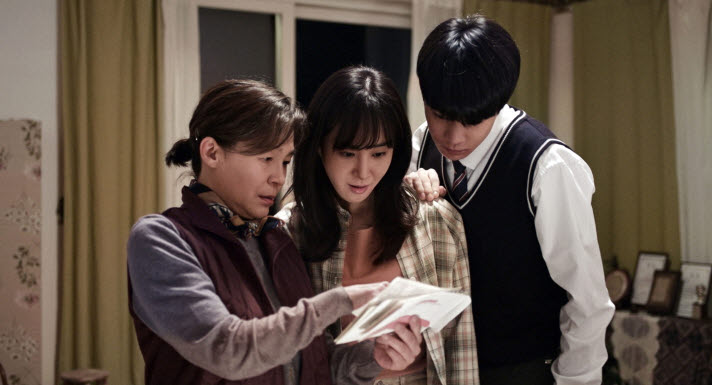
However, Na-yeong is not so pleased about that for an understandable reason. To her, the house has always been an important personal place full of old memories, and it is evident that she has put a lot of efforts on maintaining the house for many years. She is adamantly against selling the house even though Jeong-ok is willing to get a new place to live for Na-yeong, but, because her stepmother has the right to sell it as its sole owner, there is really nothing Na-yeong can do, no matter how much she protests about that. Nevertheless, she continues to prepare the lunch for her family and her stepmother’s employees as usual, while hoping that her stepmother may change her mind later.
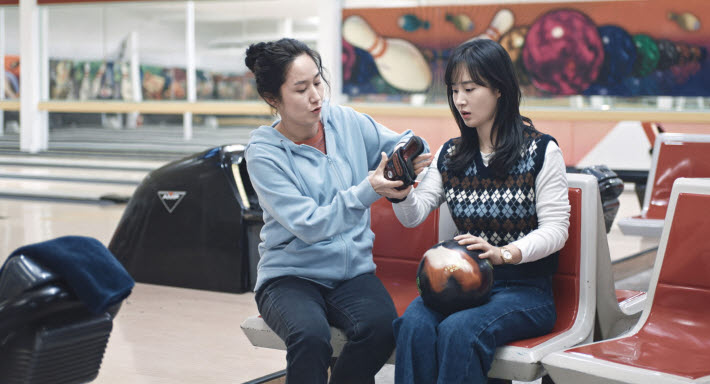
In the meantime, Na-yeong happens to be assigned to writing the article on a local bowling alley run by a woman named Mi-sook (Park Mi-hyun). Although the place is often empty, Mi-sook is still determined to run her bowling alley as long as possible, and Na-yeong comes to befriend this plucky woman after trying bowling for the first time in her life. While she is certainly quite clumsy during her first attempt, she soon gets more interested in bowling, which gradually functions as a sort of emotional ventilation for her.
In addition, there also comes a possibility of romance to Na-yeong via a young man who recently moved from Seoul for working at her stepmother’s factory. He does not seem to be bored by the quiet uneventful atmosphere of the village, and he looks like a good match for Na-yeong as they come to spend more time together, but Na-young is more occupied with how she can prevent the family house from being sold in the end.
Unfortunately, the screenplay by director/writer/co-editor Bae Du-ri simply meanders from one moment to another without developing enough story substance to engage us. For example, we do not get to know that much about Na-yeong’s family history, so we usually observe her stubborn position from the distance without much care or interest. In addition, several other main characters are not developed that well despite some interesting human moments between them and Na-yeong, and that is why the expected big melodramatic moment during the last act does not work as well as intended.

Nevertheless, the movie is not a total failure at all thanks to its main cast members, who come to us as convincing human characters under Bae’s competent direction. They are often demanded to fill some gaps and holes in the story, but, at least, their result is mostly solid enough for us to sense some life and history from their respective characters.
As the center of the story, Kwon Yuri steadily carries the film to the end, though I still think her character could be more engaging and sympathetic if the movie supported her diligent performance with more detail and substance to put on her character. In case of several other main cast members around Kwon, Kil Hae-yeong, Hyeon Woo-seok, and Park Mi-hyeon acquit themselves fairly well despite their underdeveloped supporting roles, and Kil is particularly effective during her several key scenes with Kwon.
In conclusion, “Dolphin”, whose title incidentally does not refer to a certain marine mammal but actually refers to a certain term used in bowling game, is dissatisfying due to its rather deficient storytelling, but it has some good elements to be appreciated, and it also shows the considerable potential from Bae, who made her feature film debut here. I cannot recommend the film for now, but it may be regarded later as the first small step in the career of another interesting South Korean female filmmaker to watch, and I will certainly wait for whatever will come next from her.


 Seongyong's Private Place