

South Korean film “Noryang: Deadly Sea”, the third and (definitely) final film of the trilogy after “The Admiral: Roaring Currents” (2014) and “Hansan: Rising Dragon” (2022), is often relentlessly epic and loud in what it is expected to present on the screen. Again, everything is pretty broad and simple in terms of story and characters, and that made me rather distant to a series of spectacles at times, but I admired how it kept going till the predestined ending without seldom boring me and other audiences around me.
The early part of the film establishes how the Japanese invasions of Korea (1592 ~ 1598) entered its final chapter due to the sudden death of Toyotomi Hideyoshi, the de facto leader of Japan who ordered his army to withdraw from Korea shortly before he died in 1598. As a result, every Japanese troop in Korea embarked on leaving Korean while also getting cornered more and more by the allied forces of Korea and China, who were certainly more determined to end the war as soon as possible.
As getting surrounded by the naval troops of Admiral Yi Soon-sin (Kim Yoon-seok) and his Chinese ally Admiral Chen Lin (Jung Jae-young), General Konishi Yukinaga (Lee Moo-saeng) and other Japanese generals must make a choice between their only two options: total surrender or outright battle. Time is running out for them day by day, and they are reminded again and again that Admiral Yi will not allow them to go away easily at any chance, and General Konishi comes to see that Admiral Yi must be held by any means necessary.
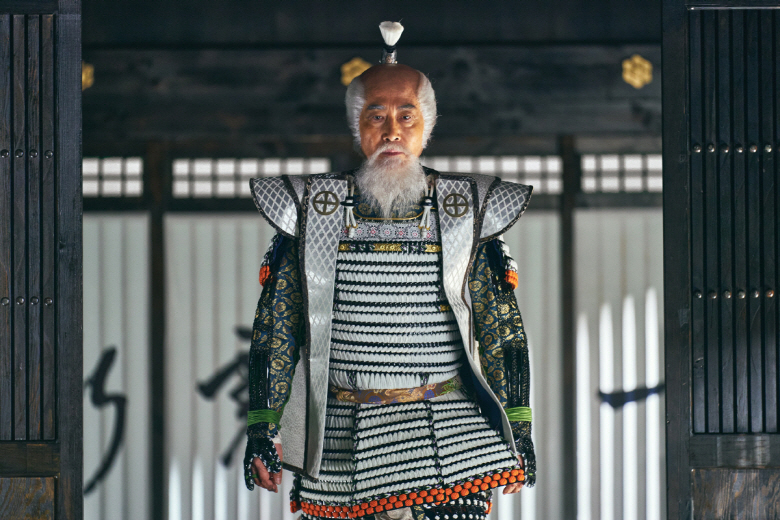
Fortunately for General Konishi, there is someone who can distract Admiral Yi at least for a while, and that is Admiral Shimazu Yoshihiro (Baek Yoon-sik), who is the commander of the Japanese naval force. Although he is not willing to save General Konishi from the ongoing trouble, Admiral Shimazu eventually changes his mind after persuaded by a messenger of General Konishi, and he and his naval troops soon begin to leave for where General Konishi and his troops have been stuck for several months.
Meanwhile, General Yi is clearly aware of what is going to happen sooner or later, but he has several problems on his side to deal with. Besides still being haunted by the tragic death of one of his sons, he has to persuade his Chinese ally to support him to the end of the impending battle to come, but Admiral Chen is not so willing to do that as considering a more convenient solution for him as well as their enemies. In addition, General Yi comes to learn that his king and several other high-ranking officials are already preparing for the aftermath of the war, and it is possible that he may be purged just because of being too famous and popular in the country once the war is officially ended.
Nevertheless, this growing trouble makes General Yi all the more determined to end the war on his own terms. Things will certainly be quite risky for him and his naval troops considering how desperate his enemies are, but he is going to give all the hell to his opponents for invading his country, and, again, he has a smart strategy to corner his enemies in one way or another.
Once everything in the story is set and ready for what would be known as the Battle of Noryang, the movie immediately goes for its full-throttle action mode, and, except during a few brief quieter parts, it goes on and on with lots of actions for more than one and half hours. You may feel numb from time to time, but the movie never get us lost amid numerous crashes and bangs thanks to director Kim Han-min’s competent direction, and Kim, who also directed the previous two films of the trilogy after impressing me and other South Korean audiences a lot with “War of the Arrows” (2011), shows again that he is a good action movie director who knows how to engage and thrill us.

However, just like its two predecessors, the movie sometimes feels rather flat in case of characters. Kim Yoon-seok, whom you may remember for his electrifying performance in “The Chaser” (2008), is as charismatic and forceful as Choi Min-sik in “The Admiral: Roaring Currents” and Park Hae-il in “Hansan: Rising Dragon”, but, again, General Yi remains as a merely commanding and honorable leader without much human complexity. General Yi was certainly an exceptional man in many aspects, and Korea was really lucky to have such a brave and clever man like him, but we never get to know or understand him much here except his sheer will and determination, and that is why the eventual ending, which will incidentally not surprise or shock any average South Korean audience at all, feels perfunctory instead of being really impactful on the emotional level.
Around Kim, several notable cast members of the film dutifully fill the spot as required. While Baek Yoon-sik looks firm and authoritative enough as General Yi’s main opponent, Jung Jae-young, Huh Joon-ho, Kim Seong-gyu, and Lee Moo-saeng are also well-cast in their crucial supporting parts, though I wonder how awkwardly their foreign language dialogues in the film sound to Japanese or Chinese audiences out there.
Overall, “Noryang: Deadly Sea” does not show anything particularly new about what I know about General Yi or the Battle of Noryang, but it mostly works despite its rather overlong running time (155 minutes). If you enjoyed its two predecessors, you will certainly not be disappointed, but I would rather recommend “War of the Arrows” first if you have not seen it yet. Even after more than 10 years have passed since it came out, I still remember that exhilarating action movie, but will I remember “Noryang: Deadly Sea” and its two predecessors for, at least, next several years? We will see.


 Seongyong's Private Place