

Pakistani film “Joyland”, which was selected as the Pakistani submission to Best International Film Oscar in last year (It was subsequently included in the shortlist, by the way), is a sensitive mix between family drama and queer story. Although the overall result is rather modest and restrained, it is fairly engaging thanks to its competent direction and a number of good performances, and it surely works an empathic window to human beings different from us in many aspects.
At first, the story revolves around a young man named Haider (Ali Junejo) and his poor family. While his wife Mumtaz (Rasti Farooq) is the one who has earned some money instead of him, he usually takes care of domestic stuffs including taking care of several daughters of his older brother Saleem (Sohail Sameer) just because he is currently unemployed, and this does not look that good to his ailing but stern father, who has been disappointed for not getting a grandson from Mumtaz or Saleem’s wife Nucchi (Sarwat Gilani) yet.
On one day, Haider goes to a local erotic dance theater because a friend of his told him that there may be a good job opportunity for him, but he is caught off guard to learn that it is actually an audition for the backup dancers for a transgender dancer named Biba (Alina Khan), who incidentally came across Haider at a local hospital early in the story. Because he is not so good at dancing from the beginning, Haider feels rather humiliated to say the least, but he is eventually persuaded to get himself hired because, well, he really needs to earn some extra money for his family.
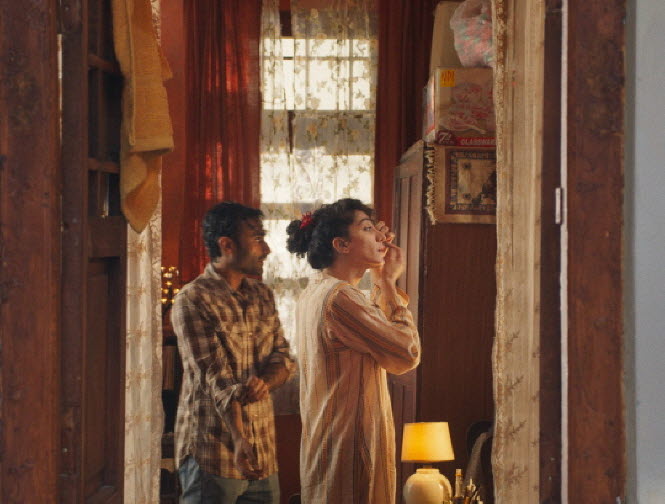
Without telling his family anything about what he will exactly do for money, Haider tries really hard for being as good as his fellow backup dancers. Although he surely needs lots of teaching and coaching right from the first day of the rehearsal, he gets some help and support from Biba, and then he slowly becomes interested and fascinated with her. After all, he never saw transgender people like Biba before, and Biba does not mind getting some attention from Haider at all as a confident lady not ashamed of her sexual identity at all.
In the end, Haider and Biba come to sense more of the mutual attraction being developed between them – especially after Haider helps Biba get a big breakout moment for her via a little brilliant idea he got from his wife. Although he hesitates at first when they are about to show more affection to each other, Haider soon finds himself more attracted to Biba than before, and Biba willingly shows more of herself and her life as they come to spend more time together night by night.
Of course, Haider does not dare to tell anything about this to his wife or his family, though he reveals to his wife on his real occupation. Moreover, he even finds himself quite confused about his sexuality as well as Biba’s sexual identity. Not knowing that much about how fluid sexuality can be, he is also not so sure about how he should regard Biba despite his growing affection toward her, and we are not so surprised when he inadvertently angers Biba when they try to have sex later in the story.
Meanwhile, the screenplay by director/co-editor Saim Sadiq, who incidentally made a feature film debut here, and his co-writer Maggie Briggs also pays attention to the growing frustration inside Mumtaz, who has her own issues to deal with. When she suddenly becomes pregnant, she understandably has mixed feelings about this as a woman who has been quite happy with her little professional career, and then she becomes more miserable as gradually being crushed by the patriarchy of Haider’s family. Because she is going to have a son, Haider’s father certainly comes to have more expectation, and she is eventually pressured to give up her job while getting no support or consolation from her husband.
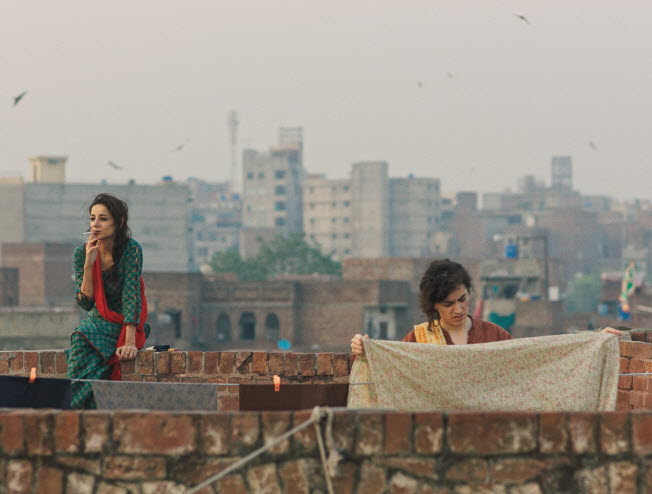
The movie also pays some attention to how unhappy several other characters around Haider and Mumtaz are in one way or another. As a woman who once had her own hope and dream before marrying her husband and then being stuck him and their several kids, Nucchi provides some support and understanding to Mumtaz, and we can only guess how much she has been discontent and frustrated for years. In case of Haider’s father, he feels ashamed as reminded again of his vulnerable physical condition, and his only comfort comes from an old widow who is clearly interested in getting a bit closer to him.
As the movie steadily maintains its low-key tone even during its melodramatic last act, the main cast members stay true to their respective roles. While Ali Junejo earnestly holds the center of the story, transgender performer Alina Khan brings a fierce sense of emotional integrity to her character, and Rasti Farooq is equally impressive as palpably conveying to us her character’s accumulating desperation and frustration along the story. In case of several supporting cast members, Salmaan Peerzada, Sohail Sameer, and Sania Saeed are also fine in their respective parts, and Sarwat Gilani is especially wonderful when her character becomes brutally honest to Haider and several other family members during a certain key scene.
On the whole, “Joyland”, which won the Jury Prize when it was premiered at the Un Certain Regard section of the Cannes Film Festival early in last year (It also won the Queer Palm award, by the way), may feel a bit too tame on the surface, but it is still a well-made work which is worthwhile to watch for several good reasons besides its groundbreaking qualities. In my inconsequential opinion, its considerable critical success may open the door for more films like this, and I will certainly look forward to that.


 Seongyong's Private Place