

Hirokazu Kore-eda’s latest film “Monster” seems rather disturbing and frustrating at first and then becomes something much more compelling and powerful than expected. As moving from one viewpoint to another along the plot, the movie gradually and sensitively delves into the aching matters of heart occupying the center of the story, and the result is another stellar work from a master filmmaker who has consistently impressed us during last three decades since “Maboroshi” (1995).
After the opening incident which throws a dark overtone over the story, the first act of the movie focuses on the daily life of a single mother named Saori Mugino (Sakura Andō) and her young son Minato (Sōya Kurokawa). While they initially seem happy and content together on the surface, Minato begins to ask odd and weird questions to his mother for no apparent reason, and Saori begins to suspect that something is quite wrong with her son as he continues to show inexplicable behaviors.
Minato later says that he was verbally and physically abused by his homeroom teacher Michitoshi Hori (Eita Nagayama), and Saori naturally becomes quite enraged about this. She subsequently goes to Minato’s school for telling everything to the principal of the school, but then she only gets frustrated more as the principal and several other teachers do not seem that active about handling this serious problem of her son. They all look like caring more about protecting their school’s reputation, and Mr. Hori is not even willing to apologize for whatever he did to her son. Eventually, Saori gets what she demands to the principal and other teachers including Mr. Hori, but that does not seem to make her son feel better nonetheless.

Around that narrative point, the screenplay by Yuji Sakamoto, which received the Best Screenplay award when the movie was shown at the Cannes Film Festival early in this year, shows more of what really happened as shifting itself to Mr. Hori’s viewpoint. Although he often looks strained and awkward in his attitude, Mr. Hori turns out to be a fairly good teacher on the whole, and we are not so surprised when it turns out that he did not lie to Saori at all when he tried to explain to her about what actually happened between him and her son on that day.
However, Mr. Hori is eventually forced to bend in front of the accusation against him because of the principal and other teachers. He soon finds himself literally on the edge as unfairly stigmatized in public to his frustration and exasperation, and then he comes to notice something important about Minato and Yori Hoshikawa (Hinata Hiiragi), a little boy who has been constantly ostracized by some of Minato’s mean classmates.
When the story enters its final act, we already got some cluse about whatever is going on between Minato and Yori. It seems that those strange questions of Minato are associated with Yori, and we are all the more disturbed by Yori’s supposedly happy-go-lucky attitude, which looks more like hiding something quite dark behind it. As the movie focuses on him more and more along the story, you may come to wonder more about whom its title exactly refers to, and I must confess that I braced myself for a while for the worst possibility about his relationship with Minato during my viewing.

All I can tell you for now is that the revelation during the final act does not turn out to be as dark as I dreaded before that point, though the movie is chilling and disturbing at times for several good reasons I will let you discover. Under Kore-eda’s sensitive and thoughtful direction, the story does not falter at all even when it understandably becomes quite melodramatic with everything eventually revealed to us with considerable dramatic impact, and the restrained score by Ryuichi Sakamoto, who sadly passed away a few months before the movie was shown at the Cannes Film Festival, is steadily calm and somber without overstepping at all.
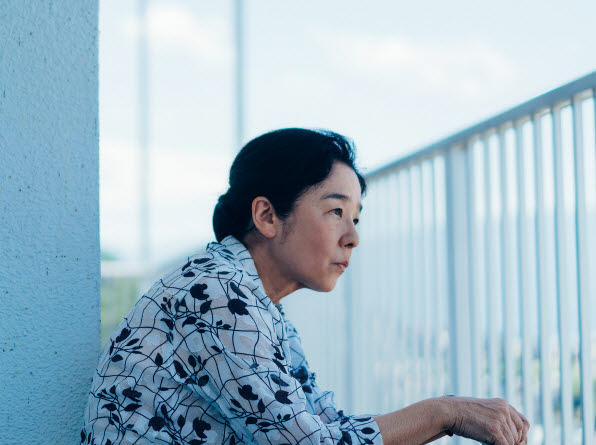
Again, Kore-eda draws excellent performances from his performers. Sakura Andō, who previously collaborated with Kore-eda in “Shoplifters” (2018), and Eita Nagayama are solid as their characters desperately struggle with their respective complicated situations, and Yūko Tanaka has several wonderful moments of her own as her principal character comes to show more of her hidden inner thoughts and feelings behind her detachedly courteous façade. Although their acting may feel a bit artificial at first, Sōya Kurokawa and Hinata Hiiragi, who are inarguably the heart and soul of the movie, are commendable in their effortless interactions throughout the film, and they and several other young performers in the film remind me again of how Kore-eda has been always good at handling child performers.
In conclusion, “Monster” may initially demand some patience as holding back some secrets and facts behind its back, but the overall result is powerful enough to justify its storytelling approach. As reflected by small and big story elements ranging from watermelon to rainy storm, Kore-eda, who previously tried some artistic experiment outside Japan as shown from “The Truth” (2019) and “Broker” (2022), is back in his usual territory, but he demonstrates here that he is willing to advance more for new and different things, and he surely succeeds in engaging and touching us as before. In short, the movie is one of the best films of this year besides being another terrific work from one of the great filmmakers in our time, and you should certainly check it out especially if you have admired many of Kore-eda’s films as I have for years.


 Seongyong's Private Place
Pingback: 10 movies of 2023 – and more: Part 1 | Seongyong's Private Place