
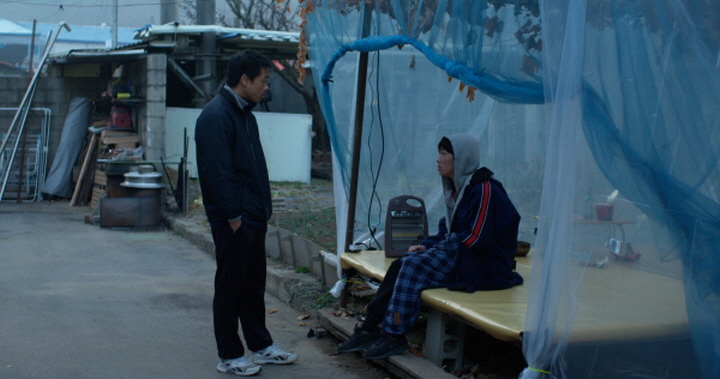
South Korean film “Big Sleep”, which is incidentally not associated with American classic noir film “The Big Sleep” (1946) at all, is a moody social drama which somehow fails to engage me. While it surely shows us well the harsh reality surrounding its two main characters on the screen, the movie often feels flat and deficient in terms of storytelling and characterization, and we only come to observe its two main characters from the distance without really getting to know them.
The early part of the film establishes how things have been hard and difficult for Gi-yeong (Kim Young-sung). He lives alone in a small apartment, and he has earned his meager living via working in some small local factory, but his detached face clearly shows how much he has been tired and frustrated with his life for years. At one point, he visits his ailing father’s residence, and it is very evident to us that he has some old issues with his father, but the movie never clarifies these issues except implying that he is still angry and resentful about his father.
When Gi-yeong leaves his apartment for his work on one cold winter morning, he finds an adolescent boy sleeping on a wooden bench in front of the apartment building. This boy, named Gil-ho (Choi Joon-woo), left his home due to his stepfather’s domestic violence, and he has been hanging around with several teenage runaways not so different from him. Although their first encounter is not so gentle to say the least, Gi-yeong subsequently lets Gil-ho into his residence, and Gil-ho is certainly grateful to him for that although he naturally feels awkward about this unexpected kindness of a stranger.
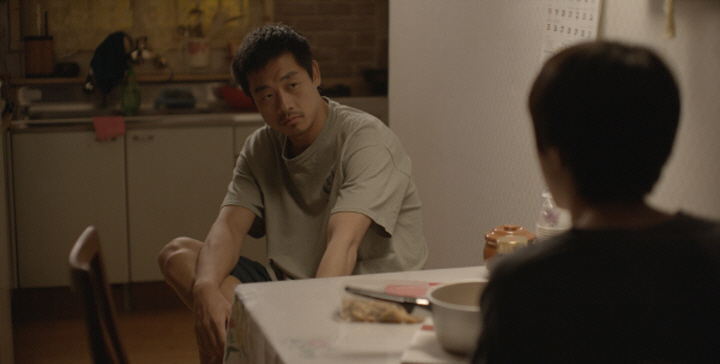
What follows next is how tentatively these two different characters open more of themselves to each other. After trusting Gi-yeong more during next several days, Gil-ho tells a bit about why he left his home, and Gi-yeong does not judge him at all while giving him some brutal advice as a guy who probably had a fair share of domestic problems in the past due to his father. Despite his rather curt and disaffected appearance, he turns out to be much more capable of kindness and compassion, and he is going to let Gi-ho stay longer at his residence as long as Gil-ho does not cause any trouble.
Of course, the situation becomes problematic due to Gil-ho’s fellow teenage runaways. When they come to learn that Gil-ho is staying in Gi-yeong’s house, they naturally want to come there, and Gil-ho cannot possibly say no because of the peer pressure upon him. Although he knows well that he is betraying Gi-yeong, but he only finds himself cornered by the aggressive leader of his group, and his unwise choice consequently leads to a big conflict between him and Gi-yeong.
Meanwhile, the screenplay by director/writer Kim Tae-hoon, who made a feature film debut here after making several short films, also focuses on Gi-yeong’s workplace problem. As the company has some serious business trouble, downsizing seems quite eventual, though the foreman assures to Gi-yeong that he will be all right in the end. When he is later instructed to do something quite illegal along with several other employees, Gi-yeong feels very conflicted, but there is nothing he can do about that.
However, this subplot does not lead to anything while only emphasizing how life remains hard and difficult for Gi-yeong, and the same thing can be said about the subplot involved with a young female employee. She seems to be interested in getting a little closer to Gi-yeong, but romance is the last thing Gi-yeong wants – even when she approaches to him more actively than before.
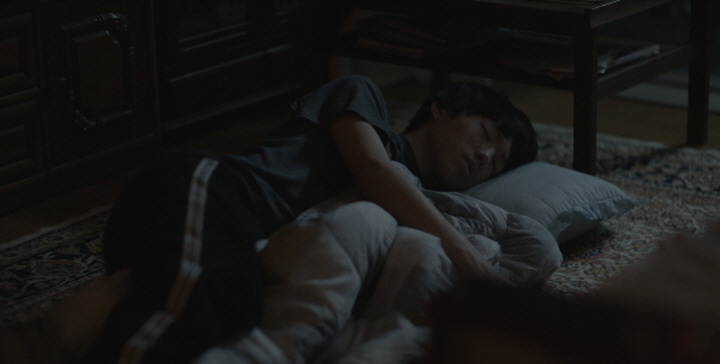
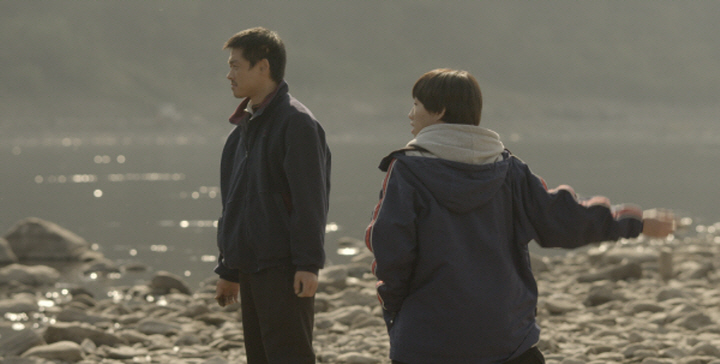
In the end, the story eventually arrives at the point where Gi-yeong really tries to do more for Gil-ho simply he cares about Gil-ho, but the movie does not build up much emotional ground for that. Not so surprisingly, Gi-yeong comes to clash with Gil-ho’s fellow teenage runaways and their leader later in the stry, but the following outcome is pretty predictable to say the least, and there is not much resolution for Gi-yeong and Gil-ho’s relationship even in the end. We do not get much sense of how their relationship has been changed, and we are only reminded that things remain quite uncertain for both of them because there is still that harsh reality outside.
At least, its two lead actors did a good job of embodying their respective roles without much pretension. While his character sometimes feels a little too obtuse, Kim Young-sung ably suggests the softer sides hidden behind his character’s weary attitude, and his solid performance dutifully carries the film to the end. On the opposite, Choi Joon-woo is stuck with his relatively underdeveloped character, but he holds his own place well besides his co-actor at least, and I think the movie could be more improved if it simply allowed more space and time for their acting talent.
In conclusion, “Big Sleep” is not entirely without engaging elements to notice, but it ultimately left me with dissatisfaction because its sincerity is frequently inhibited by its adamantly gloomy realism. It does care a lot about its story subject, but it is often too curt and restrained to show more of its heart just like its hero, and the result is just another solemn and depressing slice of South Korean life. No, I do not mind watching such a thing like that, but the movie does not distinguish itself enough on the whole, and that is all I can tell you for now.


 Seongyong's Private Place