

Netflix documentary film “Yellow Door: ‘90s Lo-fi Film Club”, which was released a few days ago, looks into the memories of a little club of young South Korea cinephiles in the early 90s. Although they did not know that much about movies, they eagerly and passionately studied and analyzed many different movies they could get from here and there, and one of them incidentally became one of the greatest filmmakers of our time.
As some of you have already guessed, that guy is none other than Bong Joon-ho, who recently finished the shooting of the next film after his Oscar-winning work “Parasite” (2019). Due to his considerable prominence at present, he naturally draws a lot more attention from us compared to many other interviewees, but they also have each own interesting story to tell, and it is often fun to see how Bong and others’ stories are mixed or clashed together to generate the portrayal of their youthful cinephile period.
How they became interested in movies was a happy accident associated with the ongoing social change in the South Korean society during that time. After the end of the dictatorship period in the late 1980s, many young people in South Korea really needed something else to occupy their mind as their democratization movement was nearly being over, and movie was one of such things. As a result, numerous film clubs were established here and there around a number of university campuses, and the one founded by Bong and his friends was one of the earliest ones during that time.

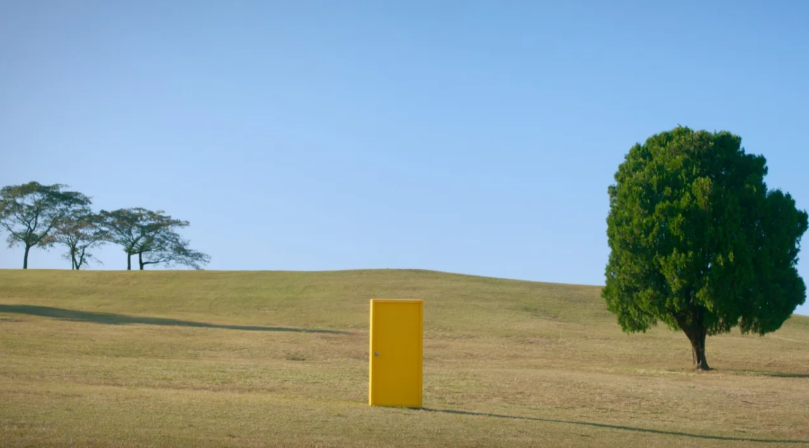
Probably because many years have passed since then, not only Bong but also his friends do not clearly remember their old film club history at times, and some of them muse that this is not so far from the enigmatic circumstance of Akira Kurosawa’s classic film “Rashômon” (1950). For example, their respective memories on how they came to name their film club “Yellow Door” do not match well with each other, and we are not entirely sure about the real origin of its name even at the end of the documentary.
Anyway, all of them remember well how enthusiastic all of them were about movies. As reading a few available books on movies and the history of cinema, they became determined to watch movies as many as possible, and they even did not hesitate to obtain many pirate video copies of a number of certain films they were so eager to watch. Bong happened to be charged with the management of their considerably large video collection, and he and others are amused a little as reminiscing about how fastidious Bong was about keeping the maintenance record of their video collection.
As time went by, they became more serious about movies, and, once they saw that they could not learn that much at their universities, they decided to take care of this matter for themselves. They often analyzed their favorite films shot by shot via a VHS player equipped with several different play options including playing forward or backward frame by frame, and Bong even made a number of storyboards based on the certain key shots of several classic films including Francis Ford Coppola’s “The Godfather” (1972). When Bong told Coppola about that right before giving him the honorary award at a local film festival in France many years later, Coppola seemed touched as much as Martin Scorsese was when Bong sincerely honored him right after winning his Best Director Oscar for “Parasite”.
Of course, the next step for Bong was making a film for himself, but, to our little amusement, his first film project is still an embarrassment for him even at present. According to IMDB, he started with making three short films in 1994, but he actually made a stop-motion animation short film before that, and it looks like he will suppress it as long as possible, just like Stanley Kubrick hid his first feature film “Fear and Desire” (1953) for a long time before his death.

As the documentary shows several brief clips from that little unofficial debut work of Bong, Bong’s friends, who were incidentally the only people who ever watched it all via a little private screening held not long before New Year’s Eve, fondly remembered how interesting their experience was. They did not expect that much at first, and Bong was quite anxious and embarrassed even before it was started, but, what do you know, the result was fairly engaging while also showing Bong’s nascent potential as a filmmaker.
After that point. Bong went further as purchasing a rather expensive video camera. While sometimes shooting wedding ceremonies for earning some money (It will be a hoot for any cinephile to see any of his old wedding ceremony videos, by the way), he made the aforementioned short films before his first feature film “Barking Dogs Never Bite” (2000), and, as all of you know, that was followed by one of the most remarkable filmmaking careers during last two decades.
Meanwhile, Yellow Door was slowly going down as Bong and others came to realize that fun was over and it was the time for them to move on in each own way. Although Bong’s friends are not as successful as him, each of them has apparently been leading each own good life, and the friendship among them is still palpable when they gather together for some online talk at one point early in the documentary.
In conclusion, “Yellow Door: ‘90s Lo-Fi Film Club”, directed by Lee Hyuk-rae, will provide you an interesting look on the origin of the ongoing prime period of South Korean cinema, and I will not deny that I felt a bit nostalgic as remembering my growing enthusiasm toward movies during that time. I was as lucky as they were because I could access to numerous different films and filmmakers ranging from Alfred Hitchcock to Quentin Tarantino thanks to the growing public interest on movies, and I am now reflecting more on how much that wonderful time has shaped me as a movie reviewer, if not a movie critic. I still have lots of stuffs to learn just like I did during that time, and the documentary delightfully reminds me that I should never forget who I was as a little nerdy cinephile prick.


 Seongyong's Private Place