

South Korean documentary film “A Table for Two” plainly focuses on one complicated mother and daughter relationship exacerbated further by an unfortunate case of mental disorder. As its two main figures reflect more on how things went wrong between them during last several years, the documentary gradually reveals their old emotional pains and regrets, and it is poignant to see how they eventually become ready to move on as facing their complex past with more honesty and understanding.
At first, the documentary introduces us to a young woman named Chae-young, and she is asked about how she has been during several recent years. She seems fairly okay while living her own life for herself, but then we come to learn that she actually suffered a serious case of anorexia during her adolescent years. As a matter of fact, her case was actually reported on TV at that time, and her mother Sang-ok did not know how to deal with her daughter’s ongoing problem before eventually sending Chae-yeong to a big mental hospital in Seoul.
10 years later, Chae-yeong is fully recovered from her serious eating disorder, but we come to sense considerable estrangement between her and her mother when she later comes to a remote rural area where her mother has worked and lived as a schoolteacher for many years. Chae-yeong is still not that comfortable to be around her mother due to how her mother was unintentionally insensitive to her eating disorder during that time, and Sang-ok has thought a lot about how she could have done more for her daughter, though she still does not entirely grasp why and how her daughter suffered during that time.
When Chae-yeong later moves to Australia for working there for a while, Sang-ok comes to muse more on her rather flawed relationship with her daughter in the past. After throwing herself into numerous left-wing activities during the 1980s, she came to have her daughter shortly after marrying her husband (The documentary does not tell much about him, by the way), but then she worked a lot outside for supporting herself and her daughter without him, and it is suggested that this was the origin of their longtime emotional distance.
Sang-ok did not hesitate at all when she received a job offer from the school in that rural area, and this environmental change led to more negative effects on Chae-yeong’s young mind. Like any young girl around her age, she desired some attention and affection from her mother, but Sang-ok was usually busy with handling her school students, and she and her daughter also did not have much private space for themselves as living inside the school dormitory.
Their following gloomy period associated with Chae-yeong’s anorexia is presented mainly via her personal diary and several simple sketches drawn by her during that time, and what these records convey to us is pretty harrowing to say the least. Just because she believed anorexia was simply a matter of willpower, Sang-ok inadvertently hurt her daughter’s feelings in one way or another, and it is evident that Chae-yeong is still reeling from those painful memories with suppressed anger and resentment.
After coming to learn much more about anorexia, Sang-ok naturally came to feel lots of guilt and regret. She has sincerely tried to understand how she came to hurt her daughter, and she comes to think more about her estranged relationship with her mother, which might be another main factor in her problematic relationship with her daughter. As she frankly admits at one point, she was not loved that much by her mother, and, to our little surprise, her mother is later revealed to have her own mental issues not so different from what Chae-yeong suffered.

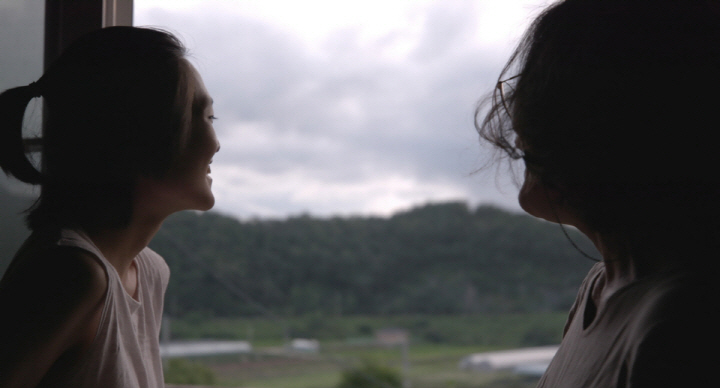
Several months later, Chae-yeong returns to South Korea due to the COVID-19 pandemic, and then she stays in her mother’s residence for some time. Again, the mood feels rather strained between them, but they slowly come to open themselves more to each other during one long private conversation, and that eventually culminates to a somber but undeniably cathartic moment of understanding and acceptance between them.
While steadily and closely following both Chae-yeong and Sang-ok, director Kim Bo-ram, who came to know and learn about them as doing some research on anorexia after making her acclaimed documentary “For Vagina’s Sake” (2017), presents their achingly human aspects with enough consideration and respect. As the camera often stays around them without any interference, the documentary becomes more immersed in their personal circumstance, and we accordingly pay more attention to their emotional interactions full of small ups and downs.
In the end, Chae-yeong and Sang-ok come to accept and understand more of not only their private issues but also themselves, and the mood becomes more relaxed and comfortable as they later prepare together for a little traditional ceremony for Sang-ok’s mother. In addition, Sang-ok’s little pet cat briefly steals the show during this moment, and I will not deny that I was tickled a bit as observing this cute cat’s little naughty act on the screen.
Overall, “A Table for Two” is another modest but engaging work from Kim, and it may be quite enlightening for you if you are not that familiar with anorexia. Just like mental depression, anorexia surely needs lots of help, support, and understanding, and, considering how mental illness has been often disregarded and stigmatized in the South Korean society, the documentary surely deserves more audiences in my humble opinion.


 Seongyong's Private Place
Hi, do you know where to watch this documentary? (from Europe)
Thanks!
SC: Unfortunately, it is available only in South Korea.