

Documentary film “Free Chol Soo Lee” presents the harrowing real-life story of Chol Soo Lee, a Korean American immigrant who was wrongfully accused of the murder he did not commit and then was unjustly incarcerated for that. It is touching to see how he was eventually vindicated thanks to lots of civilian efforts from the Asian American immigrant communities, but it is also saddening to observe how he and his life were irrevocably damaged by the sheer injustice of the American legal system.
Everything began with a shocking murder case which happened in the middle of the Chinatown area in San Francisco, 1973. It was clearly another Chinatown gang murder during that time, but the San Francisco Police promptly swooped on Lee just because of a recent little gunshot incident involved with him, even though he did not have any connection with those Chinatown gangs. Once he was identified by a couple of rather unreliable witnesses, the San Francisco Police labeled him as the culprit without any hesitation, and he soon found himself at the court as being charged for the murder in the first degree.
As the documentary gradually shows us along its narrative, that was just another very unfortunate thing in Lee’s rocky life story. He was born as the illegitimate child of his unmarried South Korean mother in the middle of the Korean War, and his mother simply left to him to his aunt and uncle when she went to US after marrying a US soldier. Although he lived fairly well under his uncle and aunt, he was taken to San Francisco by his mother shortly after her divorce several years later, and he certainly had lots of trouble as struggling to adjust to his new society which did not treat him that well from the beginning. Besides, he also did not get much love from his mother, and the documentary later reveals more about her complicated emotional relationship with her son, which was originated right from when he was conceived.
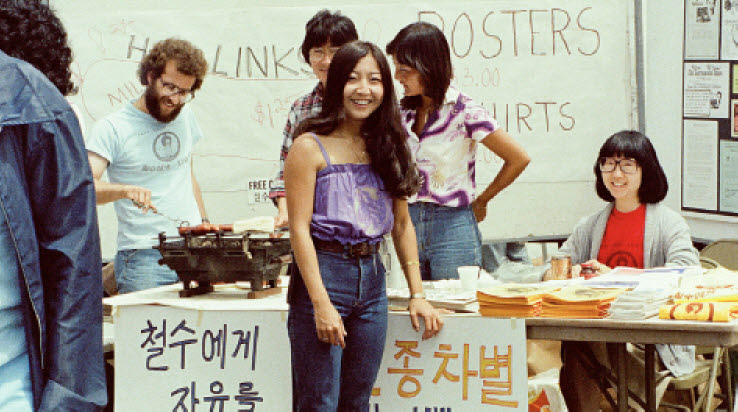
Eventually, Lee came to live on the streets of Chinatown day by day instead of living with his mother, and that was when he got wrongfully arrested for that murder. No matter how much he protested, nobody in the legal system did not pay much attention, and he only came to receive a life sentence at the end of his trial. To make matters worse, he was sent to one of most notorious maximum-security state prisons in California, and his following struggle to survive everyday as the only Asian inmate in his block unfortunately later led to an incident of manslaughter, which subsequently sent him to the death row of the San Quentin State Prison.
Meanwhile, Lee’s close friend Ranko Yamada and several other local activists in the local Asian American community embarked on their little civilian project for Lee’s acquittal and discharge, and their efforts subsequently reached to a prominent Sacramento journalist K.W. Lee, who was also a Korean immigrant and naturally took a personal interest in the case. As looking more into the case, the journalist became more determined to help Lee as much as possible, and his several articles on Lee’s case surely boosted more public interest on Lee’s case in the Asian American communities.
Although the following trial on Lee’s manslaughter in the prison ended with the jury members finding Lee guilty, Yamada and many other local activists and Asian community members did not give up at all. They continued to do more protest and fund-raising, and their efforts were certainly appreciated a lot by Lee. While still facing the serious possibility of getting executed or imprisoned for the rest of his life, he had some hope and support at least, and that was certainly something he never had before.
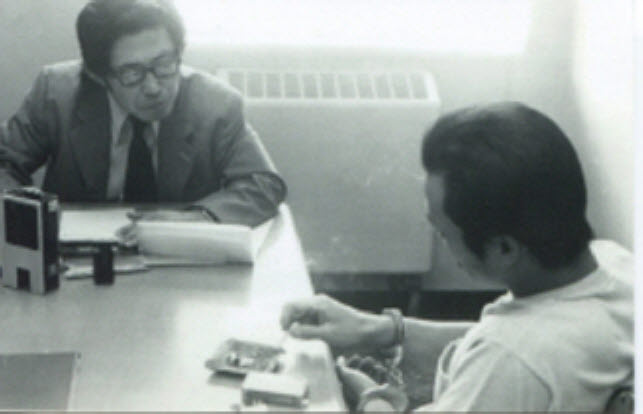
In the end, there came a cathartic moment for Lee and his friends and supporters after his lawyers including Tony Serra made a successful argument on why he was not guilty of that murder case, and Lee was subsequently released in 1983 to everyone’s joy. At that time, it looked like things would only get better for him from the point, and he was certainly willing to try a lot for that.
Now this sounds like your average feel-good real-life story, but, besides his struggle for adjusting himself to his changed circumstance, Lee also had to struggle a lot with the personal demons associated with those dark years of imprisonment of his, which consequently led him to the painful downward spiral for him to the dismay of many others who really cared about him. Not long after his release, he came to let them down a lot, and he surely came to have lots of regret around the time when he came to hit another bottom of his life.
Mainly driven by the words from Lee himself, the documentary gradually fills out here and there in its unadorned portrayal of its human subject, and that is the main reason why its final part associated with Lee’s later years is quite moving. I will not go into details here, but I can tell you instead that directors/co-producers Julie Ha and Eugene Yi present this part with considerable compassion and understanding, and Lee’s later years may remind you of what Wiliam Faulkner once said: “I believe that man will not merely endure, he will prevail.”
Overall, “Free Chol Soo Lee”, which was incidentally released in South Korean theaters a few days ago, is a modest but powerful documentary about one specific case of social justice and racism which sadly feels quite relevant in the American society even at this point. In short, this is one of better documentaries of last year, and I am glad to see it introduced to South Korean audiences at last.


 Seongyong's Private Place