
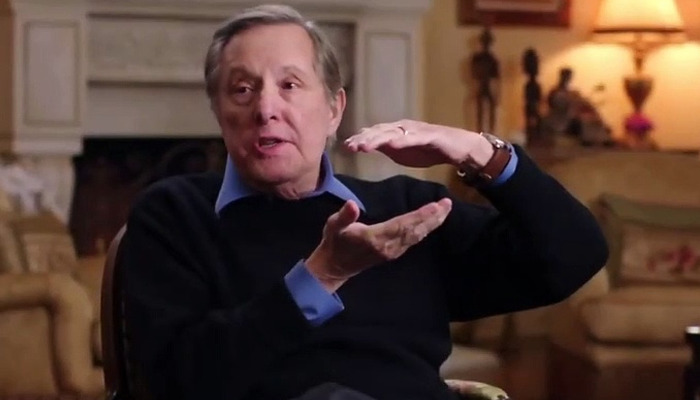
William Friedkin, who sadly left us a few months ago, has always been associated with “The Exorcist” (1973), one of the iconic classic horror films in the 1970s. To be frank with you, I was not so scared when I watched it for the first time around 27 years ago, but I came to appreciate more of its skills and techniques as becoming your average serious cinephile, and my recent revisit to “The Exorcist” confirmed me again of how memorably disturbing the result of the efforts from Friedkin and his cast and crew members is.
Alexandre O. Philipp, who is no stranger to film analysis documentary considering his previous film “78/52: Hitchcock’s Shower Scene” (2017), simply lets Friedkin talk in front of the camera. While he surely has lots of things to talk about his monumental horror film, Friedkin is also a first-rate raconteur who knows how to engage and then entertain us, and it is seldom boring to watch him reflecting or recollecting on the making of “The Exorcist”.
While he may not have much faith, Friedkin believes in fate a lot, and he dryly muses on how he accidentally got into movie business. During his childhood years in Chicago, his parents took him to a local movie theater for the first time, and that was how he became drawn to the power of cinema. Several years later, he happened to encounter Orson Welles’ “Citizen Kane” (1941), and this great film made him become all the more determined to become a filmmaker someday.
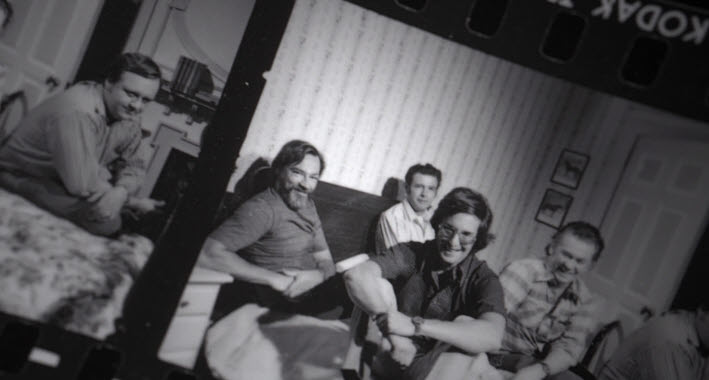
After his modest career beginning in the 1960s, Friedkin made a number of documentaries and feature films including Oscar-winning movie “The French Connection” (1971), which made him into one of the most prominent directors working in Hollywood during the 1970s. Now he could choose whatever he wanted to do next, and then there came a fateful moment via William Peter Blatty, who handed him his new novel, yes, “The Exorcist”. Right from when he read Blatty’s novel, Friedkin got the idea of how he could make it into a movie, and then he went all the way with his cinematic vision once he got attached to the following movie production by the Warner Bros. Pictures
When I recently revisited “The Exorcist”, I was quite impressed by how the movie subtly sets the unnerving tone via the prologue scene set in Northern Iraq, and Friedkin enthusiastically tells us about how he conceived and then shot it at the real locations in Northern Iraq. Nothing much is explained during this part, but a number of small and big touches on the screen generate the ambiguously disturbing undertone, which lingers beneath the seemingly mundane atmosphere of the first half of the film.
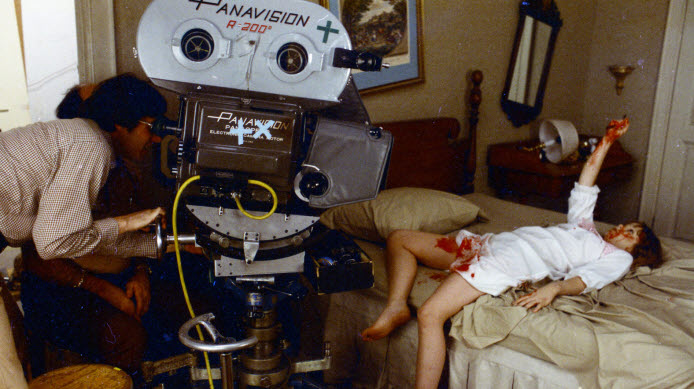
For filling the first half of the film with documentary-like verisimilitude, Friedkin and his crew members including cinematographer Owen Roizman made everything on the screen look as realistic as possible, and he also paid lots of attention to the casting. Except Max von Sydow and Ellen Burstyn, nearly all of the other cast members in the film including Linda Blair and Jason Miller were not recognizable performers, and this certainly contributed a lot to the considerable realism in the film.
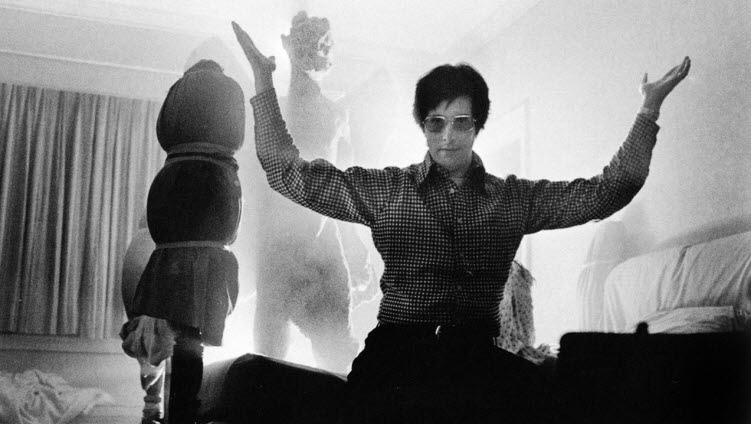
As a filmmaker more drawn to spontaneity and improvisation, Friedkin prefers to do a few takes unlike Stanley Kubrick or David Fincher, and he is pretty frank about how he pulled out right moments from his performers by any means necessary at that time. For example, he used a gunshot for making Miller really startled in front of the camera, and he also suddenly hit a certain cast member for getting the right emotional reaction during the shooting of a key scene (That cast member thanked him because, as a non-professional performer, he could not play his part that well before Freidkin took that drastic measure).
In case of Mercedes McCambridge, who provided the voice of the devil in the film, she and Friedkin were ready to push the envelope as much as possible. Once her strenuous efforts were combined with some sound manipulation, the result was much more disturbing than before, and the documentary clearly shows us the difference as comparing between the two different versions respectively featuring McCambridge’s and Blair’s voice.
Friedkin also tells us an amusing episode on the music of “The Exorcist”. He initially approached to Bernard Herrmann, but then he and Herrmann came to disagree a lot before he eventually let Herrmann go. He subsequently hired Lalo Schifrin, but then the result was not exactly what he wanted, so he finally decided to stick to his temp track consisting of various kinds of works including Mike Oldfield’s “Tubular Bells” (There are actually less than 20 minutes of music in the film, by the way).
Under Philipp’s competent direction, “Leap of Faith: Willian Friedkin on the Exorcist” works as an engaging supplement essay to “The Exorcist”, and it is worthwhile to watch mainly thanks to Friedkin’s engaging presence. Although I wish the documentary asked Friedkin anything about how he feels about all those redundant sequels and countless imitators made after “The Exorcist”, I also understand that the documentary intends to be all about the making of “The Exorcist”, so I will not complain at all.


 Seongyong's Private Place