
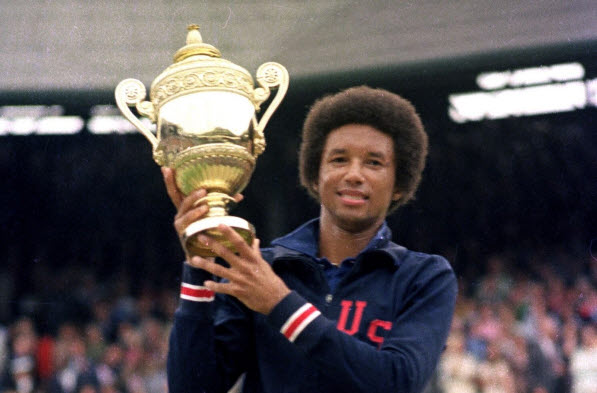
Documentary film “Citizen Ashe” looks into the life and athletic career of Arthur Ashe (1943-1993), a talented tennis champion who has been known mainly for being the first African American to win the US Open in 1968. Although he was less prominent in case social activism compared to some of his contemporary African American athletes such as Muhammad Ali or Kareem Abdul-Jabbar, Ashe actually was quite more active than his mostly relatively mild public image suggested, and it is interesting to observe how he was changed in one way or other as going his way as usual.
The early part of the documentary focuses on how Ashe happened to find his athletic talent while growing up in his hometown Richmond, Virginia. In 1955, Ashe began playing tennis along with several other local boys under a local African American coach who really cared about encouraging them more for better life, and it did not take much time for Ashe to show more of his potential during next several years. When he eventually became a confident tennis player with a fairly good game record, he decided to move to Missouri for more freedom for his life as well as his burgeoning sports career, and then he got a full athletic scholarship at UCLA in California.
During his college years at UCLA during the early 1960s, Ashe came to distinguish himself more as a promising young college tennis player, but he did not have much hope about becoming a professional tennis player. After all, there were not many options for his future professional athletic career at that time, he actually considered joining the US Army for becoming an officer someday. In fact, he later joined the ROTC (Reserve Officers’ Training Corps), and he could have been sent to Vietnam if his brother, who was serving in the US Army at that time, had not chosen to do the second tour in Vietnam in exchange for keeping Ashe in US.

Thanks to his brother’s wise choice, Ashe continued to show more prominence in his athletic career while staying in US, and then he found himself at the right moment to boost his position further. As the Open Era began in 1968, both amateurs and professionals were allowed to compete together in the Grand Slam tournaments including the US Open, and that led to more career opportunities for promising young players like Ashe. He surprised everyone as winning the US Open at that time, and it did not take much time for him to become another famous African American athlete to notice.
Of course, as the American society was troubled more and more by racial tension during the late 1960s, Ashe was often asked to be more outspoken about racism and discrimination just like many other prominent African American athletes during that time, but he was rather reluctant for understandable reasons. As a man who was constantly scrutinized even at the beginning of his athletic career, he was more accustomed to being less provocative while holding himself as much as possible, and making any unnecessary noise was the last thing he wanted.
Because of his less active stance, Ashe was not regarded that well by some of prominent African American figures during that time, but he did care a lot about racism and discrimination nonetheless. He was surely supportive of Dr. Martin Luther King Jr. from the beginning, and, as shown from a number of TV interview clips, he actually did not hide his personal opinions on the racism and discrimination against African Americans at all. As a matter of fact, he also made an active public stance against the apartheid policy of the South African government when he was about to participate in a big tournament to be held in South Africa in 1973, and he surely left a big impression on the Black citizens of South Africa when he subsequently came there.

Meanwhile, Ashe’s career reached to another peak when he won at the Wimbledon in 1975. During the final, he defeated his longtime opponent Jimmy Connors, and you will be amused a bit by how rude and arrogant Connors was in contrast to Ashe’s more much reserved attitude. While recognizing Connors as one of his toughest opponents, Ashe did not have anything good to say about Connors, and Connors even sued Ashe for libel.
Around the time when he played against John McEnroe in 1978, Ashe became more aware that his prime was being over, and his unexpected heart attack and the following surgery eventually put the end to his athletic career. Ironically, he subsequently became a new coach to handle McEnroe, and the documentary makes an interesting point on how their contrasting personalities somehow complemented each other despite lots of personal/professional clashes between them during next several years. McEnroe, who looks much milder compared to when he was young and wild, frankly talks about his tumultuous relationship with Ashe during that period, and that is certainly another amusing moment in the documentary.
Overall, “Citizen Ashe” is both engaging and informative in its respectful presentation of its human subject. Although I think it could pay a bit more attention to Ashe’s later years when he became all the more active for civil rights and social justice, directors Rex Millerv and Sam Pollard did a solid job of juggling various archival records and interview clips for giving us a vivid and interesting portrayal of one exceptional African American athlete, and you should definitely check it out especially if you do not know much about him like I did before watching it.


 Seongyong's Private Place