
Documentary film “Bad Axe” presents an intimate personal portrayal of one Asian immigrant family struggling to live and run their little business during the COVID-19 pandemic. While it is heartening to see how this family strenuously stick together for enduring that gloomy period, it is also often disturbing to observe occasional moments of racism and prejudice against them, and you will come to reflect more on how the American society has shown more of its deplorable aspects during last several years.
The story of the documentary is unfolded mainly via the camera of director/co-producer/cinematographer David Siev, who happened to come back to his little rural hometown, Bad Axe of Michigan, shortly before the whole country went into the lockdown period in early 2020. His camera closely follows his several family members including his parents, and it shows how things were quite hard and difficult for them during that time. Although the situation was relatively less dire for them and many others in their little town compared to many big cities in US, their small restaurant business was certainly struck hard by the ongoing COVID-19 pandemic, and it became quite possible that they had to shut down the restaurant for an indefinite time.
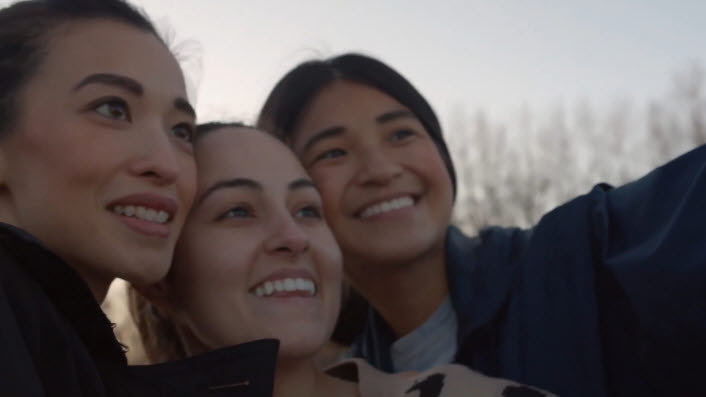
Nevertheless, David’s parents, Chun and Rachel, did not give up at all, and neither did David’s two sisters Jaclyn and Raquel. David and his two sisters still remember when their parents struggled a lot for settling in the town in the late 1990s, and Jaclyn and Raquel were willing to help their parents’ restaurant business as much as possible. While Jaclyn handled those business matters, Raquel busily cooked in the kitchen, and it looked like they and their parents could still run the restaurant even as the pandemic continued to threaten the country and its people more and more.
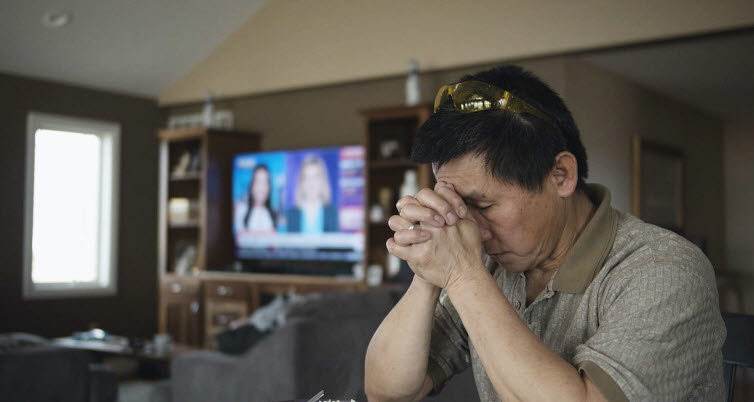
To Chun, his and his family’s struggle with the pandemic was just another big obstacle to confront. He was a young Cambodian refugee who managed to survive the Killing Fields period in Cambodia along with his mother and several siblings, and he is certainly proud of realizing his own small American dream. Besides running a solid family restaurant of his own, he and his wife Rachel, who is incidentally a Mexican American, has had a steady and loving relationship between them, and they certainly appreciate their dear children’s efforts for maintaining their precious restaurant.
However, as the family kept struggling to make ends meet, the American society got more disturbed by not only the pandemic and the increasing racial tension associated with it. As President Donald J. Trump irresponsibly caused more racism against not only Asian citizens but also many other colored people in US, Chun and his family could not help but more disturbed at times, and his children naturally came to pay more attention to the Black Lives Matter movement.
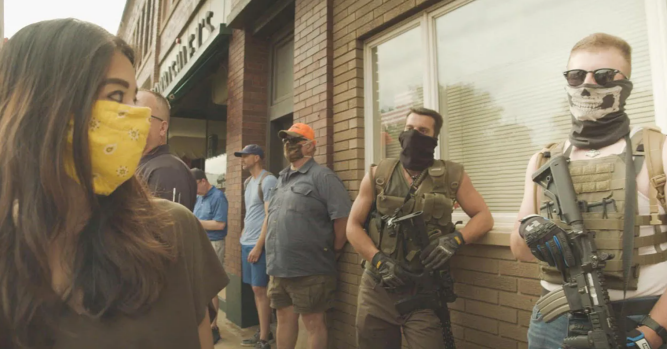
When a Black Lives Matter protest was held in the middle of the town, David and his two sisters surely joined the protest, and that was where they came to see how ugly and deplorable some of their mostly conservative neighbors could be. Shortly after they and a bunch of other protesters began their march, they confronted several armed (and masked) white supremacists, and, not so surprisingly, the local police did not do anything about that.
The circumstance became more unnerving when Chun and his family found their life and business threatened in one way or another. When one of David’s sisters showed more of her political opinion on the Internet, some nasty people called to the restaurant, and we also see several rude white people willfully refusing to wear mask inside the restaurant. In addition, some of those white supremacists seemed ready to target the family, and Chun willingly shows his daughters how to handle firearms at one point later in the documentary.

In case of David, he came to discern that he could not be totally distant to what he had closely recorded. He initially began his documentary project as a love letter to his hometown, but, as his promotional trailer for fund-raising drew some vicious responses on the Internet, he started to consider shifting the focus of his documentary more to the immigrant experience of his family. Besides vividly capturing those good and bad times among his family members, he also places himself right in front of the camera, and he tries to be as candid as possible about his personal thoughts and feelings.
After the pandemic eventually passed its peak, things got a bit better for David and his family. While they still had to be careful about social distancing, their restaurant slowly got back in business, and they also received lots of support from many residents of Bad Axe. They were certainly relieved and delighted when that orange-faced phony failed to get re-elected in the 2020 US Presidential election, but I must confess that I observed this feel-good moment with some worry and skepticism because of how that detestable scumbag may actually return to the White House in 2025.
In conclusion, “Bad Axe” is compelling as a vivid and touching slice of Asian American immigrant life in the middle of American heartland, and Siev, who received the Audience award in addition to Special Jury Recognition when the documentary was shown at the SXSW Film Festival early in last year (It was also included in the shortlist for Best Documentary Oscar early in this year, by the way), handles his personal subject with lots of care and respect. In short, this is one of the better documentaries of last year, and it surely deserves your attention as a empathetic window to others different from you.


 Seongyong's Private Place