

“Polite Society” is a little but feisty genre exercise to cherish for good reasons. As an energetic mix between martial arts action movie and coming-of-age comedy, it kicks and punches all the way for giving us a bunch of outrageously spirited fun moments, and you will also enjoy how it is deliciously peppered with distinctive style and cultural elements to be savored.
At first, we are introduced to Ria (Priya Kansara) and her older sister Lena (Ritu Arya), and the movie quickly establishes these two young Pakistani-British girls’ respective personalities as they go through another day in their neighborhood in London. While Lena does not know what to do next after recently quitting her art school, Ria is quite determined to become a stuntwoman someday as frequently honing her martial art skills, and Lena sincerely supports Ria’s aspiration as her dependable older sister.
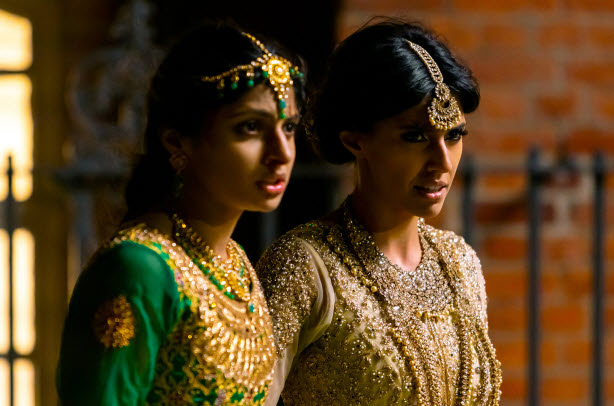
And then there comes an unexpected change into their daily life. On one day, they and their parents are invited into a big traditional part held at the old country manor of a wealthy family friend named Raheela (Nimra Bucha), and what we get next is a sort of the 21st century version of Jane Austen movie mixed with Pakistani cultural elements. Besides Ria and Lena, many other young ladies are invited to the party, and all of these ladies are eager to draw the attention of Raheela’s son Salim (Akshay Khanna), who happens to be an eligible bachelor in addition to being a very successful geneticist.
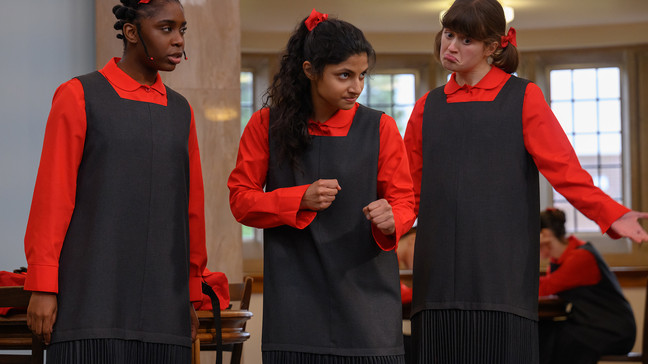
Unlike many of those young ladies at the party, Ria and Lena do not give a damn about Salim at first, but, what do you know, Ria is shocked to learn later that Salim proposes to Lena and Lena actually accepts his proposal. Naturally, Ria tries to protest, but her parents support Lena’s decision, and Lena does not have any problem with her decision to marry Salim. After all, she feels rather frustrated after quitting her art school, and it seems that marrying a nice rich guy like Salim is a much better option for her life.
What follows next is a series of comic moments showing Ria’s clumsy attempt to stop her older sister’s marriage by any means necessary. With some help from her two best friends, she tries to dig up anything suspicious about Salim for changing her older sister’s mind, but, not so surprisingly, that only adds more strain and conflict to her increasingly estranged relationship with Lena. So far, Lena looks perfectly fine to be with Salim or her future mother-in-law, and we wonder whether Ria simply does not accept well how things change between her and her older sister due to her older sister’s upcoming wedding.
However, Ria eventually discovers that there is something sinister about Salim and his mother. While it is apparent that Salim is your average mama’s boy behind his dashing appearance, he and Raheela look like having some insidious plan behind their back, and, as your typical domineering mother, Raheela is not going to let Ria to ruin her son’s upcoming wedding at any chance.
For fighting against this mighty opponent, Ria’s particular set of skills surely come handy to her, though she is still not so confident about whether she can actually save her older sister. The movie generates some good laughs when she tries to demonstrate her martial art skills in front of her schoolmates at one point early in the story, but it still cares about her hope and aspiration nonetheless, and it surely takes some risk along with its heroine when she must act right now for saving her older sister later in the film.

As the center of the film, Priya Kansara is alternatively funny and electrifying in her dexterous performance balanced well among comedy, drama, and action. Besides looking believable in many of physical action scenes in the film, she also anchors the movie well with unadorned sincerity and gravitas, and that is the main reason why several deliberately exaggerated moments in the film work on the emotional level even while tickling us a lot. When the movie tries a bit of song and dance moment during its climactic part, Kansara gives another impressive moment to be appreciated, and we come to root for her character more than before.
Around Kansara, director/writer Nida Manzoor, who incidentally makes a feature film debut here after making several short films, assembles a number of colorful performers. Besides looking both cordial and sinister as required, Nimra Bucha chews every moment of hers in the film with sheer gusto, and she does not disappoint us at all when her character eventually reveals her devious design on her son’s marriage. Ritu Arya fills her seemingly thankless role with enough life and presence, and she and Kansara ably convey to us well the considerable emotional bond between their characters during several key scenes of theirs. In case of several other main cast members, Akshay Khanna, Shobu Kapoor, and Jeff Mirza are well-cast in their respective supporting roles, and Seraphina Beh, Ella Bruccoleri, and Shona Babayemi provide extra fun as Ria’s schoolmates.
Overall, “Polite Society” is quite entertaining for its deft handling of several different genre ingredients, and it surely shows that Manzoor is another promising filmmaker to watch. As far as I can see from the movie, she is a competent filmmaker who knows how to engage and entertain us, and I guess I can have some expectation on what may come next form her.


 Seongyong's Private Place
Pingback: 10 movies of 2023 – and more: Part 2 | Seongyong's Private Place