

“The Duke”, which is recently available on Netflix in South Korea, presents a dryly amusing comedy based on one unlikely real-life story. As cheerfully observing the absurdities surrounding the theft of one certain valuable artwork in the National Gallery of London in 1961, the movie often tickles us along the story, and it is also held together well by another entertaining performance from its ever-dependable lead actor.
Jim Broadbent, a wonderful British actor who has steadily moved on since his Oscar-winning supporting turn in “Iris” (2001), plays Kempton Bunton, a middle-aged working-class man living in Newcastle. While doing one menial job after another for supporting his family, Kempton has tried to get some recognition as a self-educated writer, but his several teleplays are already rejected by BBC, and his wife Dorothy (Helen Mirren) is not so amused because one of his teleplays is based on their dear daughter who died due to an unfortunate accident some time ago.
Whenever he is not working or writing, Kempton usually focuses on his anti-establishment activities. For example, he finds a clever loophole for avoiding paying the license fee for TV, and he defiantly argues for that in front of two government officials coming into his house, but then he gets eventually incarcerated for 13 days for his little legal transgression. After he is released, he promptly protests against old pensioners having to pay the license fee for TV, but, despite some help from one of his two sons, he fails to draw a lot of attention in public.
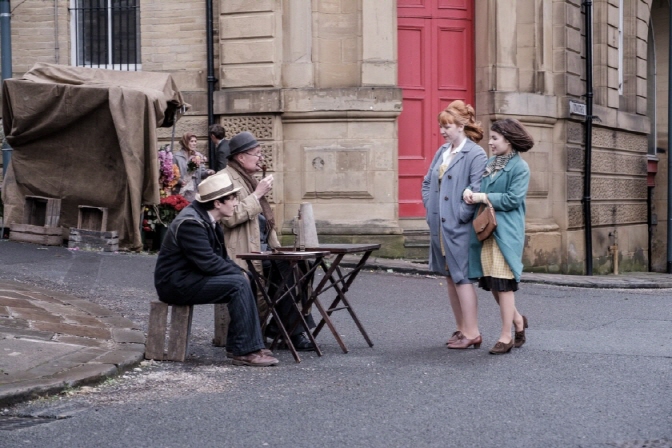
Meanwhile, the public is paying much more attention to the Portrait of the Duke of Wellington, one of more notable works by Spanish painter Francisco de Goya. When this valuable portrait is bought at the price of no less than 140,000 pounds by the UK government and then exhibited in the National Gallery, Kempton cannot help but become displeased about this. In his opinion, the government should have spent the money instead on helping millions of common working-class people like him, and that certainly makes him complain more about the government and the society.
And then something quite unexpected happens not long after Kempton goes to London for trying to convince BBC to accept his teleplays. The portrait is stolen at one night, and we later see the portrait hidden in a wardrobe by Kempton and his son. While still not telling anything to his wife, Kempton writes a series of ransom notes to the UK government, which, besides showing that he does have the portrait, demands the money to be spent for public charity and welfare.
The most amusing part of the film comes from how the UK government and the police overestimate Kempton. Despite the precise profiling job on the ransom notes by a female expert, the police simply ignore her analysis just because of gender bias, and, to Kempton’s little amusement, almost everyone believes that this is a case of professional theft.
In the meantime, things get a bit more complicated in Kempton’s life. After getting fired from the previous job, he manages to get hired at a local bakery factory, but, not so surprisingly, he comes to cause troubles just like he did in his previous job. Furthermore, his house becomes more crowded when his other son comes with his girlfriend, and there eventually comes a point where Kempton comes to see that he cannot hide the portrait anymore.
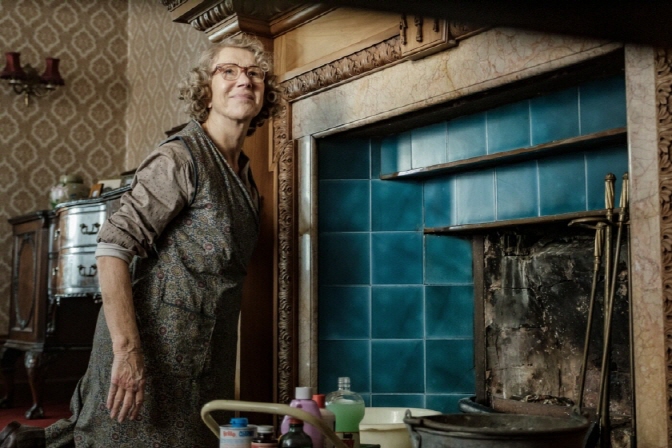
As already announced to us in the opening scene, Kempton is eventually arrested and then appears in the court for the theft of the portrait, but he is not so particularly concerned about whatever will happen next to him. While his lawyer, played by Matthew Goode with detached amusement, tries his best for making his client punished as little as possible, Kempton adamantly refuses to plead guilty to those several charges upon him, and the trial gradually becomes a big public show thanks to his defiant but humorous stand against the establishment.
The screenplay by Richard Bean and Clive Coleman simply lets the story and characters roll from one narrative point to another while occasionally throwing fun moments of absurdity in the story, and everything in the film is steadily supported by Broadbent’s solid acting. After all, he is no stranger to playing old eccentric British characters, and Broadbent certainly shines whenever his character shows considerable wit and intelligence behind his plain appearance. Although she is mostly stuck in a rather thankless role, Helen Mirren is still fun to watch as Kempton’s no-nonsense wife, and I wish the movie had more scenes between her and Broadbent, who effortlessly click well with each other whenever they are on the screen together.
On the whole, “The Duke” is a modest but engaging film mainly due to Broadbent and several other main cast members in the film, and director Roger Michell, who sadly died several months before the movie was belatedly released in UK in last year, did a competent job as he did in many of his notable movies such as “Notting Hill” (1999) and “Venus” (2006). Although I do not think “The Duke” is one of Michell’s better works, it simply accomplishes as much as intended from the start, so I will not grumble for now.


 Seongyong's Private Place